Trevano Campus Revamp: 12.6 Million for Ticino's Future
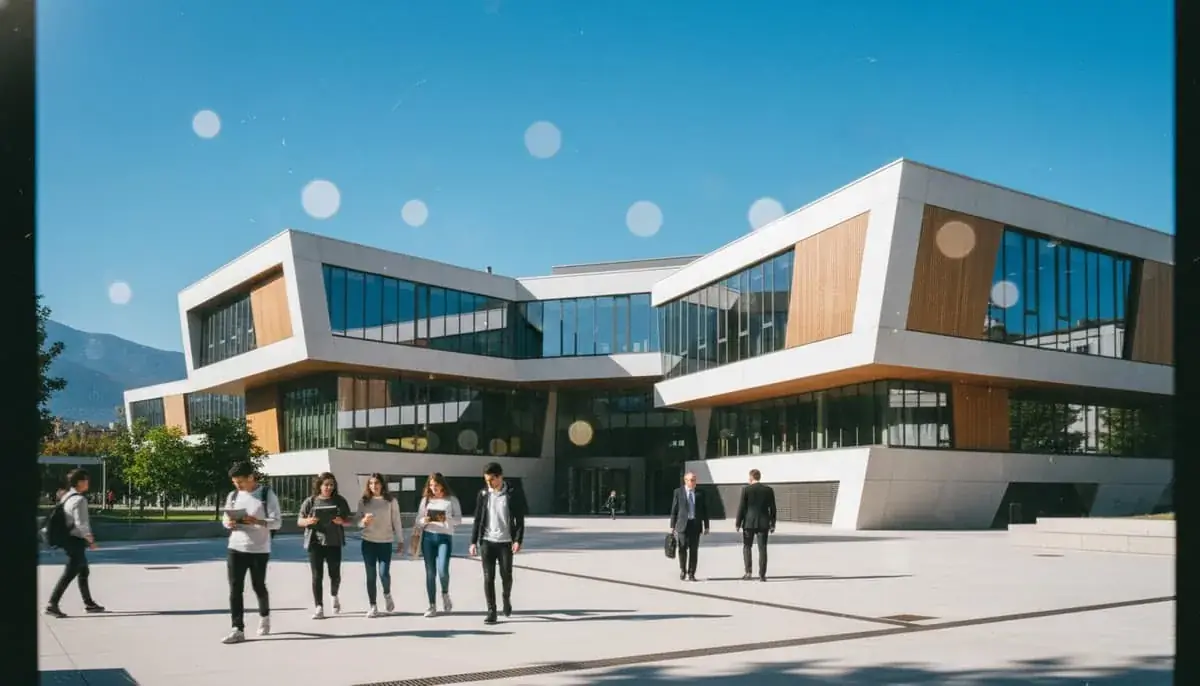
The Ticino State Council launches the first phase of the Trevano campus redevelopment project, allocating 12.6 million francs for new educational and sports facilities, including an 8-lane swimming pool.
Context
TL;DR
- Ticino invests 12.6M francs in Trevano campus redevelopment.
- New CSIA, gyms, and swimming pool to enhance education and sports.
- Project aims to boost local economy and cross-border job opportunities.
Key facts
- Project: Trevano campus redevelopment.
- Investment: 12.6 million francs for the first phase.
- Location: Trevano area, near Lugano, Canton of Ticino.
- Facilities: New CSIA, two triple gymnasiums, and an 8-lane swimming pool.
- Date: State Council approved the project before Christmas holidays, reported on March 2, 2026.
- Impact: Creation of hundreds of temporary jobs during construction phase.
- Beneficiaries: Students, teachers, local community, and cross-border workers.
The Canton of Ticino marks a significant step in its infrastructural development with the launch of the Trevano campus redevelopment project, an ambitious initiative aimed at radically transforming the region's educational and sports facilities around Lugano. The State Council approved, before the Christmas holidays, the message for the first phase, allocating an initial investment of 12.6 million francs. This substantial sum is earmarked to kick-start work that includes the construction of a new CSIA (Centro Scolastico Industrie Artistiche), two state-of-the-art triple gymnasiums, and a modern 8-lane swimming pool. The intervention, as reported by laRegione.ch on March 2, 2026, represents a long-term vision for enhancing educational and recreational offerings, solidifying Trevano's role as a hub of excellence at the heart of the Canton. The Trevano area, already home to important institutions like SUPSI (Scuola Universitaria Professionale della Svizzera Italiana), will see an expansion and modernization that will benefit thousands of students, teachers, and the entire local community. The new CSIA, in particular, will strengthen vocational training in key sectors for the Ticino economy, providing suitable spaces and updated technologies for artistic and creative industries. The new sports facilities will not only serve educational needs but also aim to become a hub for cantonal sports activities, offering high-level training and competition opportunities. This public investment underscores Ticino's commitment to supporting education and the well-being of its population, with positive impacts also on the cross-border labor market, generating new opportunities both during the construction phase and, in the long term, in the management and maintenance of the facilities. This project fits into a context of strategic public investments aimed at strengthening Ticino's attractiveness. While other news, such as the confirmation of Sergio Ermotti at the helm of UBS beyond 2027, indicates a certain stability at the top of Swiss finance, the investment in Trevano reflects a concrete confidence in local development and the Canton's ability to attract and retain talent. The Trevano campus redevelopment is not just a construction project but a strong signal for Ticino's economic and social future, demonstrating a willingness for growth and innovation that goes beyond the current circumstances. New employment opportunities will be created for various professional categories, from specialized technicians to construction workers, with a significant impact also for cross-border workers who cross the border daily to work in the Canton.
Operational details
The 12.6 million franc investment for the first phase of the Trevano campus redevelopment will have a direct and indirect economic and employment impact, particularly in the construction sector. It is estimated that projects of this scale generate hundreds of temporary jobs during the construction phase, involving professionals such as architects, civil engineers, surveyors, foremen, specialized construction workers (masons, carpenters, electricians, plumbers), and laborers. Given the geographical proximity and established practice, a significant proportion of these positions will be filled by cross-border workers, who constitute an essential workforce for the dynamism of the Ticino construction sector. Ticino companies, often with a mixed workforce of Swiss and cross-border employees, will benefit from significant contracts, stimulating the local economy, from building material suppliers to service companies.
Implications for Cross-Border Workers and the Labor Market
For cross-border workers, these contracts represent a tangible opportunity in a labor market that, despite fluctuations, continues to show signs of vitality in specific sectors. The demand for specialized skills in the construction sector remains high, and projects like Trevano contribute to maintaining a steady flow of requests. It is essential for cross-border workers to be up-to-date on current regulations, particularly those related to work permits (G permit) and salary conditions, which are governed by collective labor agreements (CCLs) specific to the construction sector. Compliance with minimum wages and working conditions is closely monitored by cantonal authorities, such as the DFE (Department of Finance and Economy) and SECO (State Secretariat for the Economy), to prevent wage dumping.
Financing and Transparency The 12.6 million franc funding for this first phase comes from cantonal coffers, demonstrating the State Council's priority on education and sports. The management of these public funds is subject to rigorous transparency controls and tendering procedures that ensure competition among companies. This ensures not only efficient use of resources but also the quality of the work carried out. Citizens and workers, including cross-border workers who contribute with their indirect taxes, have the right to expect such investments to bring lasting benefits to the community. The Trevano campus redevelopment is, therefore, not just a construction project but an economic engine that will positively influence employment and the economy of the Lugano area and the entire Canton.
Recommended tools
For an updated estimate, use the net salary calculator and the CHF-EUR exchange comparator.
Key points
The Trevano campus redevelopment is not just a construction news item but a concrete signal of the future directions of the Canton of Ticino, which continues to invest heavily in strategic infrastructure. For cross-border workers, this means a potential increase in job opportunities in the construction sector in the coming years. The new facilities, once completed, could also generate permanent jobs in management, maintenance, and teaching, further expanding the spectrum of careers available to those living across the border. It is a propitious moment for those with technical and professional skills in the construction field or for those intending to specialize in related sectors, such as sports facility management or school administration.
Practical Advice for Cross-Border Workers 💡 Monitor Job Offers: Keep an eye on online platforms and specialized portals for opportunities in the construction and services sector. Many Ticino companies publish specific announcements for large-scale construction sites. 💡 Update Your Profile: Ensure your CV is up-to-date and highlights all your relevant experiences and qualifications. Continuing education is always a competitive advantage. 💡 Inform Yourself about Permits: Verify that you have a valid G work permit and are aware of recent regulatory changes that may affect your status as a cross-border worker in Switzerland. 💡 Know the CCLs: Familiarize yourself with the Collective Labor Agreements of the Ticino construction sector to ensure you receive remuneration and working conditions that comply with cantonal standards. This investment aligns with a broader strategy for Ticino's development, which seeks to balance economic growth and quality of life. The expansion and modernization of educational and sports infrastructure contribute to making the Canton more attractive not only for residents but also for cross-border workers, who often consider Ticino as both a professional and personal opportunity. The laRegione.ch article of March 2, 2026, highlights how the State Council's financial commitment to Trevano is an investment in the territory's long-term future, with positive repercussions for all. For those looking for new professional challenges or wanting to assess their current position, it is essential to have reliable tools. If you are interested in understanding how these developments can influence your earning potential or if you are looking for new opportunities, you can consult our job offer comparator or calculate your net salary.
Frequently Asked Questions
- How much did the first stage of the redevelopment of the Trevano campus cost?
- The first stage of the redevelopment of the Trevano campus cost 12.6 million francs, financed by the cantonal coffers.
- How many temporary jobs are estimated to be generated during the construction phase for the redevelopment of the Trevano campus?
- It is estimated that hundreds of temporary jobs are generated, involving professional figures such as architects, civil engineers, surveyors, master builders, specialized construction workers and laborers, with a significant share covered by cross-border workers.
- Which professional figures will be most in demand during the redevelopment of the Trevano campus for cross-border workers?
- The works will mainly require specialized construction workers (bricklayers, electricians, plumbers), carpenters, surveyors, master builders and technicians such as architects and civil engineers. Given the proximity to the border, many of these positions will also be open to cross-border commuters, with certified technical skills required by Ticino companies.
- Do cross-border commuters hired on Trevano construction sites have to have a specific G permit for the construction sector?
- Yes, cross-border commuters must have a G permit for cross-border work, which is valid for the construction sector. It is essential to verify that the Ticino company is authorized to employ foreign labor and that wages comply with the sector's collective bargaining agreements, with regular checks by the cantonal authorities.
- Are there any tax breaks for cross-border workers working on construction sites in Ticino?
- Cross-border commuters working in Switzerland are subject to Swiss taxation and must declare their income in both Italy and Switzerland, but can benefit from double taxation agreements. Some companies offer support in the management of tax practices to optimize the position of workers.
Related articles
- All articles: AVS and LPP pensions
- Trasferirsi a Uggiate-Trevano da frontaliere: pro e contro
- Colf e badanti in Ticino: +122 mila in tre anni
- Svolta a Campione d'Italia: via libera a nuove assunzioni
- Daverio: inaugurato il nuovo campus SMARTT VAlley
- Boom Startup in Svizzera (+44%): 53 Milioni per il Ticino, nuove opportunità