Como, Rio is born under escort during the Giro
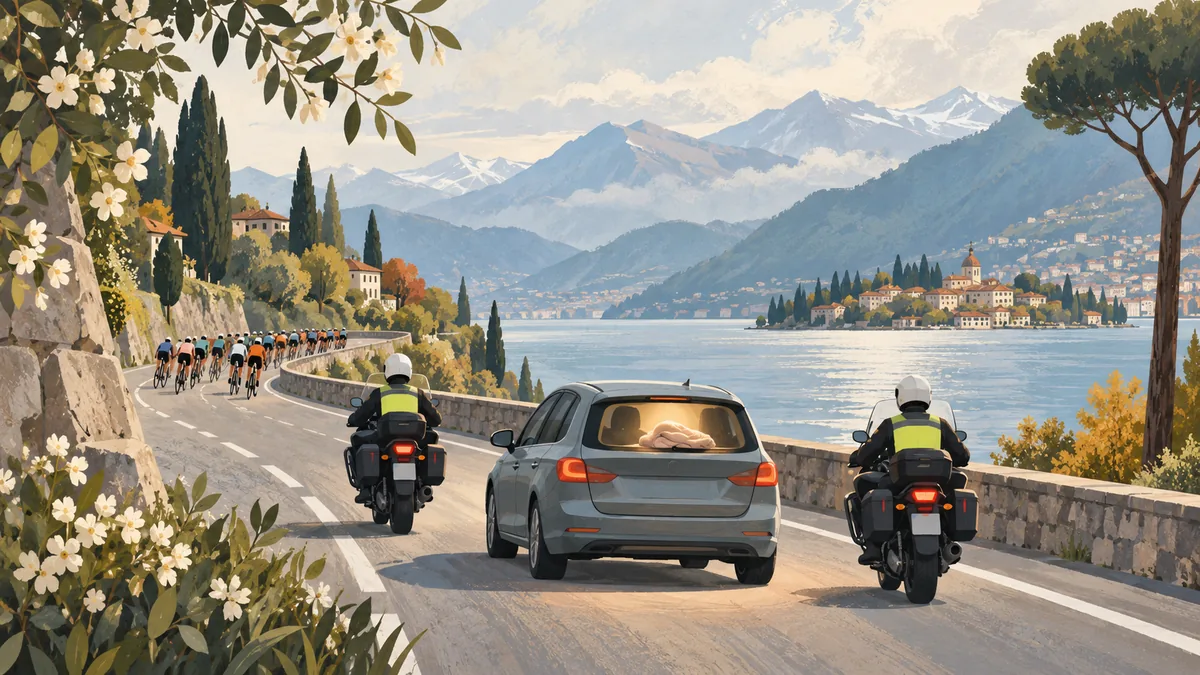
At Como, during the Giro di Lombardia, traffic was blocked Elisa called after her water broke Rio was born at 16.57, after a motorcycle escort
Context
TL;DR
- In Como, during the Giro di Lombardia, traffic was blocked
- Elisa called after her water broke
- Rio was born at 16.57, after a motorcycle escort
- The newborn weighs 4 kilos and measures 54 centimeters
Key facts
- Location → the couple's home in Albate
- Destination → Valduce hospital
- Time → 16.57
- Interval → less than 40 minutes from the first phone call
- Weight → 4 kilograms
- Measurement → 54 centimeters
- Officers → Sergio D’Angelo and Francesco Polito
- Little sister → Selva, three years old
Saturday afternoon, during the passage of the Giro di Lombardia, the Como Local Police Operations Center received an anxious call after it had been transferred by 112. Elisa’s water had just broken, and she was about to give birth; dad Alejandro was at home with her. Reaching the hospital, however, seemed almost impossible: the city streets were blocked for the race, amid the crowd’s excitement and traffic closures.
The Local Police responded immediately: the two officers assigned to the Giro motorcycle escort detail, Deputy Commander Sergio D’Angelo and Commissioner Francesco Polito, reached the couple’s home in Albate on their motorcycles within just a few minutes.
The race to Valduce
From Albate, Local Police motorcycles escorted the parents’ car toward Valduce hospital, clearing a path through the paralyzed traffic and protected checkpoints. The two officers’ prompt response enabled the couple to reach the hospital just in time.
Baby Rio was born at 16.57, less than 40 minutes after the parents’ first phone call; the baby weighs 4 kilograms and measures 54 centimeters. The source does not provide the exact time of the call, but specifies that less than 40 minutes elapsed between that call and the birth.
At home, three-year-old little sister Selva was waiting for her mother, father and newborn baby brother. The incident brings together the presence in the city, duty, efficiency and great emotion described in the account. The officers were already engaged in escorting the Giro, while the family was awaiting immediate help to overcome a situation made almost impossible by traffic. This convergence is what makes the incident extraordinary for the family and for the entire Como Command.
Operational details
For those reading the news with an eye to mobility in the Como area, the practical point is precise: during the Giro, city roads were blocked and traffic was paralyzed. The source, however, does not list the roads affected, indicate how long the closures lasted, or describe an ordinary route to Valduce. There are therefore no grounds for calculating a delay, attributing a problem to a border crossing, or suggesting a detour.
For the cross-border commuter reading the report, this distinction prevents an excessive conclusion. The episode documents a specific situation in Como and a successful escort; it does not document the race's effect on other travelers' commutes. The text does not report waiting times at the borders, highway conditions, or rail services. These data cannot be derived from the account of Rio's birth.
The certain fact and what it is not
The possible comparison is within the same emergency. Before the intervention, reaching the hospital seemed almost impossible. After the motorcycles arrived, the parents' car was guided through the paralyzed traffic and protected checkpoints, arriving at Valduce just in time. It is a documented sequence, not a general rule about city traffic.
The time should also be read correctly. 16.57 indicates Rio's birth, not the start of the race, the time the roads were closed, or the duration of the journey. Likewise, the less than 40 minutes measures the interval from the first phone call to the birth, not just the time taken to reach the hospital.
Anyone looking for separate information about cross-border mobility can consult mappa dei valichi, but without attributing to this source roads or routes that are not named. The same applies to storico del traffico ai valichi: it can serve a separate search, while this report documents only the situation experienced by the family and the intervention of the Local Police.
Useful tools to protect your net income
To reduce FX leakage, compare CHF-EUR exchange options and banks for cross-border workers.
Key points
To recount this story correctly, it is best to follow the documented sequence and not turn it into a general procedure. There are five verifiable steps.
The sequence to verify
1. Context: it is Saturday afternoon and the Giro di Lombardia is passing through the city, with crowds and road closures. 2. Report: the call concerns Elisa, whose water has broken; 112 therefore transfers her to the Local Police Operations Center. 3. Intervention: Deputy Commander Sergio D’Angelo and Commissioner Francesco Polito are engaged in the Giro motorcycle escort and reach the home in Albate. 4. Route: the motorcycles clear the way and guide the parents’ car to Valduce Hospital, through the paralyzed traffic and protected checkpoints. 5. Outcome: at 16.57, Rio is born, less than 40 minutes after the first call; the baby weighs 4 kilos and measures 54 centimeters.
This outline helps separate the facts from the additions. The text does not indicate the names of the streets, the duration of the closures, an alternative route or the exact time of the call. Nor does it describe a protocol valid for every emergency: it recounts the specific intervention of two officers already engaged in the escort service for the Giro.
The ending should also be kept in its concrete dimension. Selva, the three-year-old little sister, was waiting at home, while for the Como Command, the working day and complex traffic situation were turning into an unforgettable memory. Presenting these elements is enough to remain faithful to the source, without attributing to the story consequences for traffic or commuters that the account does not document.
For a separate exploration of employment income, use calcolatore dello stipendio.
Source: comozero.it
Frequently Asked Questions
- What time was little Rio born?
- Rio was born at 16.57, less than 40 minutes after his parents' first call to the Local Police Operations Center, which came after going through 112. The child weighed 4 kilos and measured 54 centimeters. The source does not indicate the exact time of the call: it provides the time of birth and the interval of less than 40 minutes.
- Who escorted the parents to the hospital?
- The operation was carried out by Deputy Commander Sergio D’Angelo and Commissioner Francesco Polito. The two officers were engaged in motorcycle escort duty for the Giro di Lombardia. They reached the couple's home in Albate within a few minutes, then their motorcycles led the parents' car to Valduce Hospital.
- Where did the race toward Valduce start from?
- The race started from the couple's home in Albate. The Local Police motorcycles guided Elisa and Alejandro's car through the paralyzed traffic and the protected checkpoints. The source indicates Valduce Hospital as the destination, but does not specify the names of the roads taken or the duration of the closures related to the race.
- Who was waiting for the family at home?
- At home, three-year-old little sister Selva was waiting. The account presents her waiting for her mother, father, and newborn baby brother. The episode took place during the passage of the Giro di Lombardia, on a day characterized by the public's enthusiasm, traffic closures, and complex traffic conditions in Como.
Related articles
- All articles: Energy and fuel
- Carburante Svizzera: scorte critiche per il cherosene
- Scorte carburante Svizzera: approvvigionamento garantito fino a maggio 2026
- Nuovi posti moto a Como: sosta vietata durante le partite del Como
- Guillermo Silva vince la tappa e indossa la maglia rosa del Giro d'Italia
- Giro di Lombardia: partenza in ritardo e protesta a Bergamo