Radar Crackdown: A Week of Intensive Speed Checks at the Border
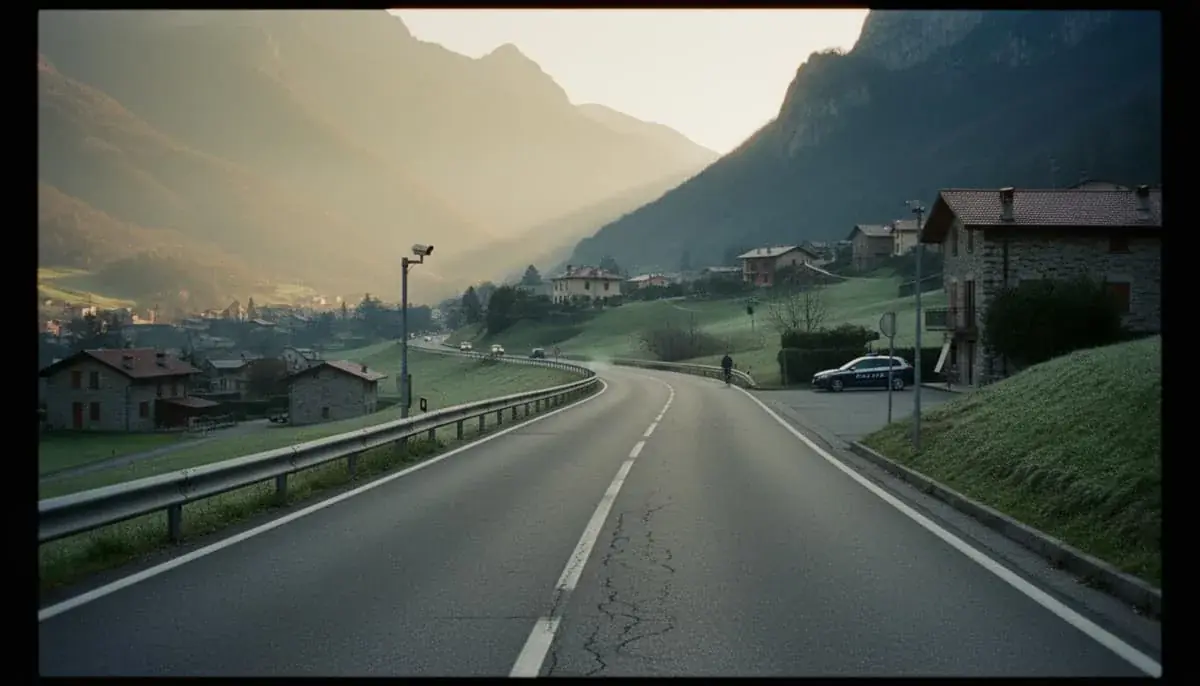
From March 2 to 8, 2026, Ticino steps up radar enforcement, focusing on border areas. A crucial week for cross-border commuters.
Context
TL;DR
- Intensive radar checks in Ticino from March 2-8, 2026.
- Mobile speed checks focus on border zones and key districts.
- Strict fines and penalties for speeding in Switzerland.
Key facts
- Cosa: Unprecedented radar checks and mobile speed checks.
- Quando: From March 2 to 8, 2026.
- Dove: Key districts in Ticino, especially border zones.
- Chi: Cantonal and municipal authorities, including Polcantonale, Polcom, and Polintercom.
- Importo: Fines range from 40 CHF to thousands depending on severity.
- Scadenza: No specific deadline mentioned, but checks are intensive during the specified week.
- Limiti di velocità: 50 km/h in towns, 80 km/h outside towns, 120 km/h on highways.
- Conseguenze: Possible license suspension, administrative measures, and even imprisonment for serious violations.
A week of unprecedented radar checks awaits commuters and drivers in Ticino from March 2 to 8, 2026. Dubbed a 'radar crackdown week' by Il Giornale del Ticino, the initiative will see a large deployment of mobile speed checks across many locations in the canton, with particular focus on border zones. This is a vital warning for the thousands of workers who cross the border daily to reach jobs in the valleys of Ticino.
Cantonal and municipal authorities, including the Cantonal Police (Polcantonale), Municipal Police (Polcom), and Intermunicipal Police (Polintercom), have mapped out comprehensive coverage of key districts for cross-border traffic. Although the well-known 'Irine' semi-stationary radars will not be in operation during this period, the emphasis is on mobile checks, making their locations unpredictable and surveillance even more effective.
Specifically, the list of monitored locations covers several crucial areas for connections with Italy. In the Mendrisio District, checks will take place in Chiasso city, Arzo, Stabio (both leaving the town and the San Pietro area), and Novazzano. All are border areas or very close to the Brogeda, Gaggiolo, and Stabio-Ponte Chiasso crossings, used daily by thousands of workers. In the Locarno District, Cugnasco and Magadino (Polcantonale), as well as Losone, Brissago, and Ascona (Polcom and Polintercom) are noted. The Lugano District will see a wide area covered, including Davesco-Soragno (Polcantonale) and Castagnola, Viganello, Molino Nuovo, Orino, Grancia, Paradiso, Maroggia, Canobbio, Ruvigliana, Pregassona, and Lugano city (Polcom and Polintercom). Finally, in the Bellinzona District, checks will be conducted in Cadenazzo and Lumino (Polcantonale), and Camorino, Bellinzona city, Castione, Arbedo, Gudo, and Giubiasco (Polcom and Polintercom). The only area missing is Malcantone near Tresa, but authorities have already announced that 'this will be addressed,' hinting at future coverage in this strategic zone. The aim of this operation is to ensure road safety and compliance with speed limits, which are often ignored, especially during rush hours.
Operational details
Speeding fines in Switzerland are famously strict and can significantly impact the budget of cross-border commuters. It's not just about hefty fines, which can range from a few hundred to thousands of francs depending on the severity of the violation and the offender's income, but also administrative consequences like license suspension or registration in the administrative measures database. Fines are set by the Ordinance on Disciplinary Fines (OMD) and the Road Traffic Act (CCS), with penalty brackets that increase steeply as the speed limit is exceeded.
📊 Sample disciplinary fines (indicative):
- Up to 5 km/h over the limit in a 50 km/h zone: 40 CHF
- Up to 10 km/h over the limit in a 50 km/h zone: 120 CHF
- Up to 15 km/h over the limit in a 50 km/h zone: 250 CHF
- Over 15 km/h in a 50 km/h zone, the violation becomes more serious and can result in criminal charges, with fines set by a judge and possible license suspensions.
For cross-border commuters, a license suspension in Switzerland directly affects the validity of the document in Italy, due to bilateral agreements. A serious violation, such as exceeding the limit by 25 km/h in a built-up area, may be classified as a 'qualified violation' (Art. 90 para. 3 CCS), leading to very severe penalties, including imprisonment and long-term driving bans. It's important to understand that the Swiss system does not use a points-based scheme like Italy, but rather administrative measures that can lead to license withdrawal. The financial impact goes beyond the fine: procedural costs, possible legal fees, and, in the case of license suspension, the expenses and inconvenience of arranging alternative transport for commuting.
⚠️ Mind the limits: Speed limits are 50 km/h in towns, 80 km/h outside towns, and 120 km/h on highways. In some border areas or near schools and hospitals, lower limits, even 30 km/h, may apply, often only locally signposted. Enforcement is strongest in these zones, where even a moment's distraction can be costly. The Cantonal and Municipal Police in Ticino use the latest technology for speed detection, both fixed and mobile, and their presence is often discreet.
Useful tools for your case
To verify your within/over 20 km tax scenario, use the net salary calculator and the tax return guide.
Key points
With such intensive enforcement, prevention is your best strategy. For cross-border commuters, this means not only paying close attention to speed limits, but also adopting defensive driving and staying informed about traffic conditions. Knowing your routes and the 'hot spots' where checks are most frequent, especially in border areas like Chiasso, Stabio, Novazzano, and Gambarogno, can make all the difference. Avoid distractions behind the wheel and always obey signage, including temporary signs related to roadworks.
💡 Practical tips for commuters:
- Plan your route: Allow for possible delays due to traffic so you're not tempted to speed.
- Respect the limits: Even a small excess can be costly in Switzerland.
- Watch the signs: Limits can change quickly, especially near populated areas or construction sites.
- Keep a safe distance: Careful driving reduces the risk of accidents and violations.
- Stay informed: Use navigation apps that report slowdowns or checks (use them wisely and without distraction).
Managing your finances and avoiding unexpected expenses like fines is an essential part of cross-border life. Understanding the cost of living in Ticino and how various expenses can impact your budget is crucial for solid financial planning. To get a clear picture of your spending and optimize your budget management, you can use our Cost of Living Comparator, a valuable tool for thousands of commuters. Stay informed and drive safely. This week of intensive checks, from March 2 to 8, 2026, serves as a warning for everyone, as reported by Il Giornale del Ticino.
Frequently Asked Questions
- What are the localities of Ticino affected by the week of radar controls?
- The localities involved are Chiasso-città, Arzo, Stabio, Novazzano in the District of Mendrisio, Cugnasco and Magadino, Losone, Brissago and Ascona in the District of Locarno, and Davesco-Soragno, Castagnola, Viganello, Molino Nuovo, Orino, Grancia, Paradiso, Maroggia, Canobbio, Ruvigliana, Pregassona and Lugano-city in the District of Lugano.
- What is the impact of a Swiss driver's license withdrawal?
- The withdrawal of the license in Switzerland, due to bilateral agreements, has consequences also on the validity of the document in Italy, potentially limiting the driving capacity in both countries.
- What are the areas of Ticino where radar controls will be more intense?
- The most prone to intensive controls in Ticino include Chiasso, Stabio, Novazzano, Cugnasco, Losone, Brissago, Ascona, Davesco-Soragno, Castagnola, Viganello, Molino Nuovo, Orino, Grancia, Paradiso, Maroggia, Canobbio, Ruvigliana, Pregassona, Bellinzona, Cadenazzo, Lumino, Camorino, Bellinzona-città.
Related articles
- All articles: Border and customs
- Attenzione frontalieri: settimana di radar a tappeto in
- Controlli velocità in Ticino: radar mobili a marzo 2026
- Radar a Mazzetti in Ticino: Frontalieri, Attenzione!
- Ticino, attenti ai radar: quando e dove i controlli della velocità
- Controlli velocità in Ticino: cosa sapere per i frontalieri