Border Under Scrutiny: A Week of Relentless Speed Checks
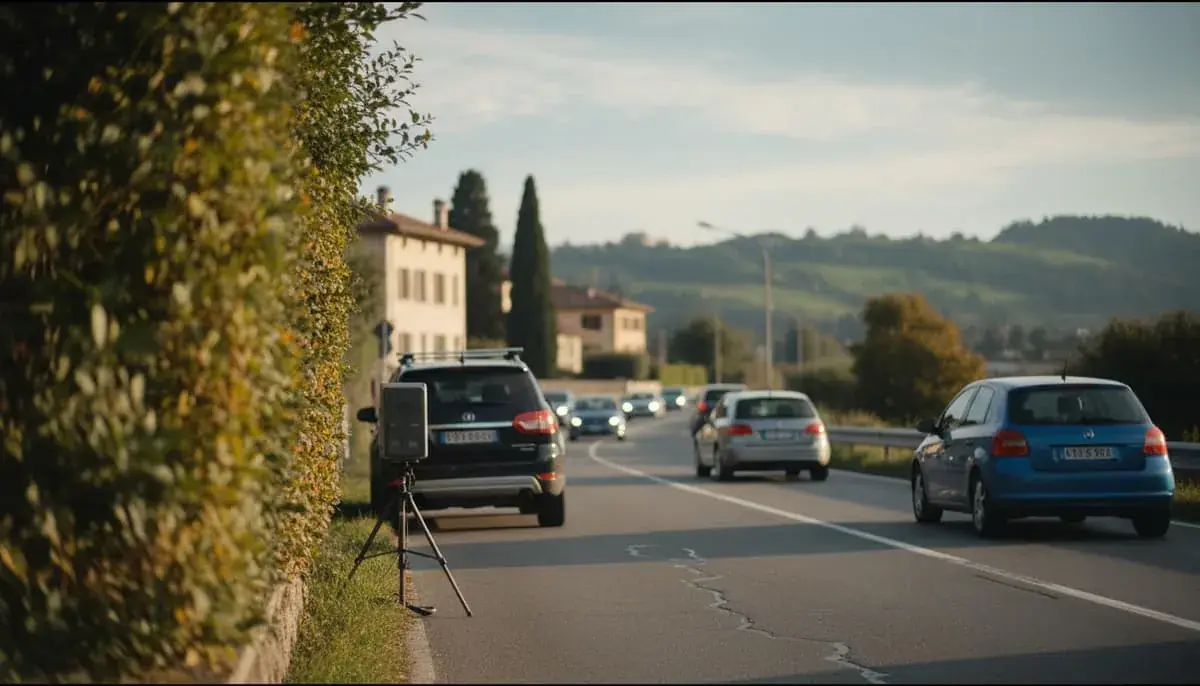
From March 2 to 8, 2026, Ticino will intensify mobile speed controls in border areas, targeting cross-border commuters with thorough checks across multiple districts.
Context
TL;DR
- Intensive speed checks in Ticino from March 2-8, 2026.
- Mobile radars deployed across key border crossing areas.
- Strict enforcement with high fines and potential license suspension.
- Commuters urged to adhere to speed limits and Swiss regulations.
Key facts
- Cosa: Intensive speed checks and mobile radar deployment.
- Quando: From March 2 to March 8, 2026.
- Dove: Key locations near border crossings in Ticino, including Mendrisio, Locarno, Bellinzona, and Lugano.
- Chi: Cantonal, municipal, and inter-municipal police forces.
- Importo: Fines range from 40-60 CHF for minor speeding to criminal procedures and license suspension for serious violations.
- Scadenza: The intensified controls are scheduled for a one-week period in March 2026.
- Conseguenze: Potential license suspension, criminal record, and financial penalties for speeding violations.
- Regole: Standard speed limits are 50 km/h in urban areas and 80 km/h outside towns.
Between March 2 and 8, 2026, cross-border commuters heading to work in Ticino will need to be extra vigilant: the Canton of Ticino has announced a week of intensive speed checks, focusing on several key locations, many of them right near the border crossings. As reported by Il Giornale del Ticino, this initiative involves a large-scale mobilization of cantonal and municipal police forces, deploying widespread 'mobile speed checks' that will apply to all vehicles passing through. The measure aims to strengthen road safety, but inevitably adds extra pressure on cross-border commuters already facing the daily challenges of mobility.
The areas under observation cover almost the entire canton, with particular emphasis on the busiest districts and main access routes from Italy. In the Mendrisio District, a vital hub for thousands of workers, checks will be active in Chiasso-city, Arzo, Stabio (twice: exiting the town and in the San Pietro quarter), and Novazzano. This means critical points like the Brogeda crossing and routes toward Gaggiolo will be monitored closely. But Mendrisiotto isn't the only area affected: the crackdown extends to Locarno, with checks in Cugnasco, Magadino, Losone, Brissago, and Ascona, and to Bellinzona, where Cadenazzo, Lumino, Camorino, Bellinzona-city, Castione, Arbedo, Gudo, and Giubiasco will see increased enforcement. The Lugano area is also included, with Davesco-Soragno, Castagnola, Viganello, Molino Nuovo, Orino, Grancia, Paradiso, Maroggia, Canobbio, Ruvigliana, Pregassona, and Lugano-city all on the list, showing comprehensive coverage that leaves nothing to chance. The only exception noted is the Malcantone area near Tresa and surroundings, but sources suggest 'this will be remedied…', hinting at possible future expansion or unannounced patrols. This strategy of widespread, mobile checks sends a clear message to anyone crossing the border: speed enforcement is a priority for Ticino authorities, and the absence of traditional 'Irine' (semi-stationary radars) should not be misleading; in fact, it likely means more unpredictable controls, making them harder to avoid and more effective as deterrents.
Control Map: Where and Who Is Watching
Checks will be managed by various police forces, ensuring coordinated and thorough coverage. The Cantonal Police (Polcantonale) will operate in strategic areas like Cadenazzo, Lumino, Cugnasco, Magadino, Davesco-Soragno, and Castel San Pietro. Municipal (Polcom) and Inter-municipal (Polintercom) police will oversee urban areas and secondary routes. This mix guarantees that both main roads and lesser-used streets are under scrutiny. For commuters, this means there are no privileged routes or safe times to ignore speed limits. Every journey, from highways to city streets, could be monitored. The 'mobile' nature of these radars, unlike fixed 'Irine', makes their exact location almost impossible to predict, increasing deterrence. The stated goal is to reduce accidents and boost road safety, but the financial impact for those who break the rules can be significant. Swiss fines for speeding are known to be high and progressive, which can seriously affect a commuter's budget. It's essential, therefore, to adopt a cautious driving style and respect local regulations to avoid penalties and keep your driving license, which is vital for maintaining employment.
Operational details
The intensification of speed controls, especially near the borders, has direct and significant implications for cross-border commuters. Swiss traffic law is very strict, and penalties for speeding go beyond hefty fines—they can include license suspension or even entry into the criminal record, depending on the severity of the violation. Exceeding the speed limit by just a few kilometers per hour can result in an administrative fine, while more serious violations may lead to criminal proceedings. For example, exceeding the 50 km/h limit in urban areas by 16-20 km/h already triggers a criminal procedure and a monetary penalty. Going over 25 km/h in a built-up area can mean losing your license for at least 3 months.
Consequences for Commuters
For cross-border commuters, having your Swiss license revoked can also affect the validity of your Italian license, due to reciprocal agreements. Additionally, fines issued by the Federal Roads Office (USTRA) are enforceable and must be paid, or else debt recovery procedures may be initiated, leading to extra costs and bureaucratic complications. The absence of fixed 'Irine' radars, as noted by sources, doesn't reduce the risk—it just shifts it. Mobile checks, often using laser or portable radar devices, are less visible and can be set up quickly at any strategic point, making it harder for inattentive drivers to prevent violations. This scenario requires greater awareness and impeccable driving, especially for those who travel the same routes daily and may be tempted to underestimate the limits.
📊 Indicative Swiss Speeding Fines:
- Up to 5 km/h over the limit: Fine of about 40-60 CHF (depending on area).
- 6-10 km/h over the limit: Fine of about 120-180 CHF.
- 11-15 km/h over the limit: Fine of about 250 CHF and warning (in 50 km/h zone).
- Over 16 km/h (in 50 km/h zone) or 21 km/h (in 80 km/h zone): Criminal procedure, license suspension, monetary or custodial penalty. The penalty is progressive and considers the offender's financial situation.
It's crucial to understand that Ticino authorities make no distinction between residents and commuters when it comes to traffic violations. Tolerance is minimal and enforcement is strict. For commuters, a serious accident or violation can not only mean direct costs, but also losing points on the Italian license (if the violation is reported), higher insurance premiums, and in extreme cases, losing your job if a license is essential for your duties. The week of intensified controls from March 2 to 8, 2026, is not just a warning—it's a call for all cross-border commuters to rethink their driving habits and prioritize safety and compliance, especially in the most sensitive and busy Ticino routes.
Useful tools for your case
To verify your within/over 20 km tax scenario, use the net salary calculator and the tax return guide.
Key points
Faced with this increase in controls, cross-border commuters should adopt a proactive and responsible driving strategy. Awareness of speed limits and strict adherence are the first steps to avoiding unpleasant surprises. Remember that the 50 km/h limit in urban areas and 80 km/h outside towns are standard, unless otherwise indicated. Using updated GPS devices that display speed limits can be helpful, but never replace attention to road signs and traffic conditions.
Practical Tips for Commuters
💡 Plan your trips in advance, allowing enough time so you don't need to rush. Being in a hurry is often the main cause of speeding. Consider potential delays due to cross-border traffic and roadworks, which are a constant on Ticino's access roads. Always keep a safe distance from other vehicles, especially in heavy traffic or bad weather. Familiarize yourself with Swiss regulations, which can differ from Italian ones, especially regarding tolerances and penalties. Any violation committed in Ticino will have consequences within the Swiss legal system, and ignoring them can lead to much more serious escalation.
The week of controls from March 2 to 8, 2026, as reported by Il Giornale del Ticino, is an opportunity to reflect on the importance of safe and mindful driving. It's not just about avoiding fines, but ensuring your own safety and that of other road users, as well as protecting your work and legal status. For those who commute between Italy and Switzerland, every aspect of mobility directly affects quality of life and financial stability. Managing the costs and risks of daily transport is essential. To optimize your budget and better understand the expenses linked to your journeys, we invite you to use our Car Cost Calculator or Commuter Transport Calculator. These tools will help you estimate expenses and plan your routes more efficiently and safely, avoiding unpleasant surprises.
Frequently Asked Questions
- What are the areas of Canton Ticino where there will be intensive speed controls during the week of 2-8 March 2026?
- The controls will be present in almost all the cantonal territory, with a marked emphasis on the busiest districts and the main access routes from nearby Italy, including the District of Mendrisio, Locarnese, Bellinzonese and Luganese.
- What are the consequences for a frontier who loses the Swiss driver's license due to excess speed on his impact on the Italian driver's license?
- The loss of the Swiss driver's license may affect the validity of the Italian driver's license due to reciprocity agreements. The suspension or withdrawal of the Italian driver's license may be required, depending on the severity of the infringement and the rules in force at the time of the event.
- What are the main consequences of a speed check for a cross-border commuter in Switzerland?
- A speed check can lead to hefty fines, temporary withdrawal of your Swiss driving licence and, in the case of serious offences, criminal prosecution. The Italian license can be affected if the Swiss license is withdrawn or suspended, compromising its validity in Italy as well.
Related articles
- All articles: Border and customs
- Controlli velocità in Ticino: radar mobili a marzo 2026
- Attenzione Frontalieri: Settimana di Radar Intensivi al
- Ticino, attenti ai radar: quando e dove i controlli della velocità
- Controlli di velocità in Ticino: date e località
- Radar mobili in Ticino: dove e quando faranno più rumore