Border health worker in Ticino: guide (cross-border guide)
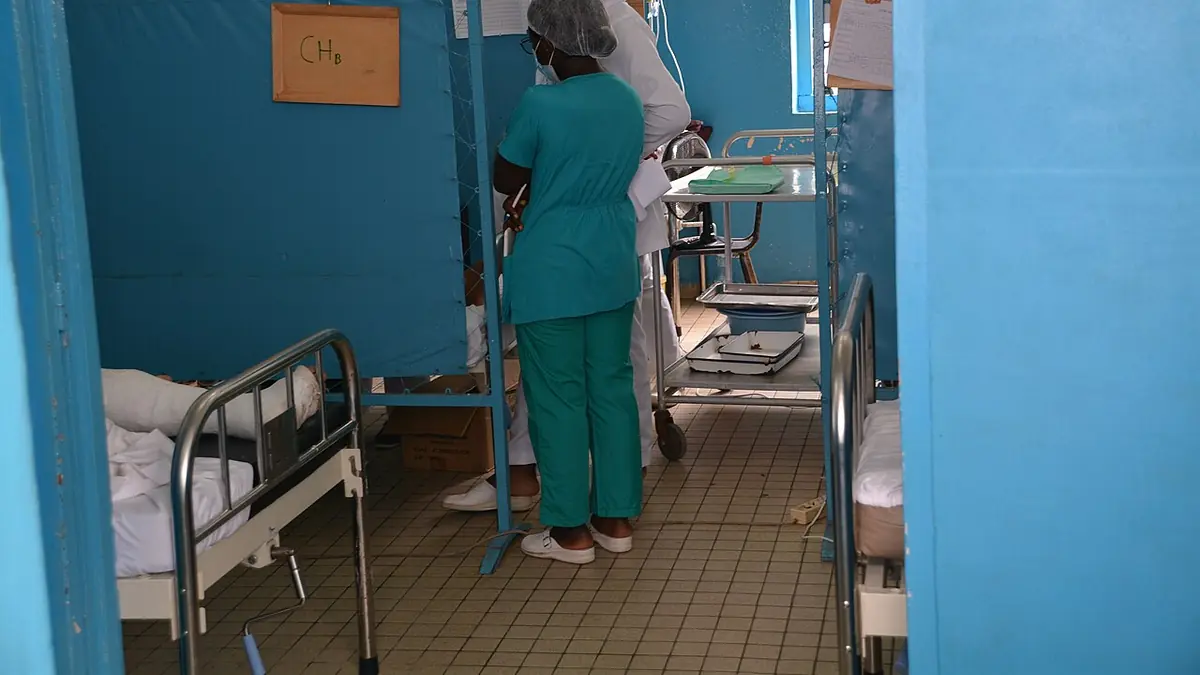
Working as an OSS in Ticino: here are the requirements for the recognition of the title, the contribution rates and the operation of the new tax agreement.
Context
In a nutshell
- New Frontier Agreement in force from 1 January 2024.
- The border worker pays the tax at source exclusively in Switzerland.
- Recognition of qualifications necessary to operate in the health sector.
- AVS/AI/IPG contributions set at 5.3% to be paid by the employee.
Key facts
- What: Profession of social health worker (OSS) in Ticino
- When: New Frontier Agreement in force from 1 January 2024
- Where: Canton Ticino, Switzerland
- Who: Frontier healthcare worker
- AVS contribution: 5.3% to be paid by the employee
- AD/AC contribution: 1.1% (cap CHF 148'200)
- LAINF: 0.7-1.5% depending on the employer
Healthcare work in the Canton of Ticino is an increasingly important choice for healthcare professionals residing in Italy. To pursue this career, you need to understand the regulatory structure that governs the relationship between the two countries. The new tax agreement, signed on 23 December 2020 and in force from 1 January 2024, introduced substantial changes in the management of taxation for frontier workers. The Italian ratification took place through Law 83 of 13 June 2023. Pursuant to this legislation, tax at source is withheld only in Switzerland. To avoid double taxation, Italy allows the tax credit to be applied through the EC framework of model 730. It is essential to remember that Switzerland is not a member of the European Union or the Economic Area
Operational details
Analyzing the tax position for a social-health operator who crosses the border daily, for instance through the Brogeda or Gaggiolo crossings to healthcare facilities in the Canton of Ticino, requires attention to recent developments. With the entry into force of the new agreement on January 1, 2024, the distinction between 'old' and 'new' cross-border commuters has been consolidated. For those who were already cross-border commuters before July 17, 2023, a 7,500 euro exemption is provided under a transitional regime covering the 2024–2033 period. For new cross-border commuters, the exemption threshold is set at 10,000 euros. These thresholds directly influence the calculation of net income, as they determine the taxable base to which Italian IRPEF rates are applied. In Italy, IRPEF follows progressive brackets: 23% up to 28,000 euros, 35% for the bracket between 28,001 and 50,000 euros, and 43% for the portion exceeding 50,000 euros.
…
Key points
For those wishing to pursue a career as a social-health operator (OSS) in Ticino, the procedure begins with the verification of professional requirements. The recognition of the Italian educational qualification is the mandatory first step. Once the qualification is obtained, the candidate must seek employment at healthcare facilities in the Canton of Ticino, such as EOC (Ente Ospedaliero Cantonale) hospitals or other private clinics. After receiving a job offer, the employer initiates the procedure for issuing the G permit, which authorizes the Italian citizen to work in Switzerland while maintaining residence in Italy. This permit must be requested from the competent cantonal offices, following the directives of the SEM (State Secretariat for Migration).
…
Frequently Asked Questions
- What are the social contribution rates for a border worker?
- For an employee in Ticino, the main deductions include 5.3% for AVS/AI/IPG, 1.1% for unemployment insurance (AD/AC) on a maximum income of CHF 148'200, and a variable share between 0.7% and 1.5% for accident insurance (LAINF). In addition, from the age of 25, the payment to the second pillar (LPP) applies with rates between 7% and 18%.
- How do you avoid double taxation for border crossers?
- Thanks to the new tax agreement in force from 1 January 2024, the source tax is only withheld in Switzerland. To avoid double taxation, the worker must indicate the income produced in Switzerland in the Italian tax return, using the EC framework of model 730 to apply the tax credit, in accordance with the regulations in force managed by the Revenue Agency.
- What is LAMal and how does it work for border crossers?
- LAMal is the mandatory health insurance in Switzerland. Border workers have the right of option, which means that they can choose their health insurance from the recognised health insurance funds. Deductibles available for adults range from CHF 300 to CHF 2,500. It is essential and tax-distinct coverage, managed in compliance with federal laws.
Related articles
- All articles: Taxes
- Frontaliere polimeccanico in Ticino: stipendio e requisiti
- Lavorare come operatore CNC in Ticino da frontaliere: stipendio medio, requisiti, riconoscimento titolo di studio e permesso G
- Lavorare come falegname in Ticino: guida per frontalieri
- Vivere a Allein e lavorare in Vallese da frontaliere
- Frontaliere in Vallese: guida fiscale e regole 2024