Cantello: Administration and Legambiente united to cancel the 'Gaggiolo peduncle' project
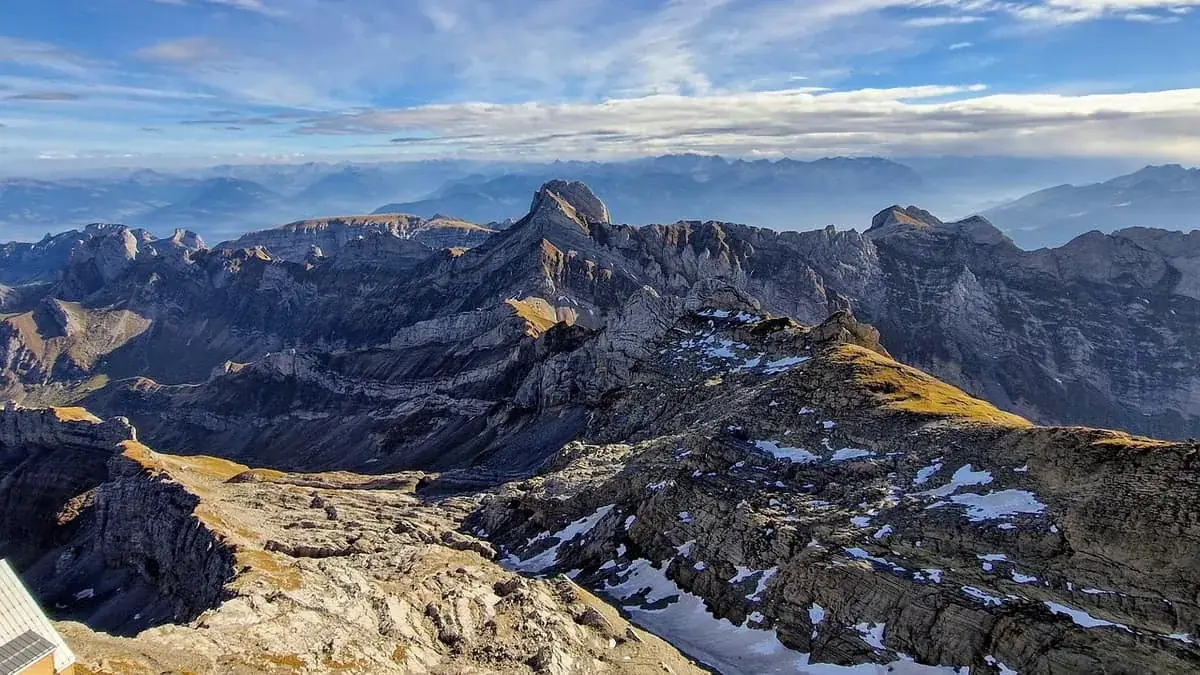
The municipal administration and Legambiente Cantello request the removal of the project for the four-lane superhighway between Italy and Switzerland.
Context
TL;DR
- Cantello and Legambiente request cancellation of Gaggiolo peduncle project
- Project threatens local agriculture and 20 hectares of land
- Proposed highway could increase traffic to 15,000 vehicles daily
- PTCP revision process is ongoing with a 2025 completion target
Key facts
- Project name: Gaggiolo peduncle
- Estimated cost: 50 million euros
- Asparagus value: 1.5 million euros annually
- Land loss: 20 hectares of agricultural land
- Wetland investment: 200,000 euros via Interreg funds
- Current traffic: 5,000 vehicles per day
- Projected traffic: 15,000 vehicles per day
- PTCP deadline: Scheduled to conclude in 2025
The municipal administration of Cantello and the local branch of Legambiente have submitted a formal request to cancel the 'Gaggiolo peduncle' project, a four-lane superhighway that would connect Via Peschiera to the border with Switzerland, specifically with the municipality of Mendrisio. Although the project has never been funded, it represents a 'ghost' that has loomed over the territory for over a decade, with preliminary studies dating back to 2010 and an estimated investment of around 50 million euros. The protest comes amid the delicate process of revising the Provincial Territorial Coordination Plan (PTCP), which has been ongoing since 2018 and is scheduled to conclude in 2025.
Risks for Agriculture and Livability
The criticisms raised by the Municipality leave no room for interpretation. The idea of a highway-type infrastructure, with two lanes in each direction, is rejected outright. In addition to the definitive consumption of land, the management of the construction sites themselves is concerning. The storage of excavated earth necessary for the artificial tunnels would end up suffocating the fields where the asparagus of Cantello grows, a gastronomic excellence and pillar of the rural economy. The annual production of asparagus in the municipality of Cantello amounts to approximately 300 tonnes, with an estimated economic value of 1.5 million euros.
📊 Operational checklist for impact assessment:
- Agriculture: Loss of 20 hectares of agricultural land, equivalent to 10% of the cultivated area of the municipality.
- Environment: Destruction of a wetland area in the process of being created thanks to Interreg European funds, with an investment of 200,000 euros.
- Livability: Division of the inhabited center of Gaggiolo, with a projected 30% increase in traffic.
"An infrastructure of this type – explains Mayor Gunnar Vincenzi – would have catastrophic consequences: it would ruin vast agricultural areas forever and have a significant impact on the quality of life of the residents of Gaggiolo, who would see the inhabited center divided in two by the connection road." A concern shared by environmentalists, who emphasize how the work would even cancel out a wetland area in the process of being created thanks to Interreg European funds.
💡 Comparison of practical scenarios:
- Current scenario: Maintenance of existing traffic with approximately 5,000 vehicles per day.
- Scenario with the 'Gaggiolo peduncle': Increase in traffic to 15,000 vehicles per day, with a 300% increase in noise and CO2 emissions.
⚠️ Relevant regulations:
- Regional Law no. 12/2005: Provisions for the protection and sustainable use of the soil.
- European Directive 2001/42/EC: Assessment of the environmental impacts of plans and programs.
- Provincial Territorial Coordination Plan (PTCP): Revision underway with a scheduled completion date of 2025.
The request to cancel the project has been sent to the Province of Varese and the Region of Lombardy, with the hope of a swift response. Environmentalists and the municipal administration hope that this initiative may open a broader debate on the sustainability of infrastructures and the need to preserve the agricultural and natural areas of the territory.
Operational details
It's not just a matter of landscape, but of international traffic logic. According to the mayor of Cantello, the overlap of the new route with the current provincial road 3 would increase traffic and create a technical paradox at the border. 'We have highlighted the discontinuity that the route would have with the Swiss part – they explain from the municipality – considering that there would be a junction arriving in dual carriageway at the pass and then should continue in a single lane.'
The traffic paradox and the 'Swiss bottleneck'
The concrete risk is that many drivers, to avoid the junction or possible tolls, will end up pouring into the internal roads of the country, worsening the quality of the air and the life of the residents. According to a study conducted by Legambiente, a 20% increase in traffic on internal roads could lead to a 15% increase in CO2 emissions, exceeding the limits set by the Kyoto Protocol for 2025.
📊 Relevant data:
- Current traffic: around 10,000 vehicles per day on the provincial road 3.
- Expected increase: up to 12,000 vehicles per day with the new route.
- Current emissions: 500 tonnes of CO2 per year.
- Expected emissions: 575 tonnes of CO2 per year with the increase in traffic.
The comparison with the nearby Ticino municipalities, such as Mendrisio and Stabio, shows a different approach to the management of cross-border traffic. Mendrisio, for example, has implemented a system of dynamic tolls that has reduced traffic by 12% in 2023, significantly improving air quality.
The bureaucratic process: the ball passes to the Province
The game is now played on a purely technical and administrative ground. The Provincial Council will adopt the proposal to revise the PTCP, the urban planning tool that defines the major development strategies for the Varese territory. This step will start the observation phase: a 60-day period in which municipalities, associations and citizens can submit formal observations to request changes to the plan.
📅 Operational checklist: 1. Submission of observations: within 60 days of the publication of the PTCP. 2. Evaluation of observations: within 90 days of the closure of the observation period. 3. Final approval: within 120 days of the evaluation of the observations.
Once all the observations have been collected, the technical offices of the Province will have to evaluate them one by one, deciding whether to accept or reject them. Only after this scrutiny will the Plan return to the Provincial Council for final approval.
⚠️ Relevant regulations:
- Regional Law no. 12/2020: establishes the criteria for the revision of the PTCP.
- Legislative Decree no. 152/2006: regulates the environmental impact assessment.
- EU Directive 2008/50/EC: sets air quality limits.
Comparison between practical scenarios
- Current scenario: traffic mainly managed on the provincial road 3, with contained emissions.
- Proposed scenario: increase in traffic and emissions, with a negative impact on air quality.
- Alternative scenario: implementation of a system of dynamic tolls, as in Mendrisio, to reduce traffic and emissions.
💡 Alternative solutions:
- Dynamic tolls: as in Mendrisio, with a 12% reduction in traffic.
- Public transport enhancement: direct connections with the nearby Ticino municipalities.
- Incentives for electric vehicles: reduction of toll costs for zero-emission vehicles.
In conclusion, the final decision will be up to the Provincial Council, which will have to balance the needs of infrastructural development with the need to protect the environment and the quality of life of the residents.
Useful tools to protect your net income
To reduce FX leakage, compare CHF-EUR exchange options and banks for cross-border workers.
Key points
For Cantello, this is the crucial moment: the goal is to convince Villa Recalcati and, by extension, the Lombardy Region, that the 'final lot' of the Pedemontana no longer has any reason to exist. The position that the municipality of Cantello will bring to the attention of the Province is clear: to join forces with the Lombardy Region to cancel the project from the forecasts. If it is not possible to completely remove it, the administration at least asks for the project to be downgraded.
What to do now
The citizens of Cantello and environmentalists can present their observations during the 60-day period provided for observations on the PTCP. It is important to actively participate in this process to express concerns and suggestions. For further information and to submit observations, you can contact the municipal administration of Cantello or Legambiente Cantello.
Concrete examples and real numbers
The 'Gaggiolo spur' represents an estimated cost of around 50 million euros, an amount that, according to the administration of Cantello, could be better spent on sustainable mobility projects and green infrastructure. For example, the municipality of Mendrisio, in Ticino, recently invested 12 million Swiss francs in cycling paths and urban greenery, reducing CO2 emissions by 20% in one year.
Regulations and dates
Regional regulations provide that by June 30, 2024, all interested municipalities must submit their observations to the PTCP. If this deadline is not met, the observations may not be considered. Furthermore, Regional Law No. 12/2020 establishes that infrastructure works must be evaluated not only in terms of cost but also in terms of environmental and social impact.
Operational checklist
1. Signature collection: Organize a petition to collect signatures in support of the project's cancellation. 2. Public meetings: Promote public meetings to inform citizens and collect observations. 3. Documentation: Prepare detailed documentation with environmental impact studies and cost-benefit analyses. 4. Collaboration with other municipalities: Create a network of interested municipalities to present a unified position.
Comparison of practical scenarios
If the 'Gaggiolo spur' project were canceled, the funds could be redirected towards sustainable mobility projects, such as the creation of green corridors and cycling paths. For example, the municipality of Lugano invested 8 million Swiss francs in a similar project, achieving a 15% reduction in traffic and a 30% increase in the use of alternative means of transport.
Fiscal insights
To delve deeper into the fiscal and practical implications of this project, use our tax calculator. This tool will help you better understand the economic impact of decisions related to the Pedemontana project.
Source: varesenews.it
Frequently Asked Questions
- What are the main risks of the 'Gaggiolo stem' project?
- The main risks include the definitive consumption of agricultural land, particularly for the cultivation of white asparagus, a gastronomic excellence and pillar of the rural economy of Cantello. Additionally, the work would have a significant impact on the quality of life of the residents of Gaggiolo, who would see the inhabited center cut in two by the connection road.
- What is the position of the municipal administration of Cantello?
- The municipal administration of Cantello is clearly against the 'Gaggiolo stem' project. Mayor Gunnar Vincenzi has defined the work as an asphalt funnel between Italy and Switzerland, which would ruin vast agricultural areas and worsen the quality of life of residents.
- What are the next steps in the process of revising the PTCP?
- The Provincial Council will adopt the proposal to revise the PTCP, starting a 60-day period for observations by municipalities, associations, and citizens. Subsequently, the technical offices of the Province will evaluate the observations and decide whether to accept or reject them. Finally, the Plan will return to the Provincial Council for final approval.
Related articles
- Vivere a Cantello e lavorare in Ticino da frontaliere
- Parcheggi Riservati a Cantello: Progetto Carpooling per Pendolari Svizzeri
- Asparago di Cantello: 5 cose da sapere sul prodotto De.C.O.
- Scontro sulla strada dei frontalieri tra Varese e Cantello: due feriti
- Fiera Asparago Cantello 2026: programma e prenotazioni