Albate-Molteno electrification: work starting in December 2024
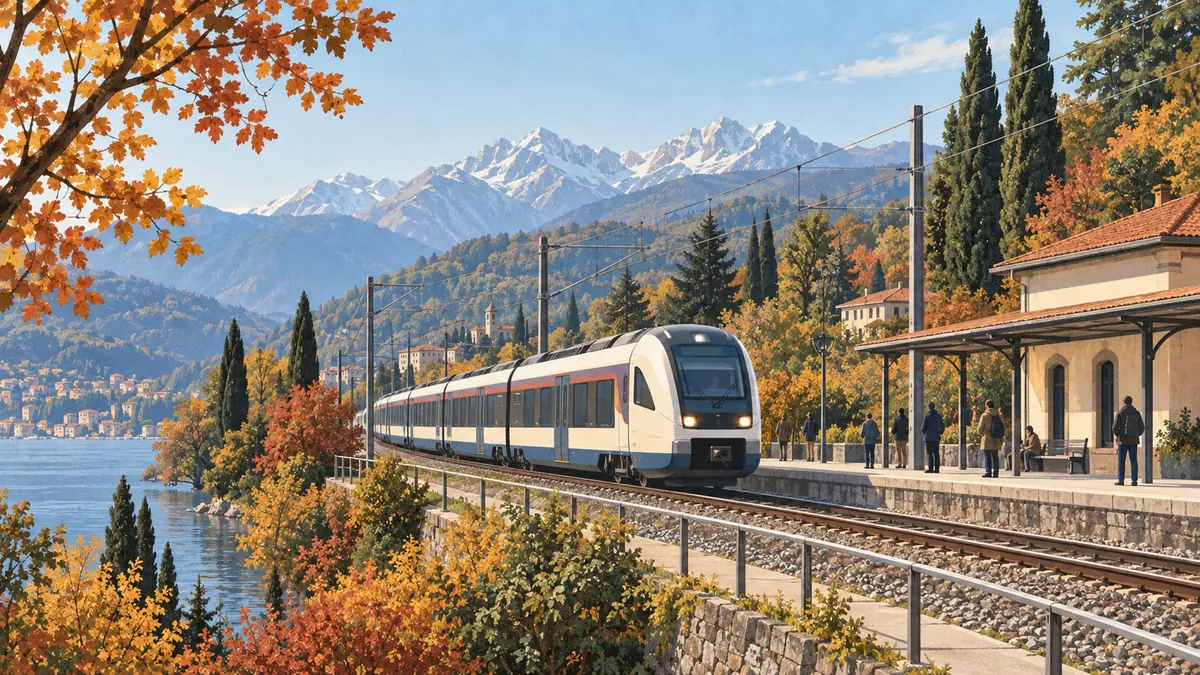
Cantieri per l'elettrificazione al via a metà dicembre
Context
TL;DR
- Electrification construction work to get underway in mid-December
- Como-Lecco suspended at least until June 2029
- Albate-Molteno: from 24 to 34 trains per day
- Tilo will be able to reach Lecco from Switzerland
Key facts
- Route → Albate-Molteno and Molteno-Lecco
- Construction start → mid-December
- Suspension → Como-Lecco until at least June 2029
- Total investment → approximately 170 million euros
- Amount to be raised → 44 million euros
Construction work on the electrification of the railway line between Albate and Molteno is scheduled to begin in mid-December. During a hearing before the Regional Council, the management of Rete Ferroviaria Italiana confirmed this timetable. The issue will also be addressed on Friday, October 9, at Lariofiere, during the meeting of the Competitiveness Roundtable.
For a cross-border commuter who uses the train to reach Switzerland, the immediate effect will be the complete suspension of rail connections between Como and Lecco, expected to continue until at least June 2029. The duration of the interruption has already been indicated, but the details of the replacement buses remain to be defined. The source therefore does not specify schedules or frequencies useful for planning the journey.
Construction sites and second phase
The project was designed to avoid work on road overpasses and underpasses, so as not to affect local traffic. Construction areas will be located near the main roads.
For the Molteno-Lecco section, referred to as the second phase, the technical and economic feasibility study has been completed and the environmental impact assessment procedure has been initiated with the Ministry. The project also includes an electrical substation in the Piccola area of Lecco.
Funding and connections
The total investment estimated for the project is approximately 170 million euros. The second section requires approximately two years and four months of construction, but first 44 million still missing must be secured and the authorization process must be completed. The Regional Department for Infrastructure intends to propose to the Ministry that funding for the Molteno-Lecco section be included in the new program agreement with RFI.
The expected outcome also concerns the service: electrification goes hand in hand with the definitive abandonment of diesel-powered trains, enables the extension of Tilo trains to Lecco, and provides an alternative route for freight trains coming from Swiss territory. Requests to upgrade the stations, submitted by the Chamber of Commerce and cited by the Province of Lecco in the environmental comments, remain outstanding. To follow the issue of public transport connections, the reader can consult mezzi pubblici in Ticino.
Operational details
The practical takeaway for a cross-border worker considering the train to Switzerland follows a precise sequence: first the suspension linked to the construction work, then the upgrade promised by electrification. The final benefit therefore does not coincide with the situation during the works.
First the suspension, then the upgrade
The report presents a clear comparison between the service indicated today and that planned after the work. During construction, the Como-Lecco rail service will be completely suspended until at least June 2029. The text does not yet define how replacement buses will be organized. The figures for the future service are instead as follows:
| Route or service | Figure indicated |
|---|---|
| Albate-Molteno | from 24 to 34 trains per day |
| Molteno-Lecco | from 46 to 68 services |
| Power supply | definitive phase-out of diesel-powered trains |
For those who work across the border and are considering this rail connection, the comparison must remain in two distinct time frames. The suspension is an effect of the construction work; the extension of Tilo trains to Lecco is instead a prospect linked to electrification. The source does not associate a specific timetable with this extension.
The reference to Switzerland also serves two different purposes. On the one hand, Tilo will be able to extend its services to Lecco. On the other, the line will offer an alternative route for freight trains coming from Swiss territory. The second element concerns freight traffic and cannot be read as an additional timetable for passengers.
The construction planning aims to avoid work on overpasses and underpasses, with areas located near major roads. This objective does not, however, make it possible to derive maps, diversions or journey times. Even station redevelopment works remain among the requests of the local area, not among the interventions already described as defined. For a separate comparison of mobility costs, costo auto pendolare is available.
Useful tools to protect your net income
To reduce FX leakage, compare CHF-EUR exchange options and banks for cross-border workers.
Key points
For the cross-border commuter, the news can be turned into a sequence of checks without anticipating dates or services that the source does not define.
Four operational steps
1. Consider mid-December as the time indicated for the start of construction work on electrifying the Albate-Molteno line. It is the first available time reference for organizing attention around the connection.
2. Treat the Como-Lecco route as subject to a complete suspension until at least June 2029. Replacement buses are expected as a topic to be defined, but the source does not yet include timetables or operating arrangements.
3. Separate the second lot from the rest of the project. For Molteno-Lecco, 44 million euros must be secured and the authorization process must be completed before construction can begin. The estimated construction duration is approximately two years and four months.
4. Assess the future benefits without turning them into services that are already available. Electrification is linked to abandoning diesel trains, increasing the number of services, and extending Tilo services to Lecco, but the text does not indicate an activation schedule.
To monitor progress, the references cited are RFI, the Regional Council, the Ministry and the Regional Department for Infrastructure. At the local level, the requests of the Chamber of Commerce and the observations of the Province of Lecco concerning the stations also remain to be followed. These elements help distinguish what is already confirmed from what still depends on funding, authorizations or design decisions.
The same caution is needed for road traffic: the stated objective is to avoid work on overpasses and underpasses, but the source does not indicate alternative routes. To complete your personal assessment of disposable income and commuting choices, use the calcolatore stipendio.
Source: comozero.it
Frequently Asked Questions
- When will electrification work begin on the Albate-Molteno line?
- Construction work for the electrification of the Albate-Molteno line will begin in mid-December, as confirmed by RFI's top management during a hearing before the Regional Council. This is the first available time frame for focusing attention on the connection.
- What is the impact on the Como-Lecco service during the construction works?
- During the works, rail traffic between Como and Lecco will be completely suspended until at least June 2029. The source has not yet defined the organization of replacement buses, which remains an issue to be determined.
- How much more funding is still needed to finance the second Molteno-Lecco section, and what future benefits are expected?
- To carry out the second Molteno-Lecco section, about 44 million euros are still needed, and the authorization process must be completed. Once electrification is completed, 24 to 34 trains per day are expected on Albate-Molteno, 46 to 68 services on Molteno-Lecco, the definitive abandonment of diesel trains, the extension of Tilo trains to Lecco, and an alternative route for Swiss freight.
Related articles
- All articles: Salaries
- Elettrificazione ferrovia Albate-Molteno: stop Como-Lecco
- Chiusura amministrazione Ticino: 31 dicembre 2025
- SNL: stagione 2026 all'insegna della sostenibilità e attesa per la concessione
- Vivere a Cugliate-Fabiasco e lavorare in Ticino da frontaliere
- Navigazione Lago di Lugano: stagione 2026 al via