Tax on planes to fund trains: initiative in Ticino
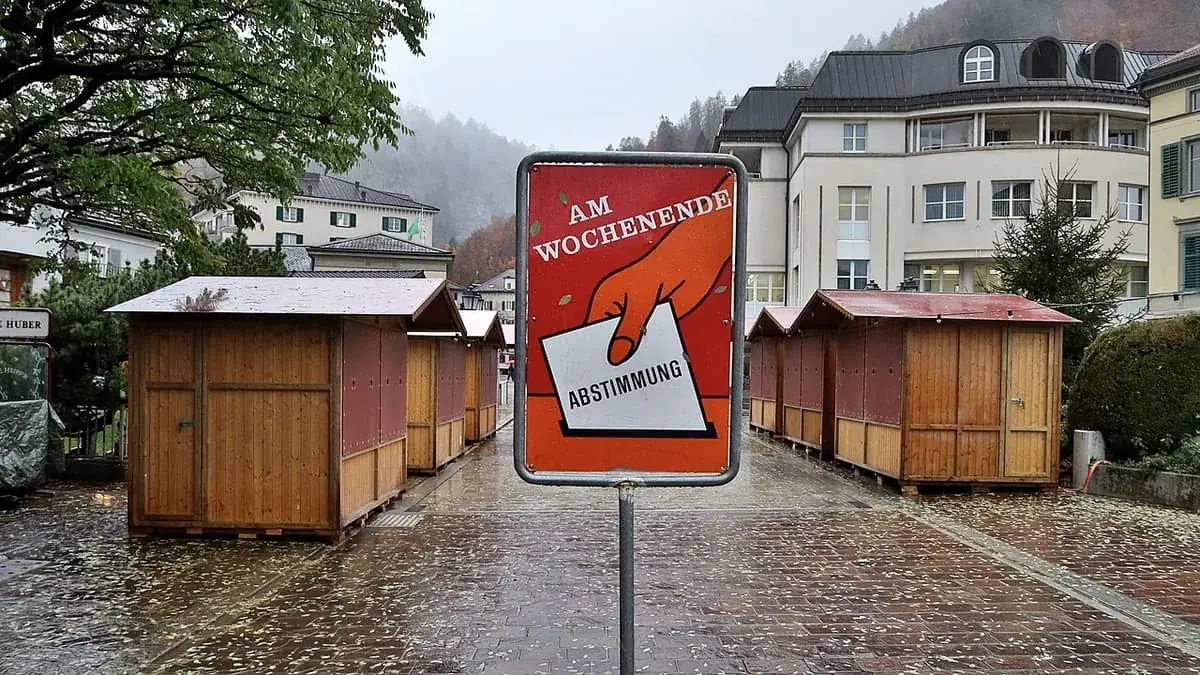
A committee proposes taxing plane tickets to support public transport in Switzerland, with a minimum contribution of 30 francs.
Context
In brief
- Minimum tax of 30 francs per airline ticket
- Expected revenue: 1.5 billion francs per year
- Two-thirds of funds in public transport vouchers
Key facts
- What: Initiative to tax airline tickets
- When: Launched on October 15, 2024
- Where: Switzerland, with direct impact in Ticino
- Who: Comitato actif-trafiC
- Amount: 1.5 billion francs per year
- Goal: Support public transport
A committee aims to increase the cost of airline tickets to support passenger rail transport in Switzerland. The initiative, launched on Tuesday, provides for a minimum contribution of 30 francs per airline ticket, proportional to the distance and class of flight. According to the committee, the expected revenue from this tax amounts to approximately 1.5 billion francs per year. At least two-thirds of this amount will be paid to the population in the form of vouchers for public transport. The rest of the revenue will allow the development of rail links to neighboring countries.
Martine Docourt, National Councilor (PS/NE), emphasizes that the initiative will bring financial benefits to approximately 90% of the population. The vast majority of the population will receive more money in vouchers than they will spend in taxes.
Implications for cross-border workers
Cross-border workers who frequently travel by plane could be affected by this tax. However, the vouchers for public transport could compensate for the additional costs, making train travel more convenient for commuters.
…
Operational details
The initiative aims to make public transport more accessible and attractive, especially for cross-border commuters who cross the Italian-Swiss border. Public transport vouchers could be used for train travel both in Switzerland and neighboring countries, thus facilitating cross-border mobility. For example, a cross-border worker who travels daily from Varese to Lugano could benefit from a voucher worth 500 Swiss francs per year, significantly reducing travel costs.
Comparison with the current situation
Currently, cross-border workers who use the plane for frequent travel could benefit from public transport vouchers, reducing travel costs. However, it is important to consider that the introduction of a tax on airline tickets, scheduled for 2025, could increase costs for those who frequently travel by plane. For example, a flight from Milan to Zurich could see an increase of approximately 20 Swiss francs per leg.
Future Scenarios
If the initiative is approved, cross-border workers could see an increase in air travel costs, but also an improvement in railway services. This could make the train a more convenient and attractive option for commuters crossing the border. For example, a train journey from Bellinzona to Locarno could become more affordable thanks to the vouchers, with an estimated 30% savings on tickets.
Comparison between plane and train
| Aspect | Plane | Train |
|---|---|---|
| Cost | Potentially higher with the tax | Potentially lower with the vouchers |
| Travel time | Faster for long distances | Slower but comfortable for short distances |
| Comfort | Limited for cross-border workers | Greater for commuters |
…
Key points
Tax on planes to finance trains: the initiative in Ticino
For cross-border workers who want to take advantage of public transport vouchers, it is crucial to monitor the evolution of the popular initiative 'For public transport, not for private planes', submitted in Ticino in 2023. If the initiative is approved, cross-border workers could benefit from an improvement in railway services and a reduction in travel costs. Currently, the tax on airline tickets is set at 10% of the ticket price, with a minimum amount of 30 CHF and a maximum of 100 CHF. The proceeds, estimated at around 5 million CHF per year, would be used to enhance regional lines, such as Lugano-Ponte Tresa or Bellinzona-Luino.
Concrete steps
1. Inform yourself: Monitor the news on the approval of the initiative, consulting the website of the Ticino Grand Council or local sources such as the Corriere del Ticino. 2. Plan: Consider using the train for frequent trips between towns such as Chiasso and Como, or Lugano and Varese. For example, a plane ticket from Milan to Zurich costs around 150 CHF, subject to a tax of 30 CHF. With this tax, you could get a 30% voucher for public transport, reducing the cost of a monthly subscription from Chiasso to Zurich from 300 CHF to 210 CHF. 3. Use the vouchers: Buy airline tickets subject to the tax to receive vouchers for public transport. For example, a flight from Lugano to Geneva costs around 200 CHF, with a tax of 30 CHF. This voucher could cover 30% of a monthly subscription for the Lugano-Bellinzona line, reducing the cost from 200 CHF to 140 CHF. 4. Save: Use the vouchers for train trips in Switzerland and neighboring countries. For example, a 30 CHF voucher could cover 50% of a single ticket from Lugano to Milan, reducing the cost from 60 CHF to 30 CHF.
…
Frequently Asked Questions
- What is the minimum amount of the air ticket tax?
- The proposed minimum tax is 30 francs per air ticket, proportional to the distance and class of flight.
- How will the funds collected from the tax be used?
- At least two-thirds of the funds will be distributed as vouchers for public transport, while the rest will be used to develop rail connections to neighboring countries.
- Who will benefit from the initiative?
- Around 90% of the Swiss population will benefit from the initiative, receiving more money in vouchers than they will spend on taxes.
Related articles
- All articles: Transport and traffic
- Iniziativa tassa aerei: 1,5 miliardi per treni e buoni mobilità
- No a tasse su biglietti aerei e kerosene in Ticino
- Ticino-Lombardia: più treni e bus transfrontalieri
- Di più E se a finanziare i treni fossero coloro che prendono l'aereo?
- Nuova tassa sui frontalieri: 3% in più per finanziare gli