Unions launch referendum against minimum wage reform
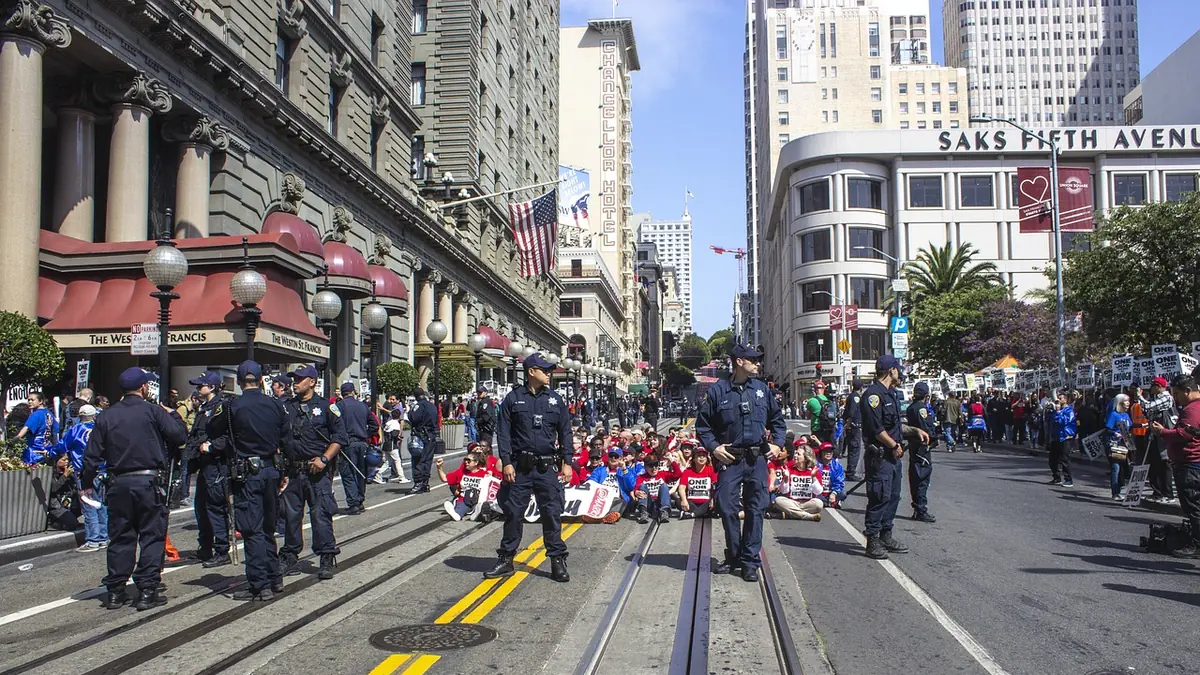
Minimum wage reform passed by Parliament would expose low-wage workers and women to risks
Context
In short, trade unions and left-wing parties are launching referendums against the minimum wage reform, approved by Parliament, which would expose low-wage workers and women to risk.
Key facts
The minimum wage reform, passed during the summer session of Parliament, allows collective agreements to take precedence over cantonal minimum wage laws. Unions argue that this reform would expose low-wage workers and women to risk. The reform, which has seen support from some centre-right political parties, has been criticised for not guaranteeing a sufficiently high minimum wage to cover workers' basic needs.
Concrete examples and real numbers
The reform plans to increase the national minimum wage from 1 January 2024. Currently, the federal minimum wage is 2,500 Swiss francs (CHF) per month, while some regions such as Canton Ticino and Canton Valais offer higher minimum wages. The reform aims to unite these different levels, but unions and left-wing parties argue that this could lead to a reduction in the minimum wage in some regions.
References to Swiss cantons or cities
The Canton of Ticino, known for its well-established collective agreements, has a minimum wage of CHF 2,600 per month. The Canton of Valais, on the other hand, has a minimum wage of CHF 2,700. The reform could lead to a uniform level of national minimum wage, but
Operational details
The minimum wage reform approved by the Swiss Parliament has aroused strong opposition from trade unions and left-wing parties. The reform, which provides for the precedence of collective agreements over cantonal minimum wage laws, has been seen as a threat to the rights of low-income workers and women, who could be exposed to significant economic risks.
Comparing Practical Scenarios To better understand the impact of the reform, it is useful to compare two practical scenarios. Consider the Canton of Ticino, where the minimum wage is around CHF 2,500. If the reform is passed, local collective agreements could establish a lower minimum wage, endangering low-wage workers. For example, a collective agreement could establish a minimum wage of 2,000 francs, significantly reducing workers' income. In contrast, the Canton of Vaud has a minimum wage of about 3,000francs. If the reform is passed, local collective agreements could set a minimum wage of CHF 3,500, improving workers' economic conditions. However, this scenario could lead to greater wage pressure, especially in sectors such as tourism and manufacturing, where wages are already high.
Concrete Examples and Real Numbers A concrete example is the Canton of Geneva, where the minimum wage is about 4,000francs. If the reform comes
Useful tools to protect your net income
To reduce FX leakage, compare CHF-EUR exchange options and banks for cross-border workers.
Key points
Trade unions launch referendum against minimum wage reform To avoid exposing low-wage workers and women to risk, it is important that Swiss citizens abstain from voting or vote against the reform. Moreover, it is important that trade unions and left-wing parties continue to fight for workers' rights. For information on the reform and the referendum, please visit the website of the Swiss Parliament. The proposed reform concerns the integration of minimum wages according to regions. Currently, the national minimum wage is CHF 2,000 per month, but the reform plans to increase this to CHF2,500 per month. This increase was discussed and approved by the Federal Council in 2023, but is still subject to popular referendum. Concrete examples of this reform are evident in the Canton of Ticino, where the current minimum wage is CHF 2,100, and in the Canton of Valais, where it is CHF2,200. If the reform is approved, these values will increase to CHF 2,600 and CHF2,700 respectively. This increase could have a significant impact on workers' lives, especially in rural and less developed areas. Trade unions and left-wing parties launched a referendum against this reform, arguing that raising minimum wages could lead to greater economic pressure and reduced employment. In addition, they criticize the reform for not being sufficiently inclusive,
For a precise net salary calculation, use our tax comparator: compare take-home pay between G and B permits with all 2026 deductions.
Source: lenews.ch
Frequently Asked Questions
- Why did trade unions and left-wing parties launch a referendum against minimum wage reform?
- Trade unions and left-wing parties have launched a referendum against minimum wage reform because they argue that the reform would expose low-wage workers and women to risk.
- What will happen if the minimum wage reform is passed?
- If the minimum wage reform is passed, the cantonal minimum wage laws would be less effective and low-wage workers and women would be exposed to risks.
- How can I help avoid exposing low-income workers and women to risk?
- You can help avoid exposing low-income workers and women to risk by abstaining from the vote or voting against reform.
Related articles
- All articles: Agreements and politics
- Referendum contro i salari minimi in Svizzera
- Disoccupazione dei frontalieri: cosa cambia con la riforma UE
- La riforma UE può costare caro alla Svizzera
- Riforma Ue sui frontalieri disoccupati, per la Svizzera costi fino a un miliardo
- Frontalieri disoccupati: l'indennità da 900 milioni a carico della Svizzera