Bilaterali III, first green light for 3,48 billion in credits
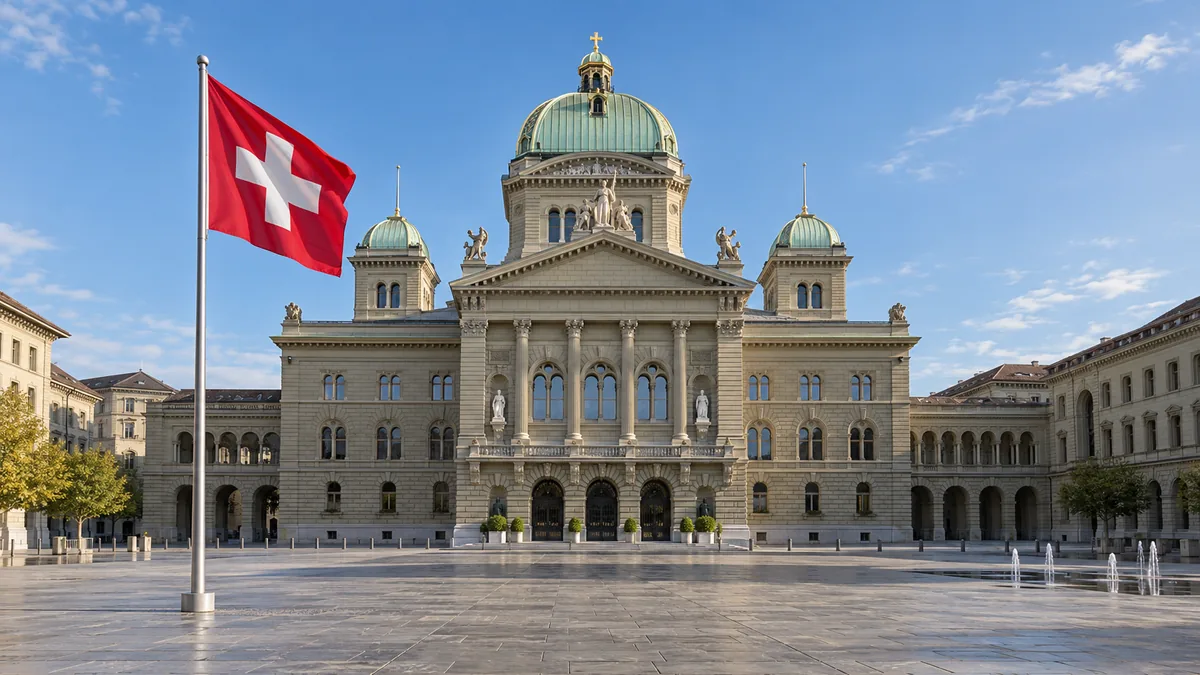
3.48 billion francs for the period 2030-2036 The FK-N votes: 14 in favor, 8 against, 3 abstentions The National Council should examine the dossier in December
Context
TL;DR
- 3,48 billion francs for the 2030-2036 period
- The FK-N votes: 14 in favor, 8 against, 3 abstentions
- The National Council is expected to examine the dossier in December
Key facts
- Amount → approximately 3,48 billion francs
- Period → 2030-2036
- Vote → 14 in favor, 8 against, 3 abstentions
- Appropriations → cohesion, migration and one-off contribution
- Program → Erasmus+
- Reviews → 13 requests
The Finance Committee of the National Council, meeting in Bern, supported by a large majority the commitment appropriations related to the so-called Bilaterals III, which total approximately 3,48 billion francs for the period 2030-2036. The vote recorded 14 in favor, 8 against and 3 abstentions.
With this vote, the committee reaffirms the course taken by the Federal Council and the Council of States. According to the majority, from a financial standpoint, the agreements with Brussels offer benefits that far outweigh the costs. The package includes the cohesion contribution, a commitment credit earmarked for migration and an additional one-off financial contribution for the cohesion sector.
The next parliamentary step
The Finance Committee has set out its position in a supplementary report addressed to the Foreign Affairs Committee of the National Council, known by the acronym APK-N. The latter will examine the dossier for the first time the following week. The Parliamentary Services made the position public on Friday.
This step does not bring the debate to a close. The package is in fact described as complex and controversial, while the Finance Committee has already identified issues that require further review.
The Erasmus+ chapter
The credit for the European exchange and training program Erasmus+ received even broader support. The committee majority considers Switzerland’s participation essential to prevent the country’s isolation in the fields of education and research.
The outstanding reviews
The Finance Committee approved 13 requests for review and tasked the administration with drafting additional reports for the meeting scheduled for mid-November. The National Council is expected to examine the package of agreements with the EU during the December winter session.
Operational details
The meaning of the vote
The Finance Committee's green light should be read as a favorable step in the parliamentary process, not as the conclusion of the procedure. The same source indicates that questions remain open, that the administration must produce further reports and that the National Council is expected to discuss the package only during the December winter session.
To understand what was assessed, it is useful to distinguish the individual financial components:
| Item | Interpretation of the step |
|---|---|
| Cohesion contribution | One of the allocations provided for in the package |
| Migration credit | One of the financial items supported by the committee |
| Supplementary contribution | A one-off payment in the cohesion sector |
| Erasmus+ | A credit supported particularly emphatically |
This distinction avoids treating the 3,48 billion as a single, undifferentiated item. The figure indicated by the source covers the 2030-2036 period and concerns the financial commitments linked to the package of agreements between Switzerland and the European Union. The news does not, however, describe an individual procedure, an application or a requirement addressed to individual citizens.
What remains to be clarified
The 13 requests for verification are the central point of uncertainty. The source does not specify the content of each request and does not assign them a precise effect on the credits. It does indicate, however, that the administration will have to prepare further reports for the mid-November session. Those documents will therefore provide new elements before the matter goes to the National Council.
The timetable makes it possible to distinguish three moments: the opinion of the Finance Committee, the initial consideration by the Foreign Policy Committee and the subsequent debate in plenary during the winter session. Until these steps have been completed, the source does not allow the outcome of the dossier to be anticipated.
A specific signal for Erasmus+
Erasmus+ represents the chapter with the strongest support. The rationale given by the majority concerns education and research: Swiss participation is considered necessary to prevent the country from becoming isolated in these sectors. This is a political assessment distinct from the other financial items, even though it falls within the same package of agreements.
Key points
How to follow the dossier
To correctly follow the next developments, the starting point is the parliamentary sequence already indicated in the source. There is no need to turn the first vote into a definitive result: it is advisable to follow separately the reviews, the report intended for the Foreign Policy Committee and the future consideration by the National Council.
The sequence to note
- Record the opinion of the Finance Committee: it is favorable, with 14 votes in favor, 8 against and 3 abstentions.
- Keep the items separate: cohesion, migration and the one-off supplementary contribution.
- Look for the additional reports prepared by the administration for the mid-November session.
- Follow the first consideration by the Foreign Policy Committee of the National Council.
- Await the package's passage during the December winter session.
These steps help avoid confusing support expressed in committee with a conclusive decision on the package. The source in fact speaks of a first positive signal, but also specifies that the debate remains open and that the dossier is complex and controversial.
How to read the next documents
In the supplementary report intended for the Foreign Policy Committee, the element to verify will be the follow-up given to the 13 requests accepted by the Finance Committee. The provided text does not indicate their content, so it is not possible to link each request to a specific change in the appropriations.
The same caution applies to the schedule. The mid-November session is indicated as the time to prepare additional reports, while the December winter session is when the National Council is expected to address the package. The source does not provide an outcome already decided for either of the two steps.
For the national public, the operational point is therefore to follow the dossier's development through these stages and keep the Erasmus+ chapter distinct, strongly supported because of its link to education and research, from the other financial components of Bilaterals III.
Source: tio.ch
Frequently Asked Questions
- What is the total amount of the approved credits?
- The total amount of the credits approved by the Finance Committee of the National Council is approximately 3,48 billion francs, intended for the period 2030-2036.
- Which areas are covered by the credits?
- The credits cover the cohesion contribution, the commitment credit for migration and a one-off additional financial contribution in the area of cohesion, as well as the Erasmus+ program.
- What is the next parliamentary step?
- The next parliamentary step is for the National Council’s Foreign Affairs Committee to examine the dossier, followed by discussion in the chamber during the December winter session.
Related articles
- All articles: Agreements and politics
- Quattro miliardi per non far mancare la luce
- La Svizzera dovrebbe investire quattro miliardi per prevenire una penuria di elettricità
- BNS: distribuzione fino a sei miliardi annui
- Svizzera investe 176 milioni nel fondo globale
- Camere svizzere: Olimpiadi, bilaterali, asilo e navi