Banking supervision in Switzerland: history, scandals and reforms (cross-border guide)
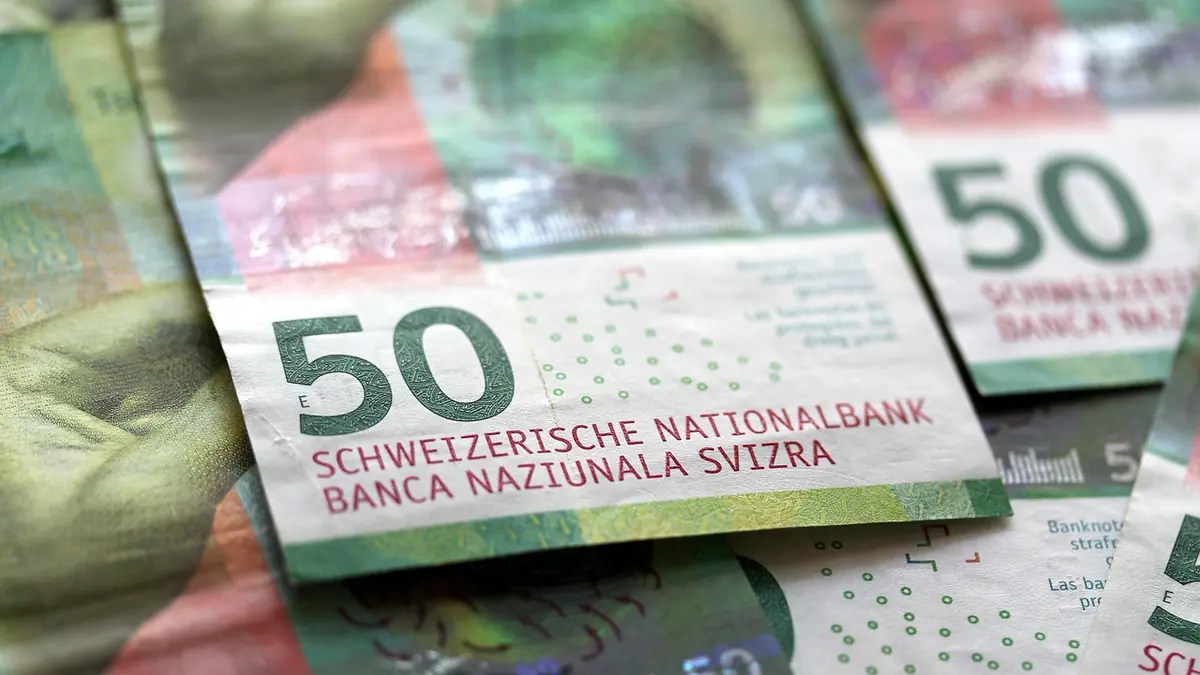
From the 1935 law to the Credit Suisse case: historical analysis of Swiss banking supervision and the new challenges for Finma between scandals and reforms.
Context
In a nutshell
- The banking law came into force on 1 March 1935.
- On 4 June 1965 the Federal Council dismissed Max Hommel from the CFB.
- 73% of voters rejected a regulatory initiative in 1984.
Key facts
- What: Evolution of banking supervision and financial scandals.
- When: From 1935 to the present, with a focus on 1965, 1977 and 1984.
- Where: Switzerland, with international impact.
- Who: CFB, Finma, BNS, SBS, UBS.
- Amount: 3 billion francs of support in 1977.
The history of Swiss banking supervision is a tormented one, marked by a constant tension between the need for strict controls and the influence of the financial lobby. The regulatory framework took its first steps after the economic crisis of the 1930s, driven by the bankruptcy of the Banque de Genève in 1931 and the difficulties of the Swiss People's Bank. On March 1, 1935, the Federal Law on Banks and Savings Banks came into force, giving rise to the Federal Commission of Banks (CFB), an independent body in charge of monitoring the liquidity and own funds of institutions.
The first institutional scandals
Trust in the supervisory authority was put to the test as early as the 1960s. On 4 June 1965, the Federal Council decided to dismiss Max Hommel, President of the CFB, with immediate effect. The accusation was serious: Hommel had provided paid advice to companies linked to the Spanish financier Julio Muñoz, involved in the
Operational details
Swiss regulatory developments have often encountered considerable internal resistance, reflecting a political culture that has long debated the appropriateness of stringent state regulation. An emblematic example of this opposition was recorded in May 1984, when a popular initiative aimed at imposing stricter controls on the sector was rejected by the electoral body with 73% of "no" votes. This result has consolidated, for decades, an approach based on self-regulation or targeted interventions only in cases of systemic emergency, rather than on constant proactive and sanctioning supervision.
The comparison between past and present
The current parliamentary debate on the new competences to be attributed to Finma proposes the same historical fractures. While the government intends to endow the authority with modern powers, such as the power to impose fines and to make public the name of defaulted institutions, Parliament shows a prudence that has its roots in 1916, the year in which the first bill remained stuck in the drawers for almost twentyyears. The fundamental difference today lies in the overall weight of the Swiss financial centre. If in the past the Trujillo banking scandal or the 1977 crisis were matters managed internally with discretion, the collapse of Credit Suisse has highlighted how the absence of immediate pressure tools prevents Finma from acting with the necessary timeliness.
Useful planning tools
To estimate your pension strategy, use the pension planner and the pillar 3 simulator.
Key points
For those who work or live in Switzerland, understanding the dynamics of banking supervision is not just an exercise in economic history, but a way to assess the stability of one's savings and the pension system. Swiss banks, operating in an evolving supervision context, remain the pillars of savings management, including funds linked to the second pillar (LPP) or the third pillar 3a. The stability of the system, guaranteed ultimately by BNS and the State, is the prerequisite for the security of retail deposits.
For a precise net salary calculation, use our tax comparator: compare take-home pay between G and B permits with all 2026 deductions.
Source: swissinfo.ch
Frequently Asked Questions
- What are the new skills planned for Finma?
- The government plans to endow Finma with more incisive powers, including the power to impose fines on failing banks and the ability to make the names of sanctioned institutions public. The objective is to fill the gaps highlighted during the Credit Suisse crisis, allowing timely intervention.
- What happened in 1977 with Credit Suisse?
- On 26 April 1977, the Swiss National Bank (SNB), in collaboration with UBS and SBS, intervened to rescue Credit Suisse with financial support of up to CHF 3 billion. The event led to the creation of the Convention on the Due Diligence of Banks (CBD).
- How is the Swiss saver protected in the event of a banking crisis?
- Deposit protection in Switzerland guarantees accounts up to CHF 100,000 per customer in the event of bank failure. It is important to verify that the institution is authorised by Finma and to monitor its financial position through official channels.
Related articles
- All articles: Agreements and politics
- Vigilanza banche Svizzera: nuovi poteri Finma
- La BNS e la Finma accolgono favorevolmente le nuove misure del Consiglio federale sulle banche
- UE avvia la vigilanza sull'AI Act, controlli e trasparenza per i chatbot e i deepfakes
- Aprire conto bancario svizzero da frontaliere
- La Finma lancia l'allarme: 'cyberattacchi in aumento, IA è un rischio'