2026 Nobel Prize in Economics: Hall and Woodford awarded
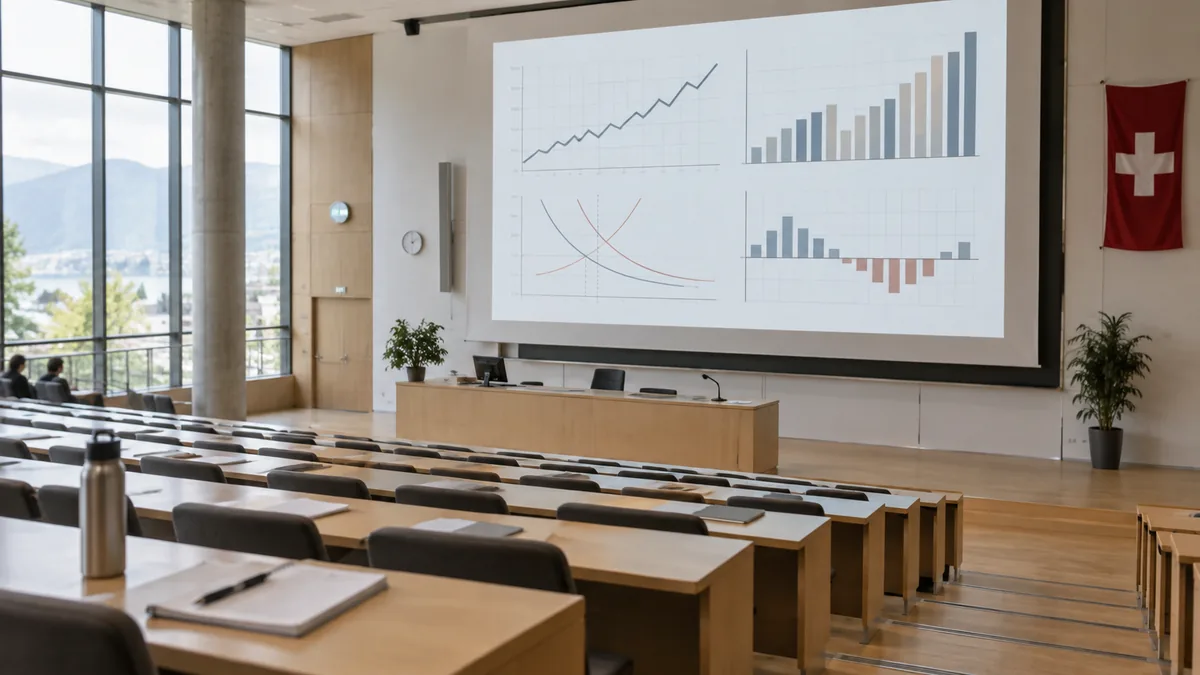
Robert E. Hall and Michael Woodford win the 2026 Nobel Prize The two teach at Stanford and Columbia University The studies concern stabilization
Context
TL;DR
- Robert E. Hall and Michael Woodford win the 2026 Nobel Prize
- Both teach at Stanford and Columbia University
- Their studies concern macroeconomic stabilization
- Ernst Fehr does not receive the prize
Key facts
- Prize → 2026 Nobel Prize in Economics
- Winners → Robert E. Hall and Michael Woodford
- Academic affiliations → Stanford and Columbia University
- Citation → Microeconomic foundations of macroeconomic stabilization
- Presentation → December 10
- Institution → Royal Bank of Sweden, 1968
The 2026 Nobel Prize in Economics was awarded on Monday to Robert E. Hall and Michael Woodford, both American professors: the former teaches at Stanford, the latter at Columbia University. The award recognizes their studies on the microeconomic foundations of macroeconomic stabilization.
The committee of the Swedish Academy explained that the models developed by the two economists have improved the ability to implement effective stabilization policies. The stated aim is twofold: to counter economic crises and keep inflation under control.
The committee’s rationale
The research focuses on how firms and households respond to government measures and monetary policy interventions. According to the committee’s explanation, expectations about the future can mean that even the mere announcement of a measure by governments or central banks influences economic behavior. For the committee, therefore, policy transmission also depends on the reaction of these actors, not only on the formal content of a decision.
The Swiss figure in the story is Ernst Fehr, a Swiss and Austrian citizen, a professor at the University of Zurich and considered a leading figure in behavioral economics. His studies have helped temper the image of “homo economicus,” conceived as an individual driven solely by self-interest. Considered among the candidates for many years, Fehr was once again left empty-handed.
In 2025, Joel Mokyr received half of the award, while Philippe Aghion and Peter Howitt each received a quarter. The prize recognized their work on the role of innovation as a driver of economic growth, with a rationale distinct from the one chosen for 2026.
The economics prize closes the series; its presentation also takes place on December 10, the anniversary of Alfred Nobel’s death. However, it is not part of the original Nobel Prizes: it was established by the Royal Bank of Sweden in 1968, on the occasion of its three-hundredth anniversary.
Operational details
What the research focuses on
For a reader following the Swiss economy, the practical value of the news lies in how to read public announcements. The source does not describe a new measure, but shows why a state decision or a monetary policy choice can also be assessed through the expectations it generates before its effects are felt.
The mechanism indicated by the committee can be summarized as follows:
| Point to observe | Reading offered by the source |
|---|---|
| Announcement | Even a communication can influence economic behavior |
| Expectations | Expectations concern what companies and households anticipate for the future |
| Subjects | The reaction concerns businesses and families |
| Objectives | Stabilize the economy, counter crises and control inflation |
The distinction is useful because it separates the content of a measure from the response that measure may elicit. The source does not indicate the direction of every reaction and does not claim that an announcement always produces the same result. Instead, it says that expectations are part of how economic policy works. Therefore, when assessing news about inflation, it is not enough to look for the intervention already adopted: the message directed toward the future must also be considered.
For the Swiss public, the same caution applies when encountering references to BNS/SNB, the Federal Council or the Cantons. The source speaks of central banks and governments in general terms, not of these institutions. It does not even mention SECO or UST/BFS and does not provide data on the cost of living. Using these names to attribute concrete effects to a national measure would add information extraneous to the text.
The case of Ernst Fehr, on the other hand, offers an explicit and verifiable Swiss connection. The source presents him as a professor at the University of Zurich and as a prominent behavioral economist, but specifies that he did not receive the prize. The news therefore makes it possible to talk about his presence in the academic context described, not about a Swiss economic decision linked to the Nobel.
Key points
A four-step check
To report the news correctly without turning it into an announcement of economic policy, one can follow a simple sequence.
1. Separate the recognition from the measure. The text concerns the awarding of the 2026 Nobel Prize in Economics to two professors, not the adoption of a new policy by a government or a central bank.
2. Check the recipients. The names are Robert E. Hall and Michael Woodford; the respective institutions listed are Stanford and Columbia University. These elements identify the prize and prevent it from being confused with an award given to Ernst Fehr.
3. Read the full citation. The reference is to the microeconomic foundations of macroeconomic stabilization. The committee’s explanation refers to economic crises, inflation, state intervention, monetary policy, and expectations for the future. These are the concepts to retain in the report.
4. Distinguish the calendar from the institution. The prize is presented on December 10, like the other awards in the series, but the source specifies that the economics prize is not among the original Nobels. Its establishment dates back to 1968, at the initiative of the Royal Bank of Sweden.
The final check concerns what must not be added. The news does not contain amounts, tax rates, tax deadlines, guidance for companies or households, or decisions concerning a canton. It therefore does not justify presenting the prize result as an immediate change for people living or working in Switzerland.
The sequence of the other awards should also be used only to orient the reader. The previous week, the winners in medicine, physics, chemistry, literature, and peace had been announced. In 2025, by contrast, the economics prize had gone to Joel Mokyr, Philippe Aghion, and Peter Howitt for their studies on the role of innovation in growth. These references clarify the chronology but do not alter the rationale for the 2026 Nobel Prize.
Source: rsi.ch
Frequently Asked Questions
- Who was awarded the 2026 Nobel Prize in Economics?
- The 2026 Nobel Prize in Economics was awarded to Robert E. Hall and Michael Woodford, two American professors. Hall teaches at Stanford, while Woodford teaches at Columbia University. The committee of the Swedish Academy awarded them for studies on the microeconomic foundations of macroeconomic stabilization, linked to the ability to implement effective policies against crises and keep inflation under control.
- Why were Hall and Woodford awarded the prize?
- Their models improved the ability to implement effective stabilization policies. The committee linked the work to the responses of companies and households to government interventions and monetary policy. A central element is expectations for the future: according to the explanation provided, even the mere announcement of measures by governments and central banks can influence economic behavior.
- Did Ernst Fehr receive the 2026 Nobel Prize in Economics?
- No. Ernst Fehr, a Swiss and Austrian citizen and a professor at the University of Zurich, has gone without a prize this time as well. The source describes him as a leading figure in behavioral economics, also thanks to his contribution to relativizing the figure of homo economicus, guided solely by self-interest. Fehr had been considered one of the candidates for many years.
- Is the economics prize part of the original Nobel Prizes?
- No. Although it is awarded on the same days as the other awards and presented on December 10, the economics prize is not part of the original Nobel Prizes. It was established by the Royal Bank of Sweden in 1968, on the occasion of its 300th anniversary. The presentation takes place on the anniversary of Alfred Nobel's death.