Traffic in Switzerland: costs reach 117 billion (cross-border guide)
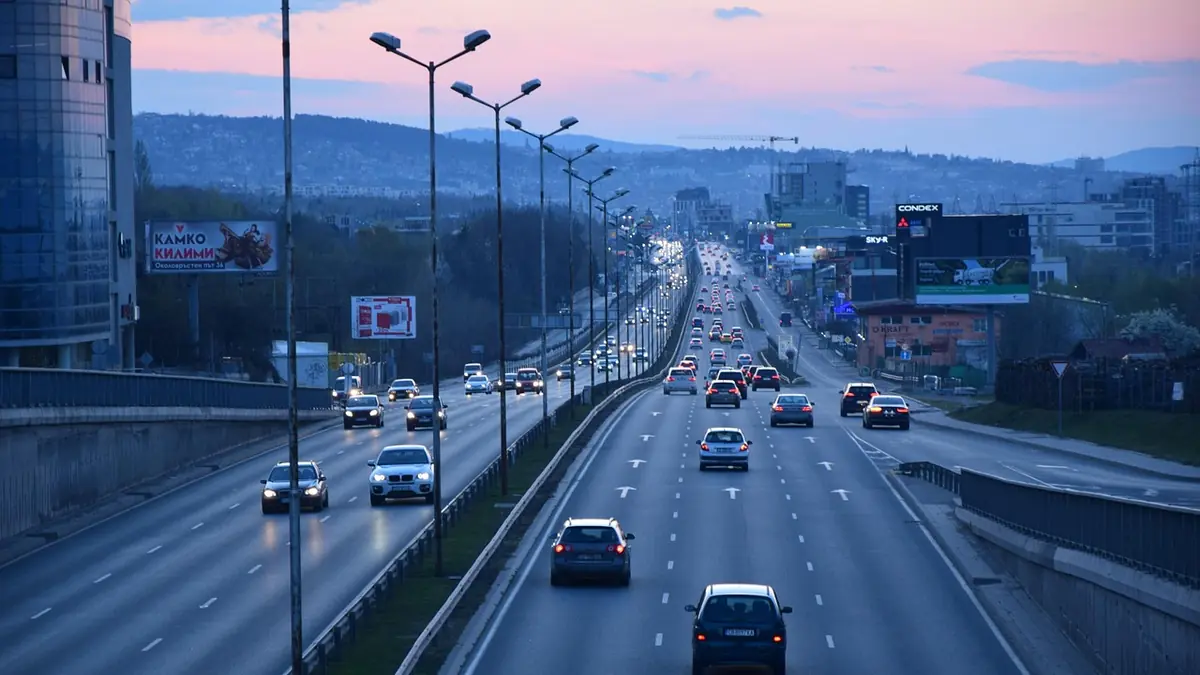
In 2023, traffic in Switzerland cost 117 billion francs. The car dominates with 68% of trips. Here is the data from the Federal Statistical Office.
Context
In a nutshell
- Total traffic costs in 2023: 117 billion francs.
- The car remains the dominant vehicle with 68% of passenger-kilometres.
- CO2 emissions from the transport sector have fallen by 16% since 2000.
- 77% of costs are generated by passenger traffic.
Key facts
- What: Statistical report on traffic costs and volumes.
- When: Data referring to 2023.
- Where: Switzerland.
- Who: Federal Statistical Office (BFS).
- Amount: 117 billion francs (total costs).
- Vehicle volume: 6.9 million motor vehicles.
Traffic in Switzerland, with a clear predominance of road transport, generated total costs of 117 billion francs in 2023. According to the latest report published by the Federal Statistical Office (BFS), the sector shows a constant growth trend in spending, increasing by 8% in the period between 2019 and 2023. The document analyzes in depth the composition of these costs, outlining a framework in which passenger transport accounts for 77%, while the remaining portion of 23% is attributable to freight transport.
The dominance of the car
The report confirms that the car remains the main means of transport for Swiss citizens. Since 2000, the volume of passenger traffic has grown by more than a quarter. In 2024, the car covered 68% of passengers per kilometre travelled, followed by the railway with 18%. At the same time, the vehicle fleet is
Operational details
Analyzing BFS data helps to better understand the dynamics that daily impact even border commuters who travel through the routes towards the Canton Ticino. Although the volume of passenger traffic is expanding, the transportation of goods sector has maintained relative stability over the last two decades, with a 63% share on the road and a 37% share on rail. It is interesting to note that, in contrast to a general increase in traffic, the number of trucks transiting through the Alps has decreased by a third compared to 2000, a figure that reflects a management of alpine transit in contrast to the internal growth.
Environmental impacts and safety Despite the increase in traffic volume, the report reveals a reduction of CO2 emissions from the transport sector by 16% since 2000. Despite this improvement, the sector remains responsible for 42% of Switzerland's total CO2 emissions and 38% of the country's energy consumption. These data are fundamental to understanding the challenges that companies and commuting workers will face in the coming years. The increase in road safety represents another positive development: the number of fatalities in road accidents has decreased dramatically since the 1970s. For those who use the arterial roads daily, such as the A2, the planning of movements becomes increasingly complex. With an average of 80 minutes spent in traffic by Swiss citizens (over 41 minutes dedicated to leisure time), the management of travel time becomes a real cost factor, not only economic but also of quality of life. To delve deeper into how to optimize mobility costs and manage one's budget, it is possible to consult the calculator dedicated to net income and tax planning.
…
Key points
The management of travel between Italy and Switzerland requires careful planning, especially in light of the increased costs of traffic described by the BFS. For a border worker, the cost of mobility does not only include direct fuel costs, but also the management of time and vehicle wear. Although the report indicates stability in freight transport, daily commuting remains strongly dependent on the car. The challenge for the future, given that the transport sector absorbs almost 40% of energy consumption, will be to balance travel needs with new environmental and road safety regulations.
First day as a cross-border worker? Our practical guide walks you from cantonal registration to your first paycheck.
Source: tvsvizzera.it
Frequently Asked Questions
- How much do passengers affect the total costs of traffic?
- According to the report of the Federal Statistical Office, passenger traffic is responsible for 77% of total costs, which reached 117 billion francs in 2023.
- What is the most used means of transport in Switzerland?
- The car remains the dominant means of transport. In 2024, it covered 68% of passengers per kilometre travelled, compared to 18% covered by rail.
- Have CO2 emissions increased with the volume of traffic?
- No, despite the high volume of traffic, CO2 emissions from the transport sector have fallen by 16% since 2000, while remaining a significant source of energy consumption.
Related articles
- All articles: Transport and traffic
- Leventina ostaggio del traffico: «A cosa serve la CUPRA se le auto invadono la cantonale?»
- FFS e Siemens: 116 nuovi treni per il Ticino
- A13 Cadenazzo: Lavori e impatto Frontalieri | Frontaliere
- Incidente sull'A2 riapre il dibattito sul traffico in Ticino
- Frontalieri in Ticino: flussi e mobilità verso Como e Varese