Switzerland-EU Agreement: Green Light from Brussels, What's Next?
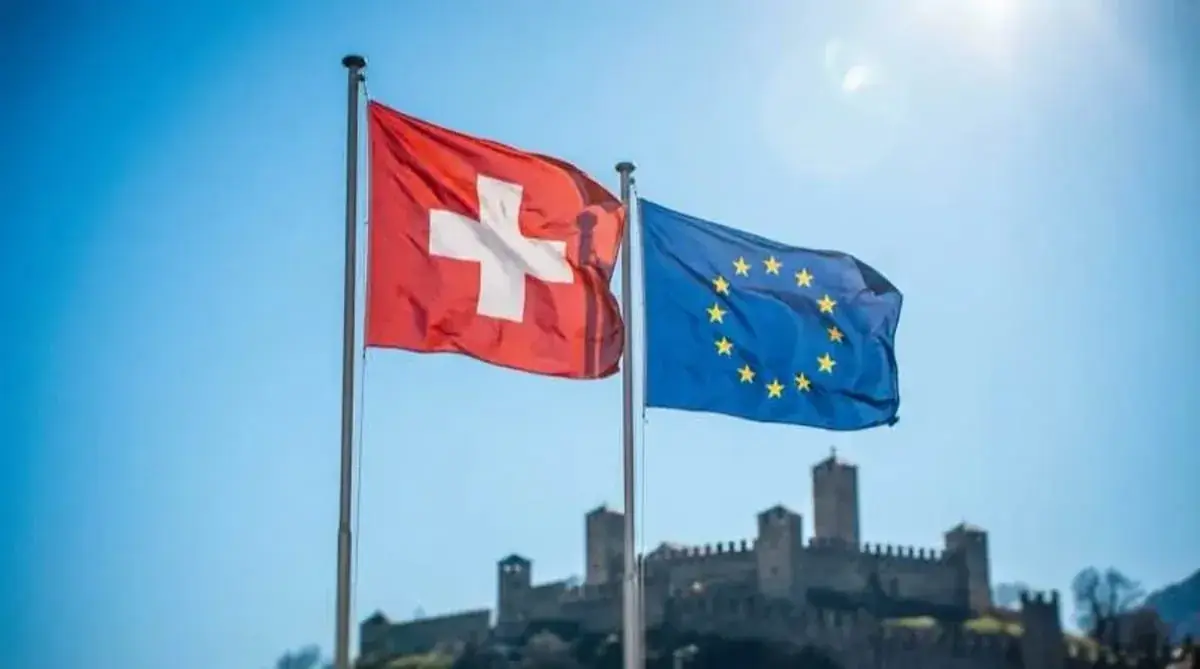
The EU Council approves the signing of the agreement package. The signature is approaching, but crucial issues for cross-border workers remain: free movement, wages, and Ticino's 'no'.
Context
TL;DR
- UE ok
- Accordo Svizzera
- Impatto frontalieri
Key facts
- Dove: Brussels e Bern
- Quando: prossime settimane
- Chi: Guy Parmelin e Ursula von der Leyen
- Cosa: Accordo bilaterale UE-Svizzera
- Importo: contributo finanziario svizzero all'UE
- Scadenza: referendum nel 2027
- Parti: UE, Svizzera, Ticino
Brussels has given the green light that could reshape the future of relations between Switzerland and the European Union, with a direct impact on the lives of thousands of cross-border workers in Ticino. On Tuesday morning, the EU Council gave its consent to the signing of the new, comprehensive package of bilateral agreements. A step described as "logical to strengthen our long-standing relations" by Marilena Raouna, Cypriot Deputy Minister for European Affairs. The official signing seems imminent: the President of the Swiss Confederation, Guy Parmelin, is expected in Brussels as early as next week to meet the President of the European Commission, Ursula von der Leyen, and seal the deal.
This package, often referred to as 'Bilaterals III', is not a mere formality. It comes after years of complex negotiations and aims to stabilize and modernize relations between Bern and Brussels. For the European Parliament, the agreement is indispensable, especially in the face of current geopolitical tensions. "Switzerland is an important partner. We share many values and interests, and it is in our mutual interest to cooperate, now more than ever," emphasized Jessica Rosenkranz, Swedish Minister for European Affairs. However, the path is far from over. The government's message will reach the Swiss Parliament in the coming weeks, kicking off what promises to be a heated debate.
Operational details
For the cross-border workers who cross the border at Brogeda, Ponte Tresa, or Gaggiolo every day, the details of this package are of vital importance. At the heart of it all is the update to the Agreement on the Free Movement of Persons (AFMP), the pillar that governs their employment status in Switzerland. But it is precisely here that the greatest concerns lie, especially in Ticino.
Key Points and Unknowns
The package includes a wide range of elements, including:
- Update of 4 existing agreements: Free movement of persons, air and land transport, conformity assessment.
- Three new agreements: Food safety, health, and electricity.
- Swiss financial contribution: A new agreement on a "fair and permanent" contribution from Switzerland to EU cohesion.
Despite a generally positive reception after the national consultation, the agreement overcame three major hurdles: the approval of the majority of the Cantons (which, however, does not include Ticino), the in-principle favor of farmers, and the support of the FDP party. The SVP remains firmly opposed, calling it a "treaty of submission." Ticino's reservations, shared by some trade unions, focus on hot-button issues: wage protection, immigration management, and the application of evolving European law in Switzerland. The fear is that too close an alignment with EU regulations could weaken the flanking measures that currently protect the local labor market from wage dumping.
Key points
The road to final ratification is still long and full of obstacles. After the parliamentary debate in Bern, the final say will almost certainly rest with the Swiss people, who are expected to vote on the issue in a referendum next year. The details, as always, will make the difference, and the political campaigns are expected to be fiery. For cross-border workers, a period of uncertainty is opening up, during which it is essential to monitor the evolution of the debate.
What to do now?
In this climate of potential change, financial planning becomes crucial. Discussions on wage protection and adaptation to European law could, in the future, have direct repercussions on working conditions and pay slips. Having a clear understanding of your current net salary and its components is the first step to facing any future scenario with awareness. To analyze your current situation and simulate any variations, tools like our net salary calculator become indispensable for an accurate and personal assessment.
Source: RSI, 24.02.2026
Frequently Asked Questions
- New EU‑Switzerland agreements: what changes for cross‑border commuters?
- The new package of bilateral agreements, pending signature, updates the free movement of persons treaty. This is crucial for cross‑border commuters, as it governs their employment status. Discussions focus on wage protection and the application of EU law in Switzerland, with possible impacts on pay slips.
- What are the key points of Bilaterals III for people working in Switzerland?
- Bilaterals III update existing accords such as free movement of persons and introduce new deals on health care and energy. For cross‑border commuters, the free‑movement update is essential, but there are concerns about wage protection and alignment with European law.
- Is there concern in Ticino about the new EU‑Switzerland agreements?
- Yes, especially in Ticino and among unions, there are doubts. The worries concern wage protection, immigration management and alignment with EU law. There is fear that a tight alignment could weaken measures against wage dumping.
- When will the new EU‑Switzerland agreements be finalised and what will happen?
- After signing, the agreement will go to the Swiss Parliament for debate. Afterwards, a popular referendum is likely. The ratification process is still lengthy and political campaigns are expected to be intense, directly affecting the uncertainty for cross‑border commuters.
- How can I financially prepare for the changes affecting Swiss‑Italian cross‑border commuters?
- It's important to understand your current net salary and its components. Discussions on wages and EU law could affect your employment conditions. Net‑salary calculators can help you simulate future scenarios and plan with awareness.
Related articles
- All articles: Agreements and politics
- Bruxelles dà il via libera: cosa cambia per chi lavora in Ticino?
- Accordi UE-Svizzera: Firma a un passo. Cosa cambia per te?
- Libera circolazione UE-Svizzera: effetti sull'economia elvetica
- Accordi Svizzera-UE: Impatti per il Ticino
- Telelavoro Frontalieri: L'Italia dice SÌ. Ecco le nuove regole