Slowdowns at the Gaggiolo border crossing after the new speed bump
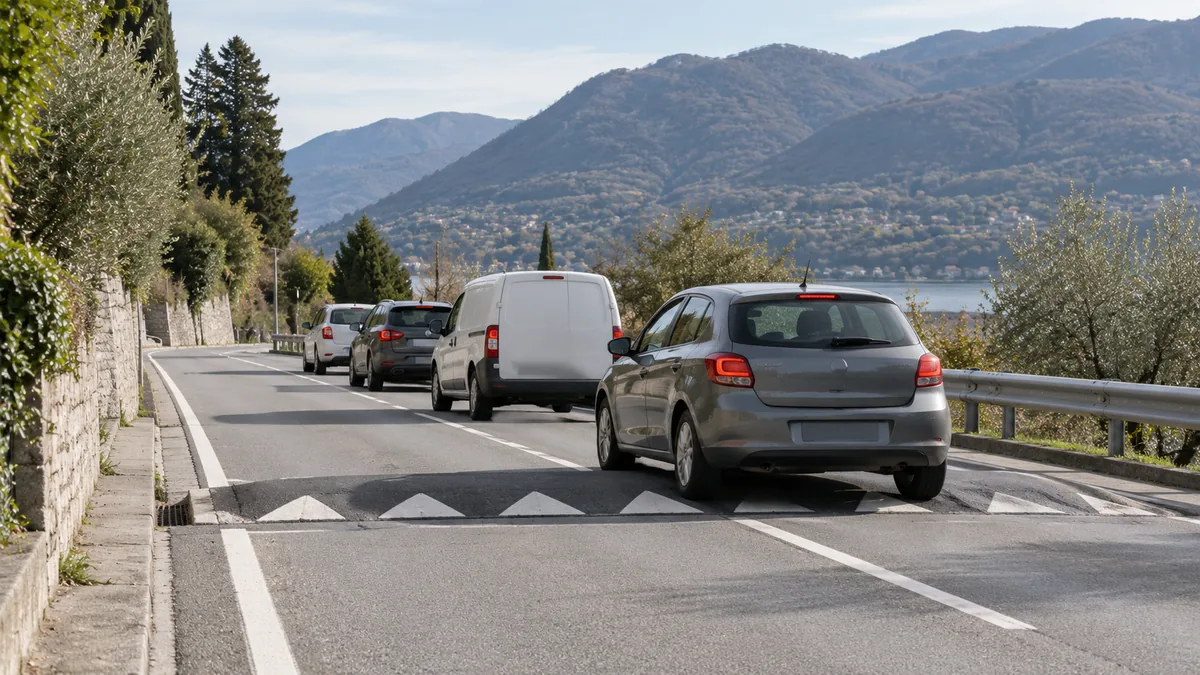
A new speed bump has been installed on the Swiss side Queues and delays at the Stabio-Gaggiolo border crossing Disruptions reported especially in the early morning hours
Context
TL;DR
- A new speed bump has been installed on the Swiss side
- Queues and delays at the Stabio-Gaggiolo border crossing
- Disruptions especially during the early morning hours
- Jolts also reported while crossing
Key facts
- Work: new speed bump
- Location: near the Stabio-Gaggiolo customs post
- Period: past few weeks
- Effects: slowdowns, long queues and jolts
- Traffic: commuters and heavy vehicles
The issue reported at the border
The new speed bump installed on the Swiss side of the Stabio-Gaggiolo border crossing is causing inconvenience for cross-border commuters who cross the border every day to go to work. The speed bump, installed near the customs post, has been followed in recent weeks by slowdowns and long queues, especially in the early morning hours.
The reference to the early morning hours indicates the period when the inconvenience is most noticeable. According to the description, this is the same time when commuter traffic is heaviest, and the crossing acts as a bottleneck.
The Italian-Swiss border crossing is described as a bottleneck for commuter traffic. The central point of the report is therefore operational: getting to work takes longer during periods of heavier traffic. The reader emphasizes that even a few extra minutes can translate into significant inconvenience for those who travel the route every day.
The queue is compounded by a different problem, related to how vehicles pass over the structure. A reader reports rather pronounced jolts while crossing, making the passage less easy.
“The passage over the speed bump is accompanied by rather pronounced jolts, making the crossing less easy.”
The request is to verify whether the structure is compatible with the characteristics of the road and with the crossing’s intense daily traffic, including the passage of heavy vehicles. No technical conclusion is formulated, but a concrete problem reported by those who cross the border to go to work is brought to attention. For the cross-border commuter, the new speed bump affects two aspects of the same crossing: the time needed to get through the border crossing and the smoothness of the passage. The reference to heavy vehicles extends the verification from a single vehicle to the entire daily flow, namely the commuter traffic that crosses the border every day.
Operational details
What changes for those who cross every day
The report highlights two consequences that the cross-border commuter experiences at the same point, but which should not be confused. The first is temporal: the new speed bump is associated with slowdowns and queues during periods of greatest traffic. The second is physical: crossing produces pronounced jolts. The inconvenience, therefore, is expressed not only as waiting, but also as the quality of the crossing.
| Aspect | Reported element |
|---|---|
| Timing | Slowdowns and long queues during peak hours |
| Moment | Early morning hours |
| Crossing | Pronounced jolts of the vehicles |
| Flow | Heavy commuter traffic, including the passage of heavy vehicles |
For those who use the border crossing to get to work, this distinction helps them correctly understand the situation. A queue makes the slowdown of the traffic flow visible; a jolt, on the other hand, describes the way the vehicle crosses that point. They are two different signs of the same problem reported after the speed bump was installed.
The practical comparison is between the period before installation and the past few weeks, that is, the period in which the report places the onset of queues, slowdowns, and jolts. This comparison does not require assigning a precise number to the route: it serves to keep travel time and the regularity of the crossing separate, both of which are mentioned by the reader.
Why the check concerns the entire border crossing
The request is not limited to asking whether the speed bump slows vehicles down. It asks to verify whether the structure is appropriate for the road and the traffic that travels along it every day. The reference to heavy vehicles broadens the point of observation: the proposed verification must consider commuter traffic as a whole, without stopping at a single crossing.
For the cross-border commuter, the practical issue is therefore twofold: reaching the border crossing during the hours when traffic is heaviest and getting over the speed bump without the jolts described. The report remains anchored to the report of the inconveniences and the request to check the adequacy of the structure.
Key points
A practical sequence for reading the problem
For a cross-border commuter crossing Stabio-Gaggiolo, the check can be organized around the four elements already indicated in the report. First: the location. The problem concerns the speed bump installed near the customs post, on the Swiss side of the crossing. Second: the time. The difficulties are reported mainly in the early morning hours and during rush hour. Third: the effect on travel times, with slowdowns and queues. Fourth: the effect on passage, with pronounced jolts.
This sequence avoids mixing different phenomena. A useful description must say whether the observed inconvenience is a queue, a slowdown, a jolt, or a combination of the three. These are the elements that emerge from the text and make it possible to represent the problem without turning a report into a definitive technical assessment.
What the inspection should verify
The reader's request also indicates the object of the inspection. It is not enough to observe the structure in the abstract: it must be considered in relation to the characteristics of the road, the heavy daily flow at the crossing, and the passage of heavy vehicles. The suitability of the speed bump must therefore be considered together with the place where it was installed and the traffic that passes over it.
For those who have to travel to work across the border, the practical criterion is to keep the two aspects separate: travel time during the busiest periods and the ease of passing over the speed bump. The report focuses attention on inspecting the structure. Following this approach means describing slowdowns, queues, and jolts without adding times, figures, or technical causes not contained in the text.
The point to bring to attention remains limited: the compatibility of the new traffic-calming device with the road and with the flow of traffic that uses the crossing every day. To learn more about the pattern of queues at the borders, consult storico del traffico e delle code ai valichi.
Source: varesenews.it
Frequently Asked Questions
- What inconveniences were reported by cross-border commuters after the speed bump was installed?
- Cross-border commuters have reported queues and slowdowns especially in the early morning hours, as well as pronounced jolts as vehicles pass. These inconveniences concern both travel time and the quality of the crossing, affecting commuters and heavy vehicles that use the crossing daily.
- When do the greatest slowdowns occur at the Stabio-Gaggiolo border crossing?
- The greatest slowdowns occur in the early morning hours, corresponding to the period of greatest commuter traffic. During this period, the crossing acts as a bottleneck, increasing the time needed to cross the border on the way to work.
- What is being asked to be checked regarding the new speed bump?
- It is requested to assess whether the structure is appropriate for the characteristics of the road and the daily traffic flow at the pass, also taking into account the passage of heavy vehicles. The objective is to ensure both consistent travel times during peak periods and passage without excessive jolts.