Faido, maintenance night: who cleans the tunnels
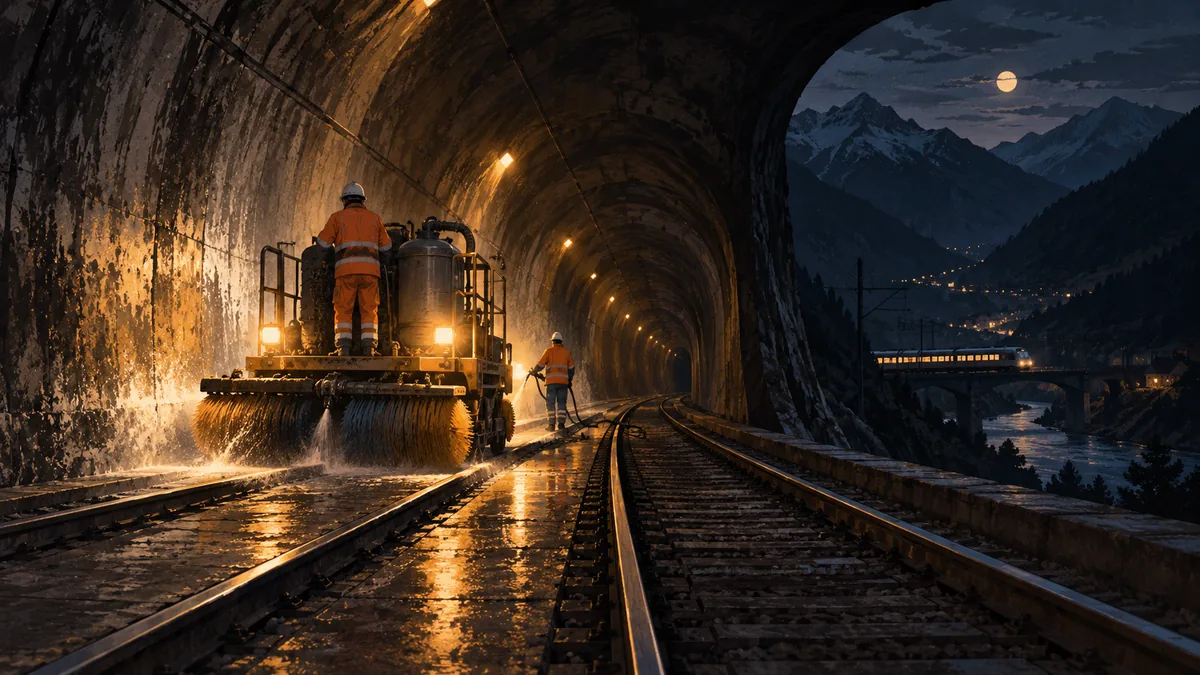
At Faido the crew prepares the closure around 18 Cones and electronic signs signal the reduction in speed Walls, asphalt and fans are cleaned
Context
TL;DR
- At Faido, the team prepares the closure around 18:00
- Cones and electronic signs signal the speed reduction
- Walls, asphalt, fans and billboards are cleaned
- At dawn, the cones are removed and the first cars set off again
Key facts
- Where Faido Alpine Maintenance → Center
- Chi → Misha and his team
- When → a hot summer evening, around 6
- → Safety and cleaning of roads and tunnels
The Invisibles series tells the hidden crafts that make a clean, illuminated and functioning city possible. The episode dedicated to safety and cleanliness in the gallery takes the audience to the night work of those who take care of streets and galleries. The work remains hidden until morning.
Around 6 pm, on a hot summer evening, Misha and his team find themselves at the alpine maintenance center in Faido. Vehicles are prepared for the operation that allows the highway to be closed and work to start when the roadway is clear.
Closing before maintenance
The closure is the most delicate step: the cars continue to pass without slowing down, while the men have to go down to the street to place the cones and install the electronic signs that indicate the reduction in speed. Misha observes that drivers have less and less patience and that, during these operations, it is not uncommon to be insulted.
Once the carriageway has been diverted, both north and south, the security agents are in position to monitor the construction site. The highway becomes empty, desolate, and Misha and his team can finally work safely.
The work proceeds in small groups: some workers wash the walls of the tunnels with trucks equipped with large brushes, others intervene on the asphalt with specific vehicles, while a third team uses the water lance to clean, one at a time, fans and billboards.
The closure also allows you to replace the lights, fix the guardrails and check the manholes. It's a dangerous business, but Misha is very proud of the galleries he runs and can even see from home. He and his companions all come from Upper Ticino, and taking care of that stretch of highway is a source of pride for them. At dawn the cones are removed, the first cars resume their path and no one knows what happened during the night.
Operational details
When the road becomes a work site
For a cross-border commuter traveling along the motorway during a similar closure, the scene to interpret is not merely a blocked-off lane. The source shows a precise sequence: first the workers enter the road, then cones and electronic signs appear, then the carriageway is diverted and officers monitor the area. Only afterward does traffic make way for the work.
From perception to operation
The most exposed moment comes precisely when the road is not yet empty. Cars continue to pass and the workers must place the equipment on the carriageway. The insults received while setting it up are part of the difficulty described by Misha, along with the danger of the work. The speed reduction indicated by the signs is therefore not an isolated detail: it accompanies the transition from traffic to the work site.
When the diversion is complete, the picture changes. Security officers monitor the work site while the teams divide up the tasks. The same closure is not for just one operation: walls are cleaned with large scrubbing brushes, asphalt with special vehicles, while fans and billboards are cleaned with a water lance. During the same window, the lights can also be changed, guardrails secured, and drains checked.
For those driving, this sequence explains why the motorway suddenly appears enormous and desolate. It is not designed for pedestrians, but during the night it becomes the workspace of people who normally remain invisible. The emptiness visible from the road coincides with the phase in which Misha and his team can move safely.
The link to the cross-border commuter therefore remains tied to the route and to interpreting the signs. If a similar closure becomes part of their driving experience, the first practical distinction is between the moment the equipment is put down, the monitored diversion, and the work carried out with the carriageway clear. To compare the perception of the journey with the information available, one can consult storico del traffico e delle code.
Recommended tools
For an updated estimate, use the net salary calculator and the CHF-EUR exchange comparator.
Useful tools to protect your net income
To reduce FX leakage, compare CHF-EUR exchange options and banks for cross-border workers.
Key points
The operating sequence
Five steps to recognize
The procedure described in the episode can be read as a concrete sequence. For drivers, recognizing the steps helps them understand what is happening on the road without confusing the installation of signage with the actual work.
First step: prepare the vehicles. Around 18:00, Misha and his team meet in Faido and prepare the vehicles that will be needed for the closure. It is the beginning of the night's work, before the motorway is made available to the crews.
Second step: close and signal. The men place the cones and install the electronic signs. In the scene described, their task consists of signaling the speed reduction while cars continue to pass. This is the most delicate point in the entire procedure.
Third step: divert the carriageway. The diversion takes place both northbound and southbound. Security officers position themselves to monitor the worksite. From this point, the road can be cleared and the team can work safely.
Fourth step: distribute the work. Small teams wash the walls, work on the asphalt, and clean fans and signs. The closure is also used to change the lights, secure the guardrails, and inspect the manholes. The procedure therefore does not concern a single surface, but several elements of the tunnel and the road.
Fifth step: remove the cones. At dawn, when the cones are removed, the first cars begin moving again. For the driver, this is the final signal of the maintenance night described by the source.
A cross-border worker facing a similar situation can use this sequence as a visual map: signs and cones indicate the initial phase, the diverted carriageway signals that the worksite is under control, and the empty motorway coincides with the crews' work. To better organize expenses related to travel, costo auto pendolare is also available.
The account shows the work that remains hidden when the road returns to normal. For those who work across the border and want to complement their mobility with a check of their payslip, use calcolatore stipendio.
Source: rsi.ch
Frequently Asked Questions
- Where does Misha's work night start?
- Misha and his team meet at around 6 pm, on a hot summer evening, at the alpine maintenance centre in Faido. They prepare the vehicles that will be used to close the highway and allow the work of the teams. The team is composed of people from Upper Ticino, and Misha proudly lives the care of the part of the highway entrusted to the team.
- What work is done during the closure?
- The team is divided into small teams. Some wash the walls of the tunnels with trucks equipped with toothbrushes, others work on the asphalt with special vehicles. Another activity uses the water lance to clean, one at a time, fans and billboards. The closure also allows you to change the lights, fix the guardrails and check the manholes.
- How is the highway closing taking place?
- The most delicate phase involves the installation of the cones and the assembly of the electronic billboards that signal the reduction in speed. Once the roadway has been diverted, both north and south, the security agents position themselves to monitor the construction site. At dawn the cones are withdrawn and the first cars run again.
Related articles
- Automobilisti stranieri rischiano la sicurezza all'entrata autostradale di Faido-Chiggiogna
- Cartelle di pagamento: Cassazione fissa termine di decadenza
- Controlli velocità in Ticino: cosa sapere per i frontalieri
- Controlli di velocità in Ticino: date e località
- Violenza domestica: convince il modello Zurigo