Mountain rescue, exercise at Sasso Malascarpa
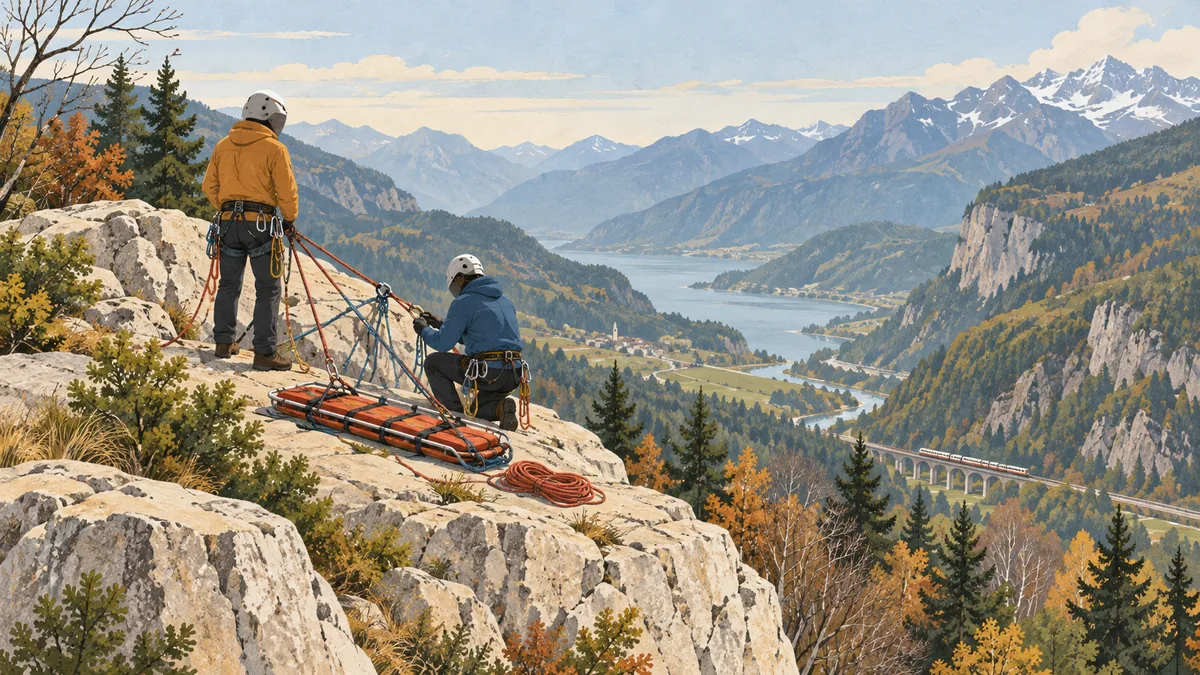
Exercise of the Triangolo Lariano Station Twenty-three rescuers, with three technical instructors and three medical personnel Two technical-medical scenarios at Sasso Malascarpa
Context
TL;DR
- Exercise by the Triangolo Lariano Station
- Twenty-three rescuers, with three technical instructors and three medical personnel
- Two technical-medical scenarios at Sasso Malascarpa
- NEXT and a portable stretcher for the test on the difficult gully
Key facts
- Who → Triangolo Lariano Alpine and Speleological Rescue Station
- Delegation → XIX Lariana Delegation
- Participants → 23 rescuers
- Training presence → three technical and three medical instructors, including an instructor
- Scenarios → two technical-health scenarios
- Exercise area → impervious channel to Sasso Malascarpa
- Techniques and aids → NEXT, immobilization systems and sedan stretcher
- Objective → maintain and update technical and healthcare skills
Twenty-three rescuers from the Lariano Triangle Station of the Alpine and Speleological Rescue, XIX Lariana Delegation, participated in a technical-health exercise in recent days. The indicated composition included three technical and three medical instructors, including one instructor. The report thus presents, in the same activity, a technical and a health component.
The program was divided into two technical-health scenarios. The work was dedicated to the use of extrication devices, including the NEXT device, intended to recover and transfer injured people in harsh environments and complex operational contexts. The activity also included the in-depth analysis of immobilization systems.
I work on the channel
Part of the exercise took place on the ground. The technicians traveled along an impervious canal at Sasso Malascarpa using the sedan stretcher technique. It is the step that connects the use of the equipment to the practice of the rescue maneuvers described in the report.
The source indicates periodic exercises as the tool for maintaining and updating the technical and health skills of rescuers. The technicians who have recently joined the Corps can thus gain new experience in using the equipment and carrying out rescue manoeuvres, working alongside more experienced colleagues. This collaboration is part of the training described in the news.
Operational details
Skills maintained in the field
Extrication and immobilization
The practical focus of the exercise lies in combining different skills within the same training session. The source mentions two technical-medical scenarios and links the work to the use of extrication equipment, without separating the use of the equipment from an in-depth look at immobilization systems.
The NEXT device is mentioned for a specific function: it is used to recover and transport injured people during operations in difficult terrain and in complex circumstances. The report does not present it as an isolated element, but as part of the equipment used during the activity. Alongside this use, the rescuers studied immobilization systems in greater depth, bringing together the technical and medical aspects.
The visit to Sasso Malascarpa also has a concrete role in the description. The technicians traversed a difficult gully using the portable-stretcher technique. The terrain identified by the source thus becomes the place where the maneuvers are practiced, while the stretcher represents the method used for the route.
Periodic exercises make it possible to maintain and update skills. For technicians who recently joined the Corps, working alongside more experienced colleagues makes it possible to gain new experience in the use of equipment and in practicing rescue maneuvers. This is the most useful point for understanding the news: not a regulatory change, but a training activity described in terms of its tools and methods.
For a cross-border reader interested in news from the Lake Como area, the link is therefore a territorial one. The source focuses its report on training and does not connect it to administrative or tax issues. Those looking instead for an income-related tool will find calcolatore fiscale in a separate section.
Recommended tools
For an updated estimate, use the net salary calculator and the CHF-EUR exchange comparator.
Useful tools to protect your net income
To reduce FX leakage, compare CHF-EUR exchange options and banks for cross-border workers.
Key points
The exercise sequence
Four steps described by the source
To reconstruct the activity without adding external elements, the sequence can be read as follows:
1. Stazione Triangolo Lariano organizes an exercise consisting of two technical-medical scenarios. 2. Rescuers work on using extrication equipment, including the NEXT device. 3. The activity also explores immobilization systems. 4. At Sasso Malascarpa, technicians cross a rugged channel using the rescue stretcher. 5. Technicians who have recently joined the Corps are paired with more experienced colleagues.
These steps bring together the operational information contained in the source. The NEXT device is used to recover and transfer injured people in rugged environments and complex circumstances; the rescue stretcher, on the other hand, is the technique used during the route through the channel. The exercise therefore includes both an in-depth review of the equipment and practice in the field.
The final step concerns the transmission of experience. New technicians have the opportunity to learn how to use the equipment and practice rescue maneuvers alongside more experienced colleagues. The source connects this dynamic to periodic exercises, which make it possible to maintain and update technical and medical skills.
The news remains limited to this activity and contains no salary figures or tax procedures. Those looking for a separate income-related tool can consult simulatore busta paga. For a tax calculation, use calcolatore fiscale.
Source: comozero.it
Frequently Asked Questions
- How many rescuers participated in the exercise?
- The activity was attended by 23 rescuers from the Larian Triangle Station of Alpine and Speleological Rescue, XIX Larian Delegation. The group included three technical and three sanitary instructors, including one instructor. The source therefore presents an exercise with a technical and a health component, divided into two scenarios.
- Where did the ground part take place?
- The technicians travelled an impervious channel to the Sasso Malascarpa. For this activity they used the carrier stretcher technique. The report describes the path as a part of the exercise dedicated to the practice of rescue maneuvers and not as the chronicle of an intervention in progress.
- What was explored during the activity?
- The exercise involved the use of extrusion devices, including the NEXT device, used for the recovery and handling of injured people in harsh environments and in complex situations. The use of immobilisation systems was also explored. Periodic exercises are used to maintain and update technical and health skills.
- What was the role of the most experienced technicians?
- The technicians who recently joined the Corps were joined by more experienced colleagues. In this way they had the opportunity to gain new experience in the use of equipment and in the practice of rescue manoeuvres. The coaching is part of the training described by the source together with the technical-sanitary scenarios and field tests.
Related articles
- All articles: Taxes
- Canton Ticino, incendio in galleria a bordo di un treno: ma è un'esercitazione
- Costi sanitari Ticino 2024: +4%
- Vivere a Abbadia Lariana e lavorare in Ticino da frontaliere
- Permesso G vs B frontalieri 2026 entro 20 km: quando conviene cambiare
- 1° maggio tra Eremo e Monastero sul Lago Maggiore e in Valle Olona