Green light for the Lombardy-Ticino Agreement (cross-border guide)
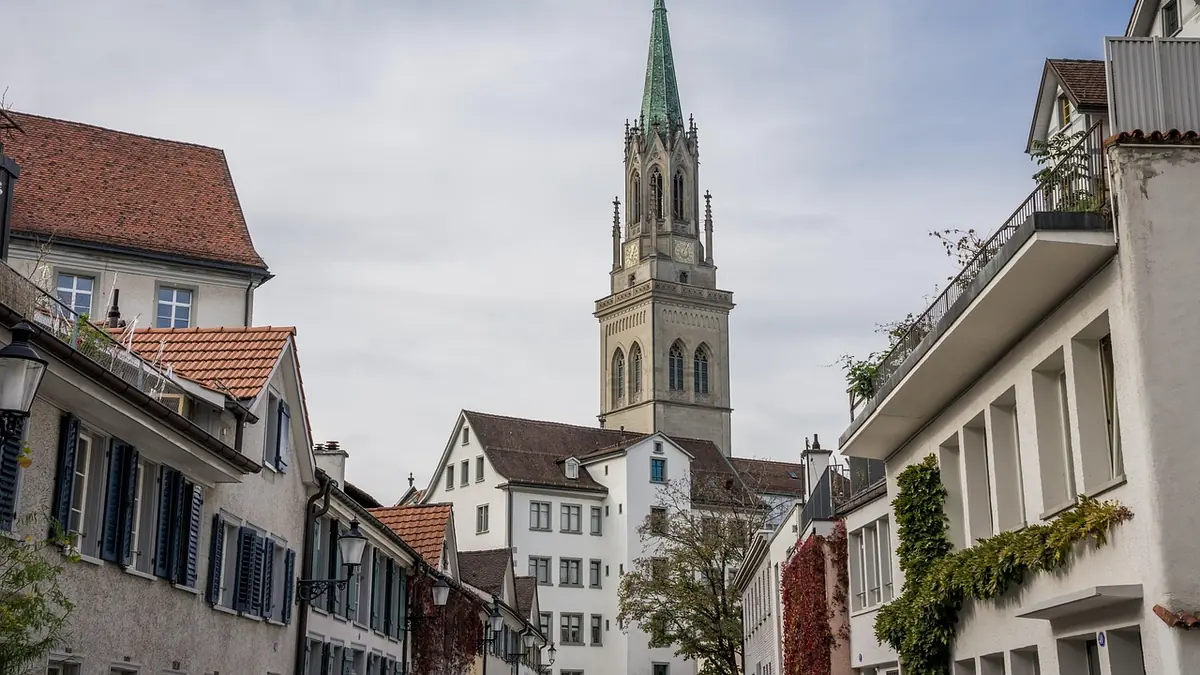
Ratified Draft Law No. 197 on cross-border mobility. Five-year agreement for trains, buses, and fares between Italy and Switzerland.
Context
In brief
- The Regional Council ratifies the Lombardy-Ticino Agreement
- Agreement signed on 16 June 2026: lasts five years
- Services scheduled every 60 minutes: S40 and S50
- RE50 Malpensa-Lugano and new cross-border buses planned
Key facts
- Bill → no. 197
- Agreement → signed on 16 June 2026
- Validity → five years, renewable for another five
- S40 and S50 → frequency every 60 minutes
- Varese-Mendrisio service → integrated every 30 minutes
- RE50 → Malpensa-Varese-Mendrisio-Lugano, hourly frequency
- S30 → Cadenazzo-Luino-Gallarate
- Fares → goal of integration between the Lombardy and Ticino systems
An agreement that starts in the Varese area
The Regional Council approved Bill no. 197, which ratifies the new Agreement between Regione Lombardia and Canton Ticino for the development of cross-border mobility. The agreement was signed on 16 June 2026 and will be valid for five years, with the possibility of renewal for an additional five-year period.
For the province of Varese, the measure is directly relevant: the area is affected by daily travel to Switzerland and by connections between Ticino, Malpensa and the Lombardy railway network. For cross-border commuters, the stated objective is to offer concrete alternatives to private cars, with more coordinated, accessible and efficient rail and road-based services. The practical reference therefore becomes the mezzi pubblici Ticino network.
Giuseppe Licata, regional councillor and vice-president of the Special Committee «Enhancement and protection of mountain and border areas; Relations between Lombardy and the Swiss Confederation», described the Agreement as an important step for Varese and called for the area to play a leading role in the next phases. The priorities identified include Malpensa, the Varese-Mendrisio-Lugano axis and the Luino corridor.
The railway network and new connections
The Agreement considers the system formed by the S10, S40 and S50 lines, which connects Bellinzona, Lugano, Chiasso, Como and Varese via the Mendrisio hub. Medium-term planning confirms the S40 Varese-Mendrisio-Como and the S50 Varese-Mendrisio-Lugano-Bellinzona-Biasca, both with a frequency of every 60 minutes. Between Varese and Mendrisio, the integrated service is scheduled every 30 minutes.
For the Varese area, the RE50 Malpensa-Varese-Mendrisio-Lugano is also indicated, with hourly frequency and stops, among others, at Malpensa Terminal 1, Busto Arsizio, Gallarate, Varese and Mendrisio. The Verbano and Upper Varese corridor is instead connected to the S30 Cadenazzo-Luino-Gallarate. The agreement also provides for new bus connections in the border areas of the provinces of Varese and Como and the coordination of road-based lines with railway routes. A permanent Technical Working Group between Regione Lombardia, Cantone Ticino and Agenzia per il TPL del bacino di Como, Lecco e Varese is also planned.
Operational details
The network as a decision-making tool
The practical value indicated by the Agreement lies not in a single route, but in the connection between rail, buses, interchanges, fares, and Malpensa. For a cross-border commuter from the province of Varese, Mendrisio is the reference point for understanding the network: from here, routes toward Como, Lugano, Bellinzona, Biasca, and Malpensa can be considered. The plan therefore concerns different destinations and not just one connection.
Three horizons for frequencies
The source distinguishes between medium-term planning, planned service, and long-term objectives. This distinction is useful for correctly interpreting the indications: S40 and S50 belong to medium-term planning, RE50 is presented as a planned service, while for S30 the text separates the medium-term frequencies from the long-term target.
| Route | Indication | Practical interpretation | | S40 and S50 | 60 minutes; every 30 minutes between Varese and Mendrisio | shared corridor as far as Mendrisio | | RE50 | hourly frequency | connection also intended for Malpensa | | S30 | 120 minutes Cadenazzo-Luino; 60 minutes Luino-Gallarate; target of 60 minutes over the entire route | development in phases |
For those based in Alto Varesotto, the S30 therefore has a different service pattern depending on the segment. The figures given for Cadenazzo-Luino and Luino-Gallarate describe a non-uniform service pattern in the medium term; the subsequent objective is to bring the frequency to 60 minutes across the entire service span and the entire route.
Buses and tickets in the same plan
The Agreement provides for new bus connections in the border areas around Varese and Como and the coordination of road-based lines with rail lines. For a cross-border commuter, this must therefore be understood as a combination of modes, not as an isolated choice of train.
The same logic appears in fares: completing the range of cross-border tickets and passes, further integrating rail and road transport, and combining the Lombardy fare system with the Ticino one. The Agreement also envisages the mutual recognition, at least on certain routes or services, of certain Swiss tickets and the Lombardy regional passes Io Viaggio and Io Viaggio in Famiglia on the Como-Varese corridor. Anyone comparing public transport with the car can supplement the analysis by using the costo auto pendolare.
Recommended tools
For an updated estimate, use the net salary calculator and the CHF-EUR exchange comparator.
Key points
From reading to action
For a cross-border commuter who wants to follow the implementation of the Agreement, it is useful to separate the rail route, any bus segment, fares and the political level. This distinguishes the planned service, medium-term planning and the long-term objective.
Five steps to find your bearings
1. Identify the route. Associate your mobility with S40, on the Varese-Mendrisio-Como route, with S50, on the Varese-Mendrisio-Lugano-Bellinzona-Biasca route, with RE50, between Malpensa and Lugano, or with S30, between Cadenazzo, Luino and Gallarate. This clarifies which axis of the Agreement to follow.
2. Mark the time horizon. Next to the line, note whether the source refers to medium-term planning, a planned service or a long-term objective. For S30, also distinguish Cadenazzo-Luino from Luino-Gallarate: the indicated frequencies are not the same.
3. Verify intermodality. When following implementation, look for the connection between the new buses in the border areas and the rail routes. The point to follow is the coordination between rail and road transport provided for by the agreement.
4. Read the fares together with the stated condition. The objective concerns cross-border tickets and passes, integration between the Lombard and Ticinese systems and the possible mutual recognition, on certain routes or services, of Swiss passes and Io Viaggio and Io Viaggio in Famiglia on the Como-Varese corridor. Do not automatically extend this provision to every route.
5. Follow the institutional steps. Giuseppe Licata, vice-president of the Special Commission for Mountain Areas, has requested a meeting with the councillor to examine developments and concrete implementation in greater depth; the session has already been scheduled for Thursday 1 October. The funded study on the former Castellanza-Malnate Olona-Mendrisio railway is also part of this monitoring, aimed at identifying a strategy for using the railway right-of-way, while assessing trams, an interconnected railway and cycling infrastructure.
This framework helps you read future updates without confusing a planning decision with a service that is already available. To complete your personal commuting planning, use calcolatore stipendio.
Source: varesenoi.it
Frequently Asked Questions
- When was the Lombardy-Ticino Agreement signed?
- The Agreement between the Lombardy Region and Canton Ticino for the development of cross-border mobility was signed on 16 June 2026. It is valid for five years, with the possibility of renewal for a further five years, and was ratified through Bill no. 197 approved by the Regional Council.
- What are the main novelties for railway lines?
- The agreement provides for the medium-term confirmation of the S40 Varese-Mendrisio-Como and S50 Varese-Mendrisio-Lugano-Bellinzona-Biasca lines every 60 minutes, as well as an integrated service every 30 minutes between Varese and Mendrisio. The RE50 Malpensa-Varese-Mendrisio-Lugano with hourly frequency and the S30 Cadenazzo-Luino-Gallarate are also indicated.
- What does the Agreement provide for buses and fares?
- The agreement provides for new bus connections in the border areas for the provinces of Varese and Como, coordinated with the railway lines. On the tariff front, the objective is to integrate the Lombard and Ticino systems, completing the cross-border offer and providing for mutual recognition on certain sections of Swiss securities and Lombard regional securities Io Viaggio and Io Viaggio in Famiglia on the Como-Varese corridor.
Related articles
- All articles: Transport and traffic
- Nuova intesa Lombardia-Ticino: più treni e autobus per frontalieri
- Ticino-Lombardia: più treni e bus transfrontalieri
- TILO Stabio-Malpensa: stop ai treni giugno 2026
- Il progetto TRIP per lo sviluppo della mobilità transfrontaliera tra Lombardia e Grigioni.
- Nuovo orario treni Lombardia 2026: cosa cambia per i frontalieri Ticino