Lugano protests: are the rules the same for everyone? (cross-border guide)
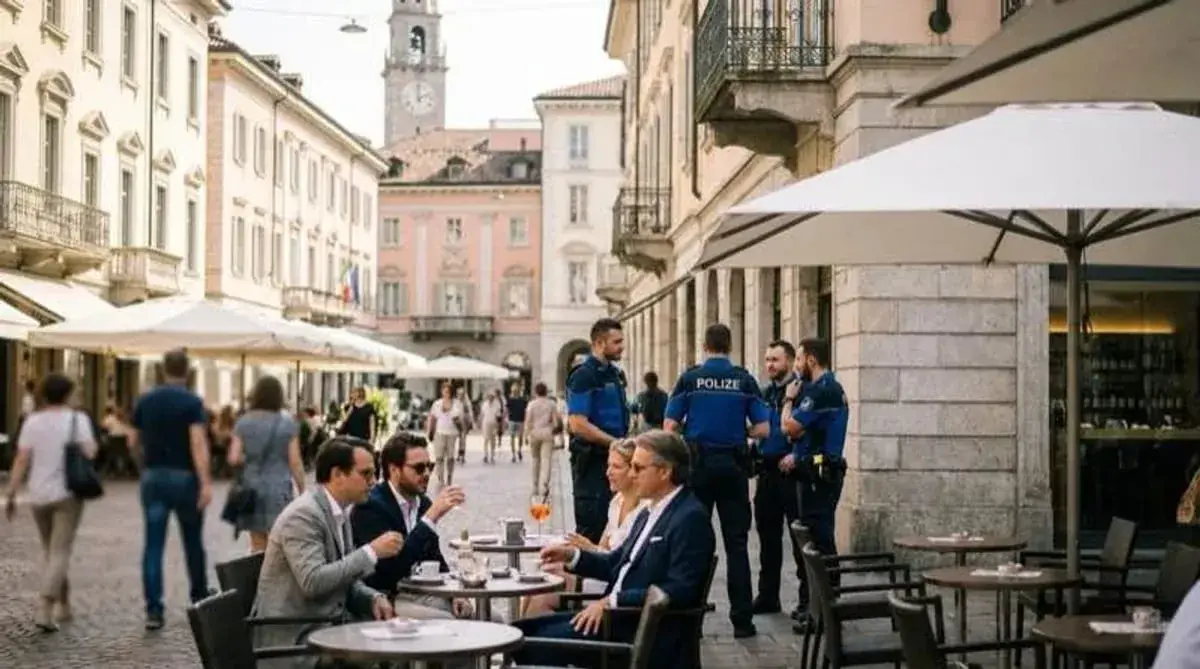
Controversy erupts in Lugano: the Municipality bans an authorized right-wing rally fearing clashes, but tolerates an unauthorized left-wing demonstration. A case that raises doubts about equal treatment.
Context
TL;DR
- Lugano's municipality denied a right-wing demo, allowed left-wing protest
- Unauthorized left-wing protest occupied central square without police intervention
- Municipality's decision raises questions about equal treatment and institutional trust
- Costs of policing unauthorized event fall on Ticino taxpayers
Key facts
- Cosa: Unauthorized left-wing protest in Piazza della Riforma
- Quando: On a crowded, sunny Saturday
- Dove: Piazza della Riforma, Lugano
- Chi: Left-wing circles with public support from elected politicians
- Importo: Massive police force mobilized to monitor the event
- Scadenza: Matter subject to an inter-party inquiry
- Costo: Costs fall entirely on Ticino's taxpayers
- Data: 22.02.2026 (likely a typo for the current year)
A political hornet's nest has been stirred in the heart of Lugano, raising a question as simple as it is fundamental: do the rules for demonstrating in the city apply to everyone equally? The fuse was lit by the Municipality's recent and controversial management of public events. Denouncing the incident is Andrea Togni, a PLR city councilor, who highlighted a clear disparity in treatment.
…
Operational details
The principle of legality and the costs for the community
The issue, as Togni points out, is not ideological but institutional. The right to demonstrate, which is enshrined and guaranteed, is not under discussion, but rather the method by which the rules are applied. "Those who duly requested authorization, identifying themselves, presenting organizational measures, and assuming responsibility, were denied permission. Those who chose to ignore procedures were able to occupy the square," reads his reflection. This dynamic sets a dangerous precedent, undermining citizens' trust in institutions.
Any resident or cross-border worker knows well that to organize a simple market stall or a neighborhood party, it is necessary to fill out forms, meet deadlines, and pay taxes. Seeing a central square occupied without authorization generates a sense of frustration and the legitimate question of whether the law is truly the same for everyone.
⚠️ The financial burden Then there is a non-negligible economic aspect. The massive police force mobilized to monitor an unauthorized event has a cost. A cost that, in the absence of a responsible organizer, falls entirely on Ticino's taxpayers, including the cross-border workers who contribute to the cantonal budget with their work and taxes. In a period of strong attention to public spending, the issue of transparency on these costs becomes crucial. The matter is now the subject of an inter-party inquiry demanding an account from the Municipality on its overall management of public order.
Key points
Trust in institutions: an asset not to be wasted
The Lugano episode goes beyond local news. It represents an alarm bell on social cohesion and the perception of fairness by the authorities. For the thousands of cross-border workers who cross the border every day to work in Ticino, the stability and predictability of the system are essential elements. Events like this, which suggest the existence of fast lanes or a certain tolerance for those who act outside the rules, can tarnish the image of an orderly and rule-abiding Canton.
💡 What does this mean for those working in Ticino? The incident indirectly affects all who contribute to the Ticino economy. The management of public finances, including unforeseen security costs, impacts the general budget of the Canton and, consequently, services and infrastructure. It is a reminder of how local political dynamics can have concrete repercussions on daily life and the work environment.
Understanding the value of one's economic contribution becomes even more important in contexts like this. Knowing exactly how tax deductions and social contributions affect one's net salary provides a clearer view of one's role in the local economy. For this reason, tools like our net salary calculator can offer a precise and personalized perspective.
Source: Tio.ch - 22.02.2026 (date reported by the source, likely a typo for the current year)
Frequently Asked Questions
- How are the rules for demonstrating in Lugano applied?
- The rules for demonstrating in Lugano are applied in a discriminatory way, with some political groups receiving denials for their requests for authorization, while other groups can occupy the square without authorization.
- How much do unauthorized events cost the Ticino taxpayer (including cross-border commuters) in terms of police expenses?
- Although the article does not provide specific data, unauthorized events can cost thousands of CHF. For example, a massive police device can reach costs between 10,000 and 50,000 CHF or more, depending on the size and duration of the event, with such expenses falling on taxpayers.
- What are the procedures to follow to organize a public event in Switzerland and Italy?
- To organize a public event, you must apply for authorizations from local authorities, comply with safety regulations and pay any taxes. In Switzerland, the request is submitted to the municipal authorities, while in Italy it is addressed to the municipality or the competent authorities, with specific times and requirements.
Related articles
- Porrentruy: piscina comunale, tariffe doppie per frontalieri
- Lugano rafforza l'attrattiva per grandi contribuenti
- Distretto del benessere: 2% dei contribuenti ha il 15% del reddito
- Primo Maggio a Torino: tensioni tra manifestanti e forze dell'ordine
- Parcheggi folli a Cernobbio: auto ticinese occupa due posti per residenti