Ticino Border: 'Radar' Checks for Cross-Border Workers
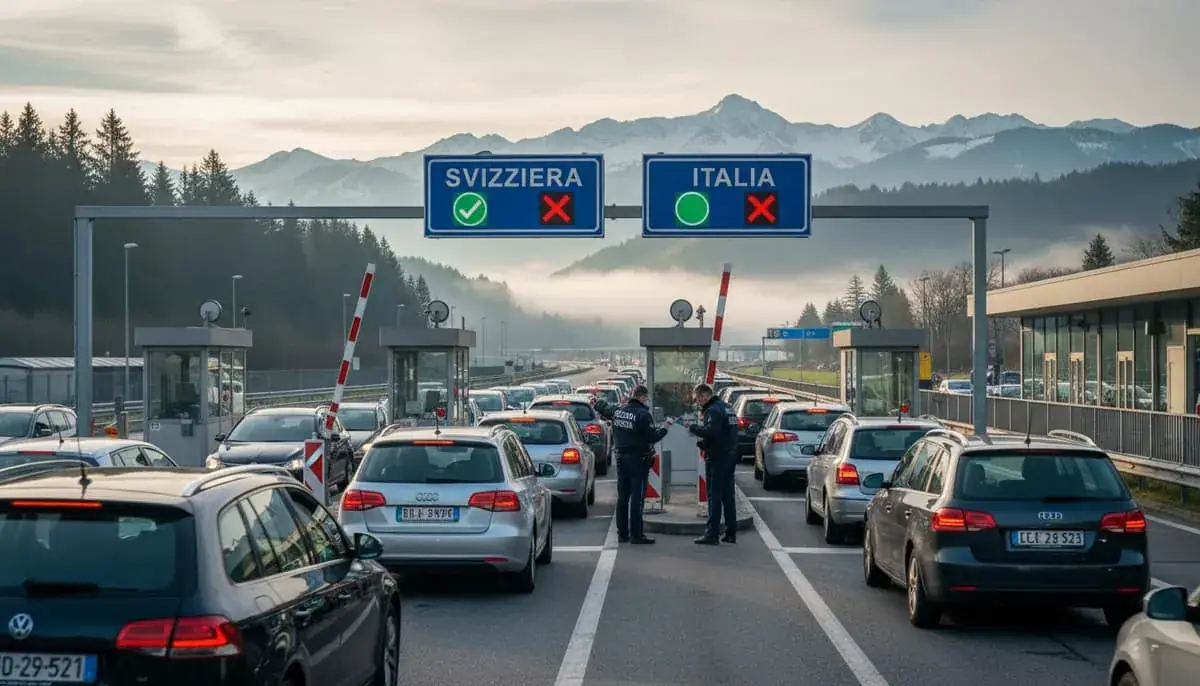
A week of intensified checks at Ticino's border crossings, from Brogeda to Gaggiolo, aimed at tackling undeclared work and tax evasion. Here are the practical implications for cross-border commuters.
Context
TL;DR
- Ticino border sees intensified checks for security and compliance.
- Cross-border workers face stricter document and vehicle inspections.
- Checks aim to combat undeclared work, tax evasion, and cross-border crime.
Key facts
- Cosa: Intensified border checks in Ticino for security and compliance.
- Quando: Past week, part of a broader Swiss strategy.
- Dove: Main border points: Brogeda, Stabio-Gaggiolo, Ponte Tresa, Chiasso.
- Chi: Cantonal Police, Border Guards, FOCBS, SUVA officials.
- Importo: Nearly 70,000 cross-border workers affected daily.
- Scadenza: New cross-border tax agreement effective from 2024 for new hires.
- Regole: Checks include G Permit validity, vehicle registration, insurance, and duty-free limits.
- Conseguenze: Fines or criminal proceedings for undeclared goods or irregularities.
The Ticino border has become a hotspot for intensified inspections. As highlighted in Il Giornale del Ticino's headline, 'And where there are borders... a week of relentless “radar” checks', the Canton of Ticino has seen a surge in controls at its main border points, from Brogeda to Stabio-Gaggiolo, including Ponte Tresa and Chiasso. This crackdown, which has marked the past week, is not an isolated event but part of a broader Swiss strategy to combat issues such as undeclared work, tax evasion, and cross-border crime. Patrols from the Cantonal Police and Border Guards, often joined by specialists from the Federal Office for Customs and Border Security (FOCBS) and, in some cases, SUVA officials for social insurance checks, have been stationed at crossing points with a frequency and thoroughness above the usual. The stated goal is twofold: to ensure territorial security and to enforce current regulations, both fiscal and labor-related. For the nearly 70,000 cross-border workers who commute daily to Ticino, this week has meant not only potentially longer waiting times but also the need to pay closer attention to the completeness and validity of their documents. Checks have not been limited to personal identification but have also focused on vehicles, with in-depth inspections of registration, insurance, and maintenance status. This 'radar-style' approach has sparked discussions and, in some cases, inconvenience, but authorities emphasize the importance of these operations for maintaining order and legality in such a dynamic and strategically important border region as Ticino. The pressure at border crossings is constant and reflects the complexity of managing such a massive flow of commuters, combined with the need to prevent abuses that could undermine the canton’s economic and social integrity. While this increase in checks may seem sudden, it fits into a broader context of growing attention to the regularity of employment and tax status, especially during a period of renegotiation and implementation of new cross-border tax agreements between Switzerland and Italy. Law enforcement has focused efforts not only during peak hours but also at less predictable times, increasing the element of surprise and the effectiveness of operations. This shows a clear commitment to leaving no blind spots, systematically monitoring access points in and out of the canton.
Operational details
The stepped-up checks at the Ticino border raise important practical and legal issues for cross-border workers. The inspections go far beyond simple identity verification. Officers are authorized to check the validity of the G Permit, essential for those working in Switzerland while residing in Italy, and to verify that the declared job matches the actual work performed—a crucial step to prevent undeclared or irregular employment. Regarding vehicles, checks focus on proper registration, valid third-party liability insurance (RC auto) for Switzerland, and compliance with Swiss road regulations. An Italian-plated vehicle driven by a cross-border worker must, in principle, be registered in the country of residence, but Swiss authorities may investigate improper or prolonged use in Switzerland, which could constitute a tax or customs violation. It’s worth remembering that, for consumer goods, there are strict duty-free import limits: for example, fuel (up to 25 liters in the tank plus 10 liters in a can per vehicle), as well as food, alcohol, and tobacco—any excess must be declared and taxed. Failure to respect these limits or omitting declarations can result in hefty fines proportional to the undeclared goods' value, and in serious cases, criminal proceedings for smuggling. The Department of Finance and Economy (DFE) of Canton Ticino, in cooperation with the Federal Customs Administration, constantly monitors these flows to ensure tax fairness. The new cross-border tax agreement, effective from 2024 for new hires and from 2026 for 'old' cross-border workers, introduces further complexities, with Switzerland retaining a larger share of taxes and requiring workers to declare income in Italy as well. Even minor irregularities can have consequences not only in terms of fines but also regarding the validity of work permits. It is therefore advisable to always keep all necessary documents at hand and stay informed about the latest customs and tax rules to avoid unpleasant surprises during checks.
Useful tools to protect your net income
To reduce FX leakage, compare CHF-EUR exchange options and banks for cross-border workers.
Key points
Faced with this intensification of border checks, cross-border workers should take a proactive approach to avoid unpleasant setbacks. The first—and most obvious—recommendation is crucial: always carry all required documents, making sure they are up to date. This includes your passport or ID card, a current G Permit, driver’s license, and vehicle registration with proof of insurance. Regularly checking expiration dates can help prevent fines and delays. It’s also wise to keep in mind customs rules for importing goods. Many commuters underestimate the limits for fuel or food products, only to run into trouble later. A quick check on the Federal Customs Administration website before crossing can clear up any doubts. Transparency is your best ally: during checks, cooperating with officers and providing accurate information can speed up the process. Cantonal and federal authorities, while conducting controls, are also available to clarify regulations. Remember, the border situation is dynamic and subject to change, especially during peak seasons or in response to specific security needs. To monitor real-time traffic and wait times at border crossings, tools like Viasuisse or dedicated apps can be invaluable. The cross-border worker phenomenon is vital for Ticino’s economy, and collaboration between workers and authorities is essential for a smooth, law-abiding flow. To better understand how tax regulations and municipal borders may affect your situation, we recommend consulting our Cross-Border Tax Map. This article is based on information available from Il Giornale del Ticino and reflects the current dynamics of cross-border checks in Canton Ticino.
Frequently Asked Questions
- How do border crossing controls work in Switzerland?
- The border crossing controls in Switzerland are intensified to counter phenomena such as black labor, tax evasion and cross-border crime. Cantonal Police and Confine Guard patrols control the validity of personal documents and vehicles, verifying the identity, Permission G, registration, insurance and maintenance status of vehicles.
- What is the impact of the new agreement on the taxation of frontier workers (in force since 2024 for new recruits and from 2026 for frontier workers) on the income statement for frontier workers Switzerland-Italy?
- The new agreement requires frontier workers to declare income also in Italy, with Switzerland holding a greater share of taxes. This adds complexity, requiring careful management of tax statements in both countries to avoid double taxation or omissions.
- What are the main areas of control intensified on the border between Switzerland and Italy?
- The Swiss authorities have concentrated the main controls at the crossings of Brogeda, Stabio-Gaggiolo, Ponte Tresa and Chiasso, with patrols of the Cantonal Police, Guards of Confine, Federal Office of Customs and Security of the borders, and officials of the SUVA.