Giro d’Italia 2026: Bellinzona to Carì in 113 km for Ticino
On 26 May 2026, stage 16 of the Giro d’Italia will be held entirely in Ticino: 113 km from Bellinzona to Carì, featuring 3,000 metres of elevation gain and five categorised climbs. A potential trap awaits after the rest day.
Context
TL;DR
- Giro d'Italia Stage 16 in Ticino, 26 May 2026
- 113km route from Bellinzona to Carì, 3,000m elevation
- Stage could impact overall classification
- Expected economic impact of €100M for Ticino
Key facts
- Data della tappa: 26 maggio 2026
- Partenza: Bellinzona
- Arrivo: Carì, Valle Leventina
- Distanza: 113 chilometri
- Dislivello: 3.000 metri
- Impatto economico: Stimato €100 milioni per la tappa
- Primo arrivo estero: Locarno, 1938
- Primo vincitore non italiano: Hugo Koblet, 1950
On Tuesday, 26 May 2026, the Giro d’Italia will descend on Ticino for Stage 16, a 113-kilometre route entirely within Swiss territory. The stage will start in Bellinzona and finish in Carì in the Leventina valley. According to the organisers, this stage has the potential to impact the overall classification, as confirmed by Giro d’Italia director Stefano Allocchio: ‘It’s a very short stage with 3,000 metres of elevation gain and five mountain points. It comes after the rest day, which is always a trap.’
The route, presented yesterday in Bellinzona, passes through areas historically linked to the corsa rosa. Ticino has indeed hosted memorable stages: the 1989 Mendrisio-Monte Generoso time trial, the three days between Mendrisio and Lugano in 1998 (the year Marco Pantani triumphed), and the finishes in 2008, 2015 and 2021. There are also historical references: the Giro already passed through Monte Ceneri in 1920, while in 1938 Locarno became the first foreign finish in the history of the corsa rosa. In 1950, with the finish in Locarno, Swiss rider Hugo Koblet won the stage and became the first non-Italian to win the Giro.
An event with economic and media impact
Beyond the sporting aspect, the Bellinzona–Carì stage brings significant economic expectations. A study estimated that the 2025 Giro generated an overall impact of €2.1 billion in the territories it crossed, with an average of €100 million per stage and a social return of nearly three euros for every euro invested. For Ticino, Finance and Economy Department director Christian Vitta stressed: ‘The Giro d’Italia is a powerhouse in terms of visibility and media attention. It will bring a great deal to our canton, with direct and indirect impacts that will be felt over time.’
Co-president of the organising committee Fabio Käppeli, a municipal councillor in Bellinzona, added: ‘Studies show there is both a direct and indirect impact. The territory is exposed to a much wider audience, and the benefits will also be seen after the day of the stage, when we expect maximum hotel and restaurant occupancy.’
Ticino prepares: monuments lit in pink
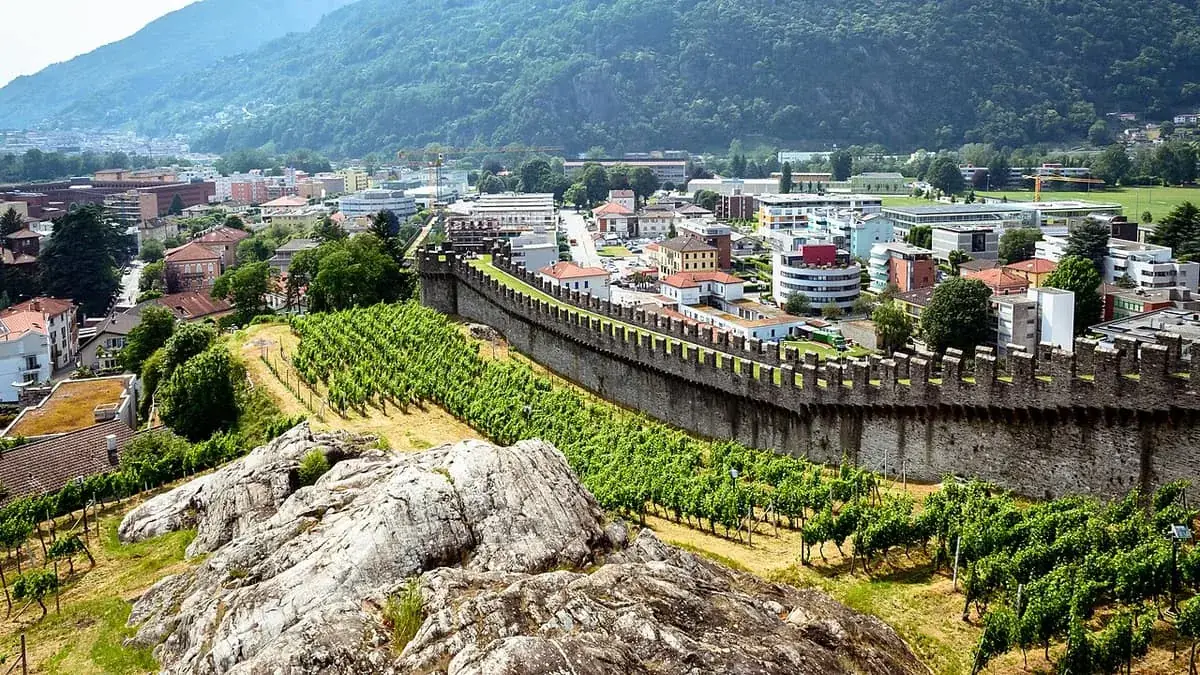
From 19 May 2026, some Ticino landmarks will be illuminated in pink to celebrate the Giro’s arrival. These include the Bellinzona Fortress and the Santa Petronilla bridge, already featured in similar initiatives in previous years. ‘It’s a historical link that has lasted for over a century,’ Käppeli noted, highlighting how this edition will further strengthen the relationship between the corsa rosa and Ticino.
What changes for cross-border workers?
For cross-border workers living in Ticino but working in Lombardy, the event represents an opportunity for visibility for the region. The Bellinzona–Carì stage could attract tourism and media attention, with potential knock-on effects for the local job market. According to estimates, every euro invested in the Giro generates a social return of about three euros—a figure that could encourage further collaboration between institutions and tourism operators.
‘The Giro d’Italia is one of the queens of cycling for visibility and media attention. It will bring a great deal to our canton, with benefits that will be felt over time.’ Fabio Käppeli, co-president of the organising committee
Operational details
The Bellinzona-Carì stage of the 2026 Giro d’Italia is more than just a sporting challenge; it’s also an economic and promotional opportunity for Ticino. With a 113-kilometre route and 3,000 metres of elevation gain, this leg stands out for its brevity and intensity—characteristics that could make it a potential game-changer in the general classification. After the rest day, riders may struggle to manage their energy levels, a factor that could influence team strategies.
A comparison with previous editions
In recent years, Ticino has hosted high-profile stages. In 2021, for example, the Giro passed through Lugano and Ascona, while in 2015 the race concluded in Melide. These editions left their mark both sportingly and in terms of tourism. According to 2025 estimates, each stage generates an average of CHF 100 million in economic returns, with a social return of three francs for every franc invested. For Ticino, the Bellinzona-Carì stage could replicate these results, thanks in large part to the Giro d’Italia’s global media reach.
Impact on cross-border workers: tourism and employment
For cross-border workers living in Ticino but working in Lombardy, the event represents a window of opportunity. The Giro’s arrival could:
- Boost tourist flows to Ticino in the days before and after the stage, with potential benefits for hotels, restaurants and local transport.
- Strengthen collaboration between Ticinese and Lombard institutions to promote joint initiatives, as seen in the past with sporting and cultural events.
- Create temporary job opportunities in logistics, security and hospitality sectors, which could benefit from the influx of visitors.
According to Christian Vitta, Director of the Department of Finance and Economics, ‘The benefits extend beyond the day of the stage itself.’ This means the economic impact could stretch well beyond 26 May 2026, with positive effects on sectors such as retail, hospitality and tourism.
Concrete scenarios for cross-border workers
What might change in the daily lives of Ticino’s cross-border workers? Here are a few scenarios:
- Transport: Road and rail networks around Bellinzona and Carì may experience disruptions in the days before and after the stage. Commuters are advised to plan their journeys in advance and monitor updates from local authorities.
- Work: Some Ticinese companies may require additional staff to manage events, offering temporary employment opportunities to cross-border workers.
- Daily life: The lighting of landmarks in pink could create a festive atmosphere in towns, with potential benefits for local businesses.
The role of institutions
Ticino’s Department of Finance and Economics (DFE) is working closely with the event organisers to maximise the benefits. Planned initiatives include:
- Promoting the region through national and international media channels.
- Collaborating with tourism operators to create packages linked to the stage.
- Monitoring the economic impact to assess the effectiveness of measures taken.
According to Käppeli, ‘The Giro d’Italia is a powerhouse in terms of visibility. It will bring so much to our canton, with benefits that will last well beyond the event itself.’
What does history tell us?
Ticino’s connection with the Giro d’Italia dates back to 1920, when the race passed through Monte Ceneri. In 1938, Locarno became the first foreign finish in the history of the corsa rosa. In 1950, Swiss rider Hugo Koblet won the stage in Locarno, becoming the first non-Italian to claim victory in the Giro. These historic stages have helped forge a cultural and sporting bond between Ticino and the race, a relationship that continues to this day.
Useful tools to protect your net income
To reduce FX leakage, compare CHF-EUR exchange options and banks for cross-border workers.
Key points
The 16th stage of the 2026 Giro d’Italia, scheduled for Tuesday, May 26, is an event that directly impacts Ticino and its residents, including cross-border workers who live and work between Switzerland and Italy. Here’s how to stay prepared:
Step 1: Plan your travel
If you live in Ticino and work in Lombardy, the stage could cause disruptions to transport, particularly in the days leading up to and following May 26. Here are some practical tips:
- Trains: Keep an eye on updates from TiLo and FERROVIENORD for any schedule changes or route closures. The Gotthard railway line may be affected by the race.
- Car: Avoid crossing the areas along the route, such as Bellinzona and Carì, in the hours before and after the start. Check traffic updates on traffic-history.
- Roads: The A2 and A13 motorways could become congested. If you need to travel, opt for less busy times or alternative routes.
Step 2: Seize temporary work opportunities
The event could create temporary job openings in sectors like security, logistics, and hospitality. If you’re a cross-border worker looking for work, keep an eye on:
- Local job listings: Websites like jobs.ti.ch or jobup.ch may post openings for roles such as stewards, security staff, or catering personnel.
- Direct contacts: Reach out to local businesses in the tourism sector, such as hotels, restaurants, or travel agencies, to ask if they need extra staff.
Step 3: Take part in side events
In addition to the stage itself, the Giro d’Italia brings a range of collateral initiatives you can take advantage of:
- Monument lighting: From May 19, the Fortezza di Bellinzona and the Ponte di Santa Petronilla will be lit in pink. A great opportunity to explore the city and discover its local heritage.
- Cultural events: Some Ticino municipalities will host initiatives tied to the Giro. Watch for announcements on the Bellinzona Municipality website or Pro Bellinzona.
Step 4: Assess the economic impact
If you’re self-employed or a business owner, the stage could be a chance to promote your activity to a wider audience. Here’s what you can do:
- Collaborate with tourism operators: Offer special packages for visitors who want to follow the Giro, such as discounted overnight stays or guided tours.
- Promote on social media: Use hashtags like #GiroTicino2026 or #BellinzonaCarì to boost your business’s visibility.
Deadlines and timelines
- May 19, 2026: Start of the pink lighting of monuments.
- May 26, 2026: Bellinzona-Carì stage. Organize your travel plans at least 24 hours in advance.
- Post-stage: Monitor local media updates to assess the economic impact and any future initiatives.
Useful tools
To help you get organized, we’ve prepared some handy resources:
- Cross-border worker salary calculator
- Border crossing map
- Road and rail traffic history
- Practical guides for cross-border workers
“The Giro d’Italia is a major visibility boost. For our canton, it will bring a lot, with benefits that will extend well into the future.” Fabio Käppeli
Now that you know all the details about the Bellinzona-Carì stage, it’s time to get ready to make the most of the opportunities this event offers. Whether you’re a cross-border worker, a tourist, or an entrepreneur, the 2026 Giro d’Italia is a chance not to be missed for Ticino!
Source: rsi.ch
Frequently Asked Questions
- Will the Bellinzona-Carì stage of the 2026 Giro d’Italia be broadcast on television?
- Yes, the stage will be broadcast live on the official Giro d’Italia television screens. While the source does not specify the channels, major events of this scale are typically aired on RAI Sport and RSI. It is advisable to check the official schedules in the weeks leading up to the race.
- What are the main border crossings between Ticino and Lombardy near Bellinzona and Carì?
- The closest border crossings to the stage route are Ponte Chiasso (Chiasso), Valico di Brogeda (Stabio), Valico di Gaggiolo (Mendrisio), and Valico di Arzo (Meride). To reach Bellinzona from Milan or Como, the quickest route is via the A36 (BreBeMi) to Lugano, followed by the A2 heading south.
- Are there any traffic restrictions along the stage route?
- Yes, there may be temporary traffic restrictions along the stage route, particularly near the start in Bellinzona and the finish in Carì. The cantonal authorities will issue specific ordinances in the days leading up to the event. It is recommended to follow updates on traffic-history and the Ticino cantonal police website.
- Can I watch the stage live from Carì?
- The finish in Carì is scheduled for late morning on May 26. However, the source does not specify whether there will be designated public viewing areas or if access will be unrestricted. It is advisable to contact the Comune di Carì or visit the official Giro d’Italia website to confirm access arrangements.
- What are the expected economic benefits for Ticino from the Bellinzona-Carì stage?
- Based on estimates from the 2025 edition, each Giro d’Italia stage generates an average of 100 million euros in economic benefits for the territories it passes through, with a social return of approximately three euros for every euro invested. For the Bellinzona-Carì stage, significant economic benefits are anticipated, both in direct terms (employment in hotels and restaurants) and indirect terms (territorial promotion).
Related articles
- All articles: Transport and traffic
- Giro d'Italia in Ticino: strade chiuse al traffico
- Guillermo Silva vince la tappa e indossa la maglia rosa del Giro d'Italia
- Paul Magnier trionfa ancora al Giro d'Italia: Froidevaux dodicesimo
- Giro-E 2026: tappa Angera-Verbania sul Lago Maggiore
- Trasporti pubblici da record: treni più cari o più affollati per i frontalieri?