Cross-border commuters in Valais: a different reality from Ticino (cross-border guide)
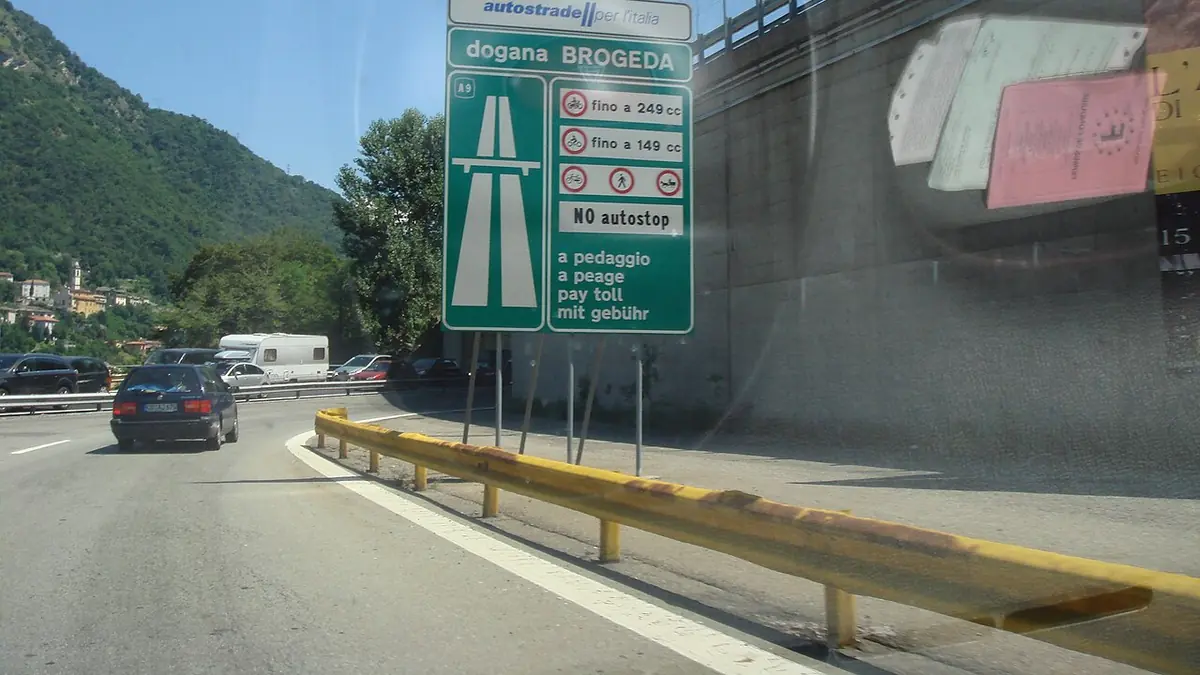
In Valais, Italian workers are not at the center of the political clash as in Ticino.
Context
In brief
- Around 3,000 cross-border commuters in Valais
- Relaxed relations between workers and local population
- New tax regime and cross-border mobility at the heart of the challenges
- What: Relaxed relations between cross-border commuters and the local population
- When: Current situation
- Where: Valais, Piedmont, Valle d'Aosta
- Who: Pasqualino Gallicchio, president of UNIA Valais
- Amount: Approx. 3,000 cross-border commuters
When we talk about cross-border workers in Switzerland, the collective imagination almost always runs south of the Alps: queues at the crossings, wage dumping and the endless dispute over rebates and health tax. But moving our attention further west, along the border between Valais, Piedmont and Valle d'Aosta, the climate changes radically. There is no shortage of daily exchanges and the new agreement on taxes is also being felt here, yet the social pressure that dominates the debate in Lugano or Chiasso is almost imperceptible.
The difference starts with the numbers. In the first quarter of 2026, the Canton of Ticino had 78,562 cross-border commuters out of a national total of 91,997 workers from Italy. The specific figure for Valais, although not isolated in the federal tables, has decidedly smaller proportions. Pasqualino Gallicchio, president of UNIA Valais and head of the local Ital-UIL patronage, speaks of about 3,000 G permit holders. A small scale, which helps to explain a profoundly different climate.
In fact, Gallicchio describes relaxed relationships between those who cross the border every day and the local population. "Here," he observes, "there is not the same pressure that characterizes Ticino, neither on wages, in the form of dumping, nor on residents. Holders of a G permit are generally accepted and integrated."
…
Operational details
Frontalieri in Valais: a different reality from Ticino If to the south the frontier has been a central theme of the political agenda for years, where any tax change or discussion on free movement inflames the public debate, in Valais, Gallicchio explains, "the phenomenon does not have the same symbolic or electoral weight". The trade unionist recalls the period of the pandemic, when the continuity of essential sectors made clear the role of this cross-border workforce: "Without them both the construction sites and the health system would have stopped. The Valaisan economy was coming to a halt ". It is a memory that sums up a less conflictual perception of the overseas worker: not a competitor to be rejected, but a vital cog in the local economic fabric. The geographical context contributes to this difference. The connections through the Alps are more selective, the population is less concentrated compared to the strip between Lugano, Chiasso, Como and Varese and the border is not inserted in an urban continuity comparable to the insubrious one. Hence a less massive mobility and a relationship that tends to remain on a pragmatic and institutional level. Changing jobs, controls and sectors: no substitution Another substantial difference compared to Ticino concerns competition on the labour market. In Valais, according to Pasqualino Gallicchio, there is no structural phenomenon of "replacement" of residents with border workers hired to For example, the Federal Law on the Free Movement of Persons (LLCP) of 2002 states that frontier workers must be paid according to the collective labour agreements applicable in the canton in which they work. This has helped to reduce wage disparities and improve working conditions for all workers. #
…
Key points
Cross-border commuters in Valais: a different reality from Ticino
For cross-border commuters working in Valais, it is important to know their rights and the procedures they need to follow to ensure that their tax and social security situation is properly managed. Consulting the guides and tools available on the Frontaliere Ticino website can be useful to obtain detailed and up-to-date information. In addition, it is crucial to be aware of the current regulations and the opportunities offered by the new tax agreement, which will come into force on January 1, 2024.
In conclusion, the situation in Valais offers an example of how the management of the cross-border commuter can be different from that of Ticino. The lower concentration of cross-border commuters and the different perception by the local population contribute to creating a more relaxed and collaborative working environment. This example can provide food for thought for other regions facing similar challenges.
For further information and to learn more about the practical implications for cross-border commuters, you can consult the calcolatore di imposte and the guides available on the Frontaliere Ticino website.
Regulations and Procedures
Tax Agreement 2024
From 1 January 2024, a new tax agreement will come into force that could significantly affect the situation of cross-border commuters. This agreement aims to simplify tax procedures and reduce the administrative burden for cross-border workers. It is essential that cross-border commuters inform themselves of the new provisions in good time to avoid unpleasant surprises.
…
Frequently Asked Questions
- How many border crossers are there in the Valais?
- Approximately 3,000 border workers work in the Valais.
- What is the perception of the local population towards border workers in Valais?
- The local population generally accepts and integrates border workers, without the same pressure that characterizes Ticino.
- What are the main differences between border management in Valais and Ticino?
- In the Valais, the lower concentration of border workers and the different perception by the local population contribute to creating a more relaxed and collaborative work environment.