Fabio De Luigi opens Varese's theater season
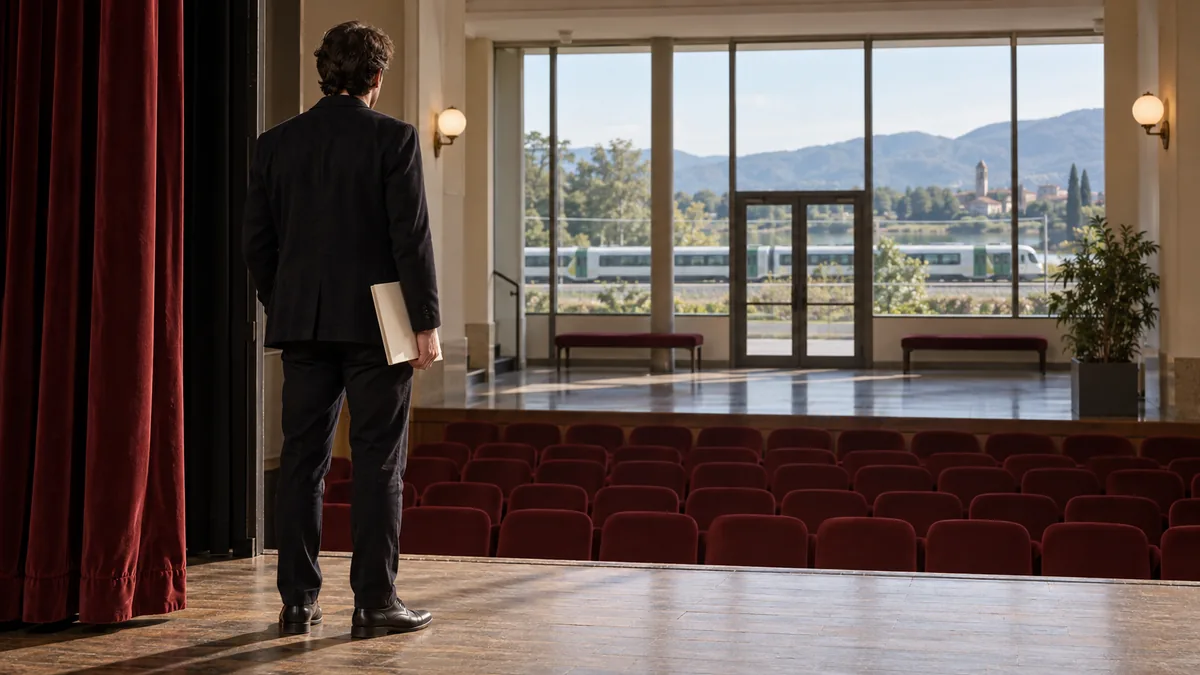
Fabio De Luigi returns to the theater after twenty-five years BIOL
Context
TL;DR
- Fabio De Luigi returns to the theater after twenty-five years
- BIOL – In Carne e Ossa opens the season in Varese
- The Varese stop is the third of the tour
- More than 1000 people at Teatro Intred
Key facts
- Entertainment → BIOL – In the flesh
- Protagonist → Fabio De Luigi
- Place → Varese Theatre, Piazza Repubblica
- Stage → third of the tour
- Audience → over 1000 people
- Authors → Fabio De Luigi and Paolo Cananzi
- Production → Live Nation
The debut of the tour
Fabio De Luigi officially opened the new theatrical season of the Teatro di Varese with BIOL – In Carne e Ossa, the work that marks the return of the Romagna actor to the stage after twenty-five years away from the theatre. The hall in Piazza Repubblica thus inaugurated the program with an evening dedicated to an artist who, after a long journey especially in cinema and television, has chosen to re-establish a direct relationship with the public.
Varese was the third overall stop on the tour, arriving immediately before the Milanese appointment. The audience responded with important numbers: the Intred theater welcomed over 1000 people. The live return therefore opened in a room filled with the public and in a season that had just started.
The show was written together with Paolo Cananzi and produced by Live Nation. Its structure brings together monologues, stories, improvisations and more intimate ideas. The result takes up De Luigi's comic and narrative tone without separating the personal story from entertainment.
At the center remains the transition from cinema and television to the stage. After twenty-five years of absence, De Luigi has resumed the tour with a work that the source describes as a reconnection of ties with the theater audience. The Varese event thus combined the opening of the program and the actor's theatrical restart.
Even the title finds a reference in the actor's memory. At the origin of the show lies a childhood memory: the detergent with the Dutch girl peeking out of the porthole of a washing machine. The familiar detail accompanies a project built not only on already known characters, but also on more personal stories and passages.
The debut in Varese brought to the stage De Luigi's theatrical restart and the opening of the program of the theater in Piazza Repubblica. The stage preceded Milan and presented the live format of BIOL – In Carne e Ossa to the public, between narration, comedy and improvisation.
Operational details
A career retrospective without nostalgia
Two recognizable returns
The evening began in a festive mood. The audience at Teatro di Varese greeted De Luigi with a spontaneous chorus of “Happy birthday,” dedicated to the occasion the actor had celebrated the previous day. The tribute gave the evening a festive opening and marked the first contact between the actor and the Varese audience.
The career retrospective was carefully calibrated. The performance avoided the risk of turning into a mere parade of old crowd-pleasers and allowed only two nostalgic interludes. They were placed at two clearly defined points, the opening and the closing, while the rest adopted a more conversational and narrative tone.
At the beginning, the inevitable reference to Ingegner Cane returned. The character was the first recognizable nod to one part of the actor’s career, without turning the entire show into a sequence of reprises. The memory thus remained present, but concentrated in one precise moment of the evening.
In closing, Olmo reappeared, with his irreverent romanticism and the celebrated Sei una merda. The finale was enriched by a vocal surprise: Olmo was introduced by Marco Mengoni’s voice, remembered as a fan of his predecessor and his extraordinary successes. The reference gave the conclusion a different form from the opening, while nevertheless maintaining the same thread with De Luigi’s artistic past.
Between the two moments, the show maintained a polite and pleasant tone, with an intimate and familiar atmosphere. The set design remained minimalist, but not without impact. The inflatable dolphin and the little plush giraffe were the most prominent stage elements: the dolphin’s movement seemed random, but was actually carefully choreographed like that of a true co-star.
The choice to limit the nostalgic callbacks left room for anecdotes, stories, and improvisations. The audience thus encountered both familiar references and a more intimate narrative, within a balance that avoided reducing the return to the theater to a mere celebration of the past.
Key points
Piadina, jokes and the local area
The show beyond the script
Amid hilarious anecdotes and moments of live entertainment, one of the evening’s most original moments came in the form of the onstage cooking demonstration. De Luigi rolled out a Romagna piadina, demonstrating seasoned skill, and then tossed it directly into the audience. The preparation thus became part of the entertainment and brought to the center of the room an element connected to his Romagna roots.
The rapport with the audience also took shape through jokes about the people of Como. The reference was delivered with a certain crowd-pleasing spirit and a knowledge of the area that the audience especially appreciated. The comedy therefore did not remain separate from the setting of the evening: it also used references recognizable to those listening from the province of Varese and nearby areas.
The piadina tossed among the spectators, the improvisations, and the local jokes gave the performance a direct, immediate feel. They are different moments, but all belong to the same dimension of live entertainment described in the report: not just monologues, but also onstage action and exchanges with the audience.
The connection with the province of Varese emerged even more concretely at the end of the show. De Luigi offered special thanks to the historic Caffè Teatro di Verghera di Samarate, a venue that launched many leading figures in Italian comedy. The actor followed the acknowledgment with the clarification “But not me,” thereby also recalling his own particular relationship with that place.
Caffè Teatro was not mentioned solely as a reference point for Italian comedy. It also hosted part of the rehearsals for this show. The final thanks therefore linked the evening open to the public with a phase of the preparatory work carried out in the Varese area.
The closing highlighted precisely this dual connection: on the one hand, the relationship built onstage with the audience; on the other, the reference to a place in the province where part of the rehearsals took place. For the opening evening of Teatro di Varese, the local area entered the story through comedy, the piadina, jokes about the people of Como, and the tribute to Caffè Teatro di Verghera di Samarate.
Source: varesenews.it
Frequently Asked Questions
- Where did Fabio De Luigi's stage in Varese take place?
- The show was held at the Teatro di Varese, in Piazza Repubblica, at the Intred hall. It was the third stop of the BIOL – In Carne e Ossa tour, preceding the Milan event. The hall welcomed over 1000 people for the inauguration of the theatre season.
- Who produced the show BIOL – In Flesh and Bone?
- The show is produced by Live Nation. The show was written by Fabio De Luigi together with Paolo Cananzi. The work marks the return of the Romagna actor to the stage after twenty-five years of absence from the theatre.
- What did Fabio De Luigi do during the showcooking?
- De Luigi spread a Romagna piadina on the stage, demonstrating skill in preparation. Subsequently, it launched the food directly among the spectators, transforming the culinary preparation into a moment of entertainment linked to its Romagna origins.