The long battle of cross-border workers: taxes, rights and disparities
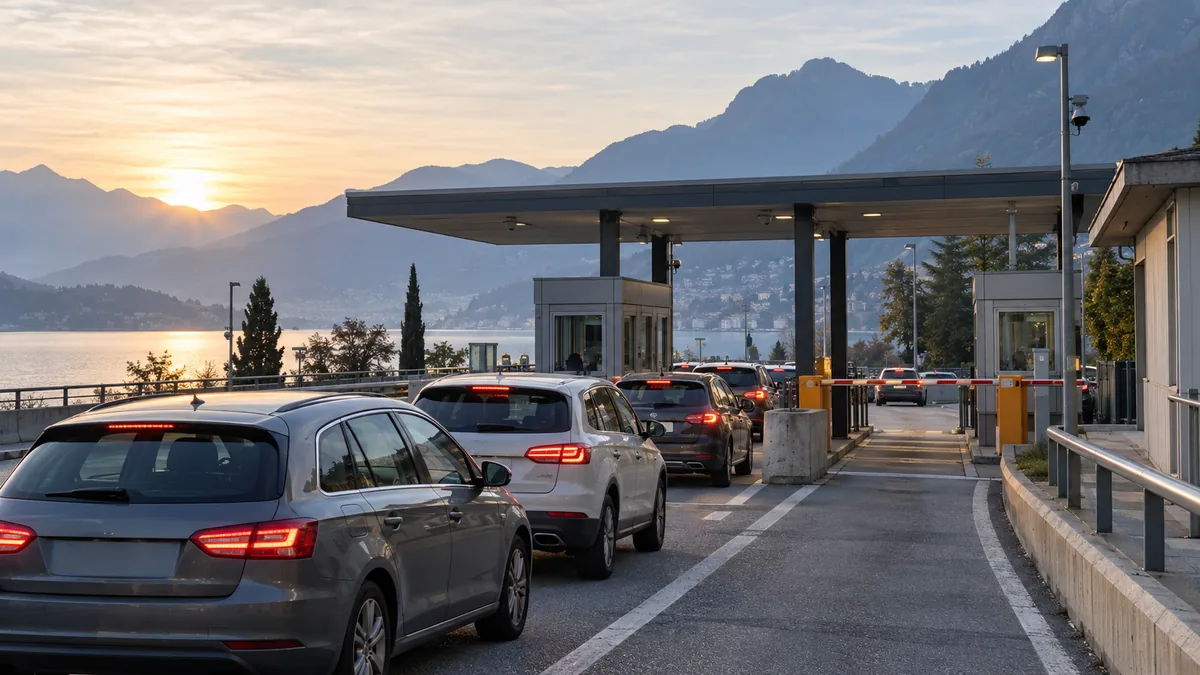
About 31 thousand cross-border commuters in the Varese area and 32 thousand in the Como area Varese remains excluded from tax rebates after the return of 4% 31,7% spend more than an hour and a half traveling
Context
TL;DR
- About 31 thousand cross-border workers in the Varesotto area and 32 thousand in the Comasco area
- Varese remains excluded from the rebates after the return to 4%
- 31,7% spend more than an hour and a half traveling each day
- 55,6% think they earn less than a Swiss resident
Key facts
- Workers involved: approximately 31 thousand in Varese province and 32 thousand in Como province
- Tax rebates: approximately 4 million euros per year no longer received by Varese
- Threshold: 4% in the ratio of cross-border workers to the population
- Commutes: 31,7% spend more than an hour and a half per day commuting
- Salary comparison: 55,6% lower than a Swiss resident performing the same duties
The sequence of disputes
In Varese province, approximately 31 thousand workers are involved; in Como province, 32 thousand. In recent years, for cross-border workers from the Varese and Como areas, the disputes have concerned taxes, rights and cross-border work rules. These issues begin with family finances and extend to relations between Italy and Switzerland and the budgets of municipalities in the border area.
At the center of the dispute is the so-called “health tax”: this contribution is предусмотрed for old cross-border workers and is strongly opposed by trade unions. The dispute has involved meetings and public initiatives, accompanied by announcements of legal challenges. The issue then became intertwined with the long-standing matter of tax rebates, that is, tax resources linked to cross-border workers, which represent an important source of revenue for many municipalities in the border area.
For Varese, the issue has had particular significance. Reinstating the 4% threshold in the ratio between cross-border workers and the population left the provincial capital without direct access to the funds. According to the source, this loss of access amounts to approximately 4 million euros per year, following the two previous years in which the provincial capital had received those sums.
The matter also concerns rights. The new tax regime introduced a distinction between “old” and “new” workers, adding complexity to an already complex system. In addition, there are the new unemployment benefit provided for by Law 83/2023 and teleworking, now among the central issues in discussions about the rules governing cross-border work. The matter therefore unfolds on several fronts: taxation, tax rebates, welfare, mobility and equal treatment.
Operational details
The daily cost of the border
For 31,7% of respondents, the daily time devoted to commuting between home and work exceeds an hour and a half. The source refers back to this figure after describing queues at border crossings and long travel times: the commute thus becomes part of the same picture that includes salary, purchasing power, and equal treatment.
The research promoted by Cisl and Ocst, cited by the source, provides indicators concerning different aspects of the cross-border worker's experience.
Five indicators to read separately
| Indicator | Reported figure |
|---|---|
| Salary satisfaction | 73% satisfied |
| Purchasing power | 48,4% believe they have lost it |
| Salary comparison | 55,6% believe they earn less than a Swiss resident who performs the same duties |
| Discriminatory treatment | 42,7% perceived it at least once as a cross-border worker |
| Commuting between home and work | 31,7% spend more than an hour and a half a day |
The percentages do not measure the same thing. The 73% expresses satisfaction with salary, while 48,4% reports a perceived loss of purchasing power. The source does not present these figures as contradictory and does not attribute the loss to a specific cause. The 55,6% instead concerns the comparison with a Swiss resident who performs the same duties: it is a relative assessment, not the calculation of a salary difference.
The 42,7% should also be interpreted in its precise sense. It concerns those who report having experienced, at least once, treatment they perceived as discriminatory because they were cross-border workers; it therefore describes a perception reported by respondents, not an official finding. Taken together, the figures show that economic advantage does not encompass the entire cross-border experience. The source does not, however, indicate the total number of respondents, a data-collection period, the individual routes, or travel costs. It therefore does not allow these data to be turned into a calculation of the salary gap or the annual time lost commuting.
Key points
The tax issue and the limits of the framework
Dates and regimes not to be confused
The source refers to a “new tax regime” and distinguishes between “old” and “new” workers. The verified reference for this matter specifies that the New Cross-Border Workers Agreement was signed on December 23, 2020, entered into force on January 1, 2024, and that the Italian ratification is Law 83 of June 13, 2023. Therefore, the phrase “new 2026 tax agreement” should not be used to indicate the entry-into-force date.
The same reference clarifies the distinction mentioned by the source. Cross-border workers who already had that status before July 17, 2023, benefit from an exemption of €7'500 under the 2024-2033 transitional regime. For new cross-border workers, the allowance is €10'000. On employment income, withholding tax is deducted only in Switzerland for cross-border workers; Italy avoids double taxation through the tax credit in section CE of form 730. The Italy-Switzerland Convention for the Avoidance of Double Taxation was signed on March 9, 1976, while Switzerland is not a member of the EU or EEA.
These elements help interpret the tax section without attributing the same withholding to both countries. However, the source refers to the Varese area, the Como area and municipalities in the border area: it does not break down the percentages by canton and does not present them as an exclusive statistic for the Canton of Ticino.
In addition, the amount of the health tax, the outcome of the announced appeals, the operational content of the teleworking rules and the details of the new unemployment benefit beyond the reference to Law 83/2023 remain undocumented. The text describes a long series of disputes, but does not indicate a common final solution. For the specific section on Ticino-Italy tax rebates, a dedicated in-depth analysis is available.
Source: varesenews.it
Frequently Asked Questions
- How many cross-border workers work in the provinces of Varese and Como?
- According to the source, approximately 31.000 cross-border workers reside in the province of Varese and 32.000 in the province of Como, for a total of more than 63.000 cross-border workers in the area.
- Why does Varese no longer receive tax rebates?
- The provincial capital remained excluded from direct access to the funds after the 4% threshold was reinstated in the ratio between cross-border workers and the resident population. The stated consequence is foregoing approximately 4 million euros per year, which the municipality had received in the previous two years.
- What are the main data on the satisfaction and conditions of cross-border workers?
- The Cisl-Ocst survey reports: 73% are satisfied with their salary, but 48,4% perceive a loss of purchasing power; 55,6% believe they earn less than a Swiss resident for the same duties; 42,7% have experienced at least one treatment perceived as discriminatory; 31,7% spend more than 1h30 per day commuting between home and work.
- What does the new tax regime entail for existing and new cross-border workers?
- The New Cross-Border Workers Agreement (signed on December 23, 2020, in force from January 1st, 2024, ratified by Law 83/2023) distinguishes between: the 'old' cross-border workers (already in that category before July 17, 2023) have an exemption of €7.500 under the 2024-2033 transitional regime; the 'new' cross-border workers have a tax-free allowance of €10.000. Withholding tax is collected only in Switzerland; Italy avoids double taxation through a tax credit in section CE of Form 730.
- What other open issues remain for cross-border workers?
- The following issues remain open: the 'health tax' challenged by the unions for old cross-border workers (with appeals announced), the new unemployment benefit (Law 83/2023), regulation of telework, and equal treatment. The source does not disaggregate the data by canton, nor does it indicate the outcome of the appeals or the operational details of the new rules.