Chiasso: The Community Rediscovers Itself Between Faith and New Values
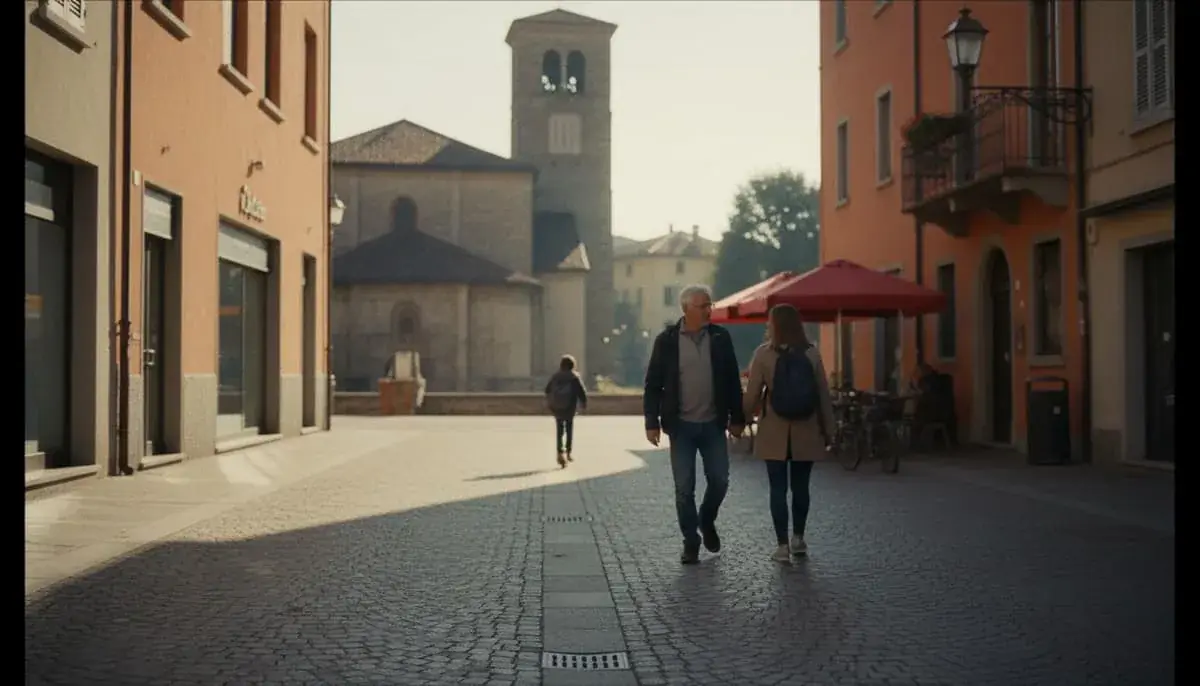
A changing Chiasso: parish priest Don Feliciani reveals a paradigm shift in sacraments, with adults choosing confirmation at 40. A signal for cross-border commuters.
Context
TL;DR
- Chiasso undergoes social and spiritual transformation
- Don Feliciani notes shift in sacraments approach
- Cross-border commuters seek deeper integration
Key facts
- Cosa: Transformation in Chiasso's social and spiritual fabric
- Quando: Just before Don Feliciani's retirement
- Chi: Don Gianfranco Feliciani, historic Chiasso parish figure
- Importo: 25 years of service in the Chiasso parish
- Dove: Chiasso, a vibrant border town in Ticino
- Fatto: Sacraments now chosen by adults out of personal motivation
- Esempio: Confirmation received at age 40 by choice
Chiasso, the vibrant border town that thousands of cross-border commuters pass through daily, is undergoing a profound transformation in its social and spiritual fabric. It's not just about economic figures or changes in traffic flow, but a more intimate shift concerning the sense of community and approach to traditional values. Just a few months before his retirement, Don Gianfranco Feliciani, a historic figure in the Chiasso parish for 25 years, made an observation that resonates far beyond the church walls, touching on the very essence of integration and Ticinese identity in a global context. His revelation, reported by Ticinonline, is surprising: 'Christianity doesn't work the way it used to. Today, sacraments are no longer obtained because 'one has to.' But because one wants to. And indeed, I have people who receive confirmation at 40. By choice.'
Operational details
For cross-border commuters who cross the border daily to contribute to the Ticinese economy, Chiasso's social transformation offers fundamental food for thought. The conscious choice of a sacrament in adulthood, rather than out of mere tradition, symbolizes a more proactive approach to belonging and identity. This 'change in approach' is particularly relevant in a context like Ticino, where the coexistence of different cultures and origins is the norm. Cross-border commuters are not just a workforce; many seek a deeper integration into the social fabric, desiring to feel part of the Ticinese community beyond mere employment. The drive towards a more felt and less habit-driven participation, observed by Don Feliciani in his parish, can be a model for cross-border commuters aspiring to build stronger ties with the territory.
Useful tools to protect your net income
To reduce FX leakage, compare CHF-EUR exchange options and banks for cross-border workers.
Key points
For cross-border commuters, understanding these social dynamics is not a purely academic exercise but a practical component for a better quality of life and more effective integration into the Canton of Ticino. Living on the border doesn't just mean crossing it for work but also immersing oneself in local realities, understanding their evolutions, and contributing to their development. Chiasso, with its openness and ability to re-imagine faith and community, offers a tangible example of how values can be rediscovered and strengthened through individual choice. This approach is particularly valuable for those navigating between two cultures, offering a model for finding one's place in a new context, not out of obligation but through personal motivation.
Frequently Asked Questions
- What does the conscious choice of a sacrament mean in adulthood?
- The conscious choice of a sacrament in adulthood means that the person decides to receive the sacrament not by tradition, but because he actually wants it, demonstrating a more mature and felt approach to faith.
- How can social transformation in Chiasso affect the integration of frontier workers in Ticino?
- The transformation to Chiasso, characterized by conscious choices of belonging (such as confirmation in adulthood), promotes a model of integration based on free adherence. This can help frontier workers build more authentic ties with the Ticino community, through active participation and personal choices, as well as through work.
- How does the growing conscious choice of the sacraments affect the religious life of the frontiers in Ticino?
- The rediscovery of the sacraments as a personal choice, as highlighted in Chiasso, fosters a more autonomous and authentic attitude among the frontalists, strengthening the sense of belonging and active participation in the local religious community.