Commuter car costs: how much does it weigh on your salary?
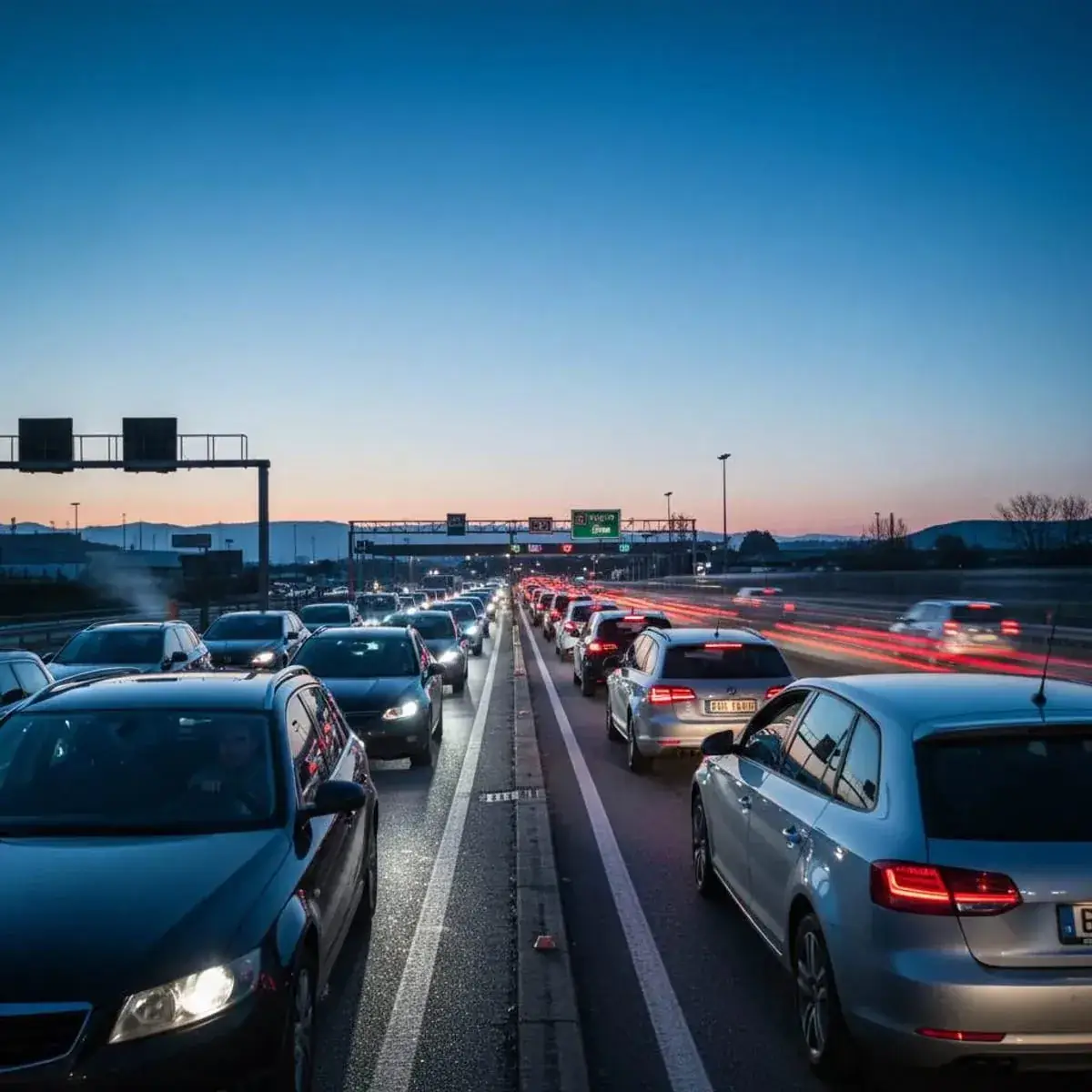
Fuel, wear and tear, parking, and vignette: the complete 2026 cost analysis. A commuter spends about CHF 8,670 per year. Comparison with train and bus.
Context
TL;DR
- Annual car commuting cost in Ticino 2026: CHF 8,670
- Visible costs: fuel, vignette, parking (CHF 3,580)
- Hidden costs: insurance, maintenance, depreciation (CHF 5,090)
Key facts
- Annual distance: 13,200 km for 50 km/day round trip
- Fuel cost: CHF 1,740 for 6.5L/100km at €2.154/L (MIMIT, 24 September 2026)
- Motorway vignette: CHF 40 fixed cost for Swiss motorways
- Parking cost: CHF 1,800 annually for average CHF 150/month
- Insurance & tax: CHF 890 for RCA insurance and road tax
- Maintenance cost: CHF 900 for service, tires, and wear
- Depreciation cost: CHF 3,300 for 15% loss on CHF 22,000 car
- Public transport: CHF 1,638 for the Como-Lugano annual cross-border Arcobaleno pass
The automobile, still an indispensable symbol of freedom for many, represents one of the heaviest and most underestimated expenses in the budget of the nearly 80,000 cross-border workers who travel to Ticino every day. Beyond the cost of fuel, a series of fixed and variable expenses erodes a substantial portion of their salary. But what is the actual annual cost for those who choose to drive for their commute? A detailed analysis for 2026 reveals figures that give pause for thought.
Let's take a common case: a commuter who travels 50 km per day, round trip, for 22 working days a month. Over a year, this amounts to about 13,200 km. Let's look at the most obvious costs:
- Fuel: With an average consumption of 6.5 liters per 100 km and the national average self-service petrol price recorded by MIMIT on 24 September 2026 (€2.154/liter), the annual expense is around €1,850, equivalent to approximately CHF 1,740 at the ECB reference rate of the same day (CHF 0.9409 per euro).
- Motorway Vignette: A fixed and mandatory cost for driving on Swiss motorways. Its amount is CHF 40 (FOCBS; the 2026 vignette is valid from 1 December 2025 to 31 January 2027).
- Parking: This is one of the most impactful variables. A company parking spot or one in the outskirts of Mendrisio might cost CHF 80-100 per month, but for a spot in a parking garage in Lugano, it can easily reach CHF 250-300. Assuming an average of CHF 150 per month, the annual total is CHF 1,800.
Adding up just these three items, the visible cost of commuting by car already amounts to about CHF 3,580 per year. But this is just the tip of the iceberg. The most insidious expenses are those that are not seen on a daily basis.
Operational details
In addition to operating costs, owning a car involves a series of fixed charges and depreciation that drive up its real cost. Many cross-border commuters tend not to consider these expenses in their monthly calculations, making a significant evaluation error that impacts long-term financial planning.
Analysis of hidden costs
- Insurance and Road Tax: Keeping a car registered in Italy has its costs. Between car insurance (RCA), whose premium in border provinces is notoriously high, and road tax, a cross-border worker can spend an average of €800 to €1,200 per year. A conservative estimate is around €950, or about CHF 890.
- Maintenance and Tires: A car that travels over 13,000 km per year needs at least one service (CHF 300-500), a seasonal tire change (CHF 150-200), and a provision for wear on brakes, clutch, and other unforeseen issues. A realistic budget is at least CHF 900 annually.
- Depreciation: This is the biggest and most ignored expense. A mid-range car (e.g., worth CHF 22,000) loses about 15% of its value each year due to aging and mileage. This represents a loss in value of about CHF 3,300 per year.
📊 Total Annual Cost Summary 2026
- Visible Costs (Fuel, Vignette, Parking): CHF 3,580
- Hidden Costs (Tax/Ins., Maintenance, Depreciation): CHF 5,090
- Actual Total: CHF 8,670
A comparison with public transport is stark. An annual cross-border Arcobaleno pass for the Como-Lugano route costs CHF 1,638 (2nd class, fare in force since 14 December 2025). The potential savings exceed CHF 7,000 per year, a figure almost equivalent to a thirteenth salary.
Key points
Faced with an annual expense that can exceed CHF 8,000, the choice of a car is no longer just a matter of convenience, but a strategic financial decision. The flexibility of schedule and the freedom to move around come at a price, and it is crucial for every cross-border worker to be aware of it to plan their family budget. The public transport alternative, thanks to the enhanced TILO connections in recent years, has become increasingly competitive, not only economically but also in terms of time, avoiding queues at the Brogeda or Gaggiolo border crossings during peak hours.
Strategies to reduce costs
💡 Practical tips for the commuter:
- Consider Carpooling: Sharing a car with colleagues who travel the same route can halve or even reduce fuel and parking costs to a third.
- Use Park & Ride (P+R): Using interchange car parks like the one at Fornaci in Lugano or those near the Mendrisio and Chiasso stations, and then continuing by public transport, can drastically cut parking expenses.
- Negotiate with your company: Some companies in Ticino offer subsidies for public transport or contribute to parking costs. It is always worth asking your employer.
Understanding the real impact of these expenses on your salary is the first step towards effective financial management. For a personalized and detailed picture based on your vehicle, your route, and your habits, our car cost calculator is the ideal tool. It will allow you to compare the real costs and understand if, for your situation, the car is still the right choice.
(Sources: MIMIT average self-service petrol price and ECB reference rate as of 24 September 2026; vignette price from the FOCBS; cross-border Arcobaleno fare in force since 14 December 2025. Parking, insurance and road tax, maintenance and depreciation are indicative editorial estimates, updated September 2026.)
Frequently Asked Questions
- How much does the fuel cost for a commuter that travels 50 km a day between return in a year?
- The annual fuel cost is approximately €1,850, or about CHF 1,740 (self-service petrol at €2.154/liter, MIMIT national average of 24 September 2026).
- What is the annual potential savings for a commuter who chooses public transport compared to the car for the Como-Lugano route?
- The annual potential savings may exceed CHF 7,000, equivalent to almost a thirteenth.
- What are the tax benefits available for frontier workers who use the car to travel to Switzerland?
- None specific to the car. In Switzerland, withholding tax already includes flat-rate deductions, and workers covered by the Switzerland-Italy agreement of 23 December 2020 can no longer request a subsequent ordinary assessment to deduct actual expenses, because the withholding tax is final (Ticino Tax Division). In Italy, employment income comprises all amounts received (art. 51 TUIR), and there is no deduction or tax credit for fuel, maintenance or other costs of the car used to commute.