Border Municipalities: The Distance That Matters
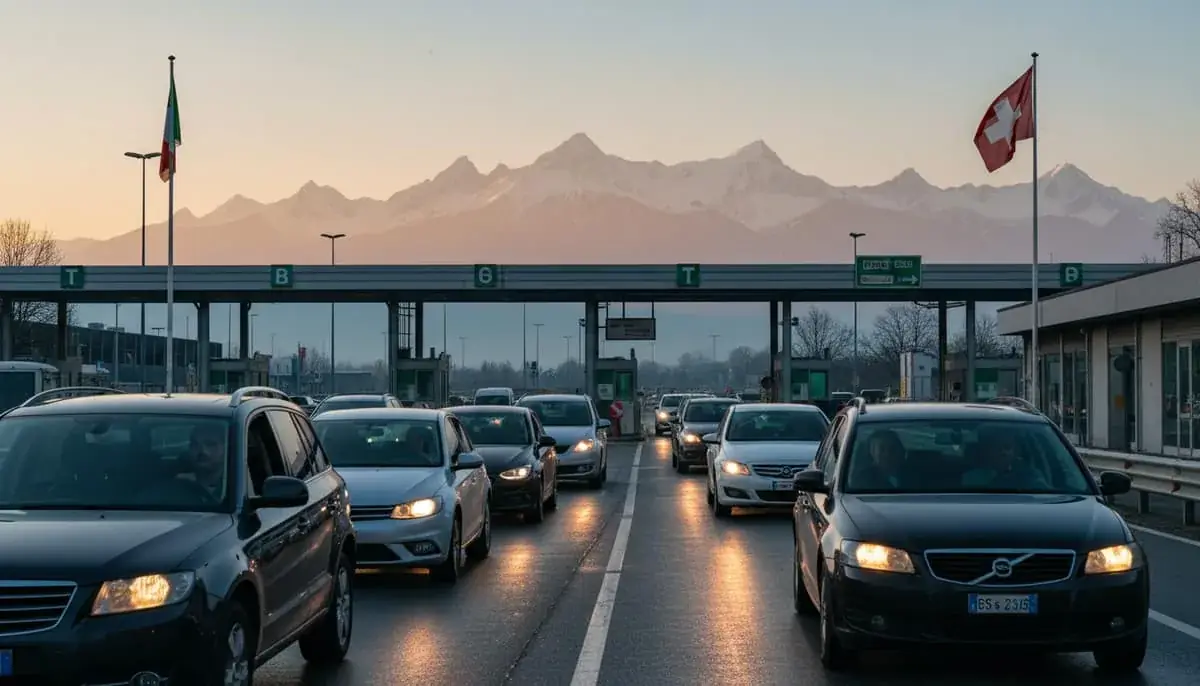
New criteria for border municipalities: how 20 km can change everything for cross-border workers.
Context
TL;DR
- Misinto, 17km from the Swiss border, was only recognized as a border municipality in 2023
- New Italy-Switzerland tax agreement creates 'old' and 'new' cross-border workers
- New agreement excludes retroactive benefits for 'new' cross-border workers
- 72 new municipalities added to border list, but their new cross-border workers are taxed in both Switzerland and Italy
Key facts
- Distance Criteria: 20 kilometers aerial distance from the border defines border municipalities
- New Agreement: signed December 23, 2020, in force since July 17, 2023
- New Municipalities: 72 new municipalities added to the official list of border municipalities
- Tax Status: New cross-border workers are taxed in Switzerland (withholding tax at 80% of ordinary rates) and in Italy, which eliminates double taxation with a credit for the Swiss tax
- Since 2024: in the 72 municipalities, those who already worked in Graubünden, Ticino or Valais between December 31, 2018 and July 17, 2023 can opt for a substitute tax equal to 25% of the Swiss taxes (Art. 6 Decree-Law 113/2024; from 2027 Art. 221 of the Italian Consolidated Income Tax Act)
- Retroactivity: No retroactive application of benefits for new cross-border workers
- Misinto Inclusion: Misinto included in the official list only in 2023 but no retroactive benefits
- Old Agreement: 1974 cross-border tax agreement with unclear criteria for border municipalities
Leaving Lombardy every morning to reach their workplace in Ticino is a daily routine for thousands of cross-border workers. But what happens when your municipality of residence is not officially recognized as a 'border municipality'? The case of Misinto, a small town in the Brianza area just 17 kilometers from the Swiss border, has highlighted how a 'few meters' can result in a significant economic difference for cross-border workers.
In recent years, the issue of defining 'border municipalities' has become a central topic of discussion, especially with the introduction of the new Italy-Switzerland tax agreement, which came into force on July 17, 2023. This agreement created two categories of workers: 'old cross-border workers', who pay taxes exclusively in Switzerland, and 'new cross-border workers', taxed in both Switzerland and Italy, with Italy eliminating double taxation through a credit for the Swiss tax. This distinction, however, is not only temporal but also geographical: residents of municipalities located less than 20 kilometers from the border are entitled to specific tax benefits. For years, though, it was unclear how to precisely define border municipalities.
The struggle of Misinto is emblematic: in 2022, a citizen discovered that, despite living 17 kilometers from the border, his wife, a cross-border worker for twenty years, had never benefited from the tax regime for cross-border workers living in a border municipality; by his calculations the municipality had also lost part of the ristorni, the financial compensation the cantons pay to Italian border municipalities. The intervention of Mayor Matteo Piuri led to the small municipality being included in the official list only in 2023, but with a bitter surprise: workers are still considered 'new cross-border workers', with no retroactive application of the benefits lost in previous years.
Operational details
The Legislation and Distance Criteria
The root of the issue dates back to the 1970s when the 1974 cross-border tax agreement was drafted. At the time, Swiss cantons created 'unilateral' lists of border municipalities based on criteria that were often unclear and sometimes linked to old agreements on pastoral rights. Only with Resolution No. 38/E of March 28, 2017 did the Italian Revenue Agency clarify that, for Italy, a cross-border worker is anyone residing in a municipality lying wholly or partly within 20 kilometers of the border with one of the three cantons, even when working in a canton other than the neighboring one; Switzerland, however, kept applying the cantonal lists. This led to paradoxical situations, with cross-border workers living just steps from the border unable to benefit from the tax advantages provided.
The new agreement (signed December 23, 2020, in force since July 17, 2023) has finally set clearer rules: the official list of border municipalities, agreed by Italy and Switzerland in the mutual agreement procedure of December 22, 2023 and applied since January 1, 2024, includes 72 new municipalities. However, workers residing in these municipalities are considered 'new cross-border workers', regardless of their years of employment in Switzerland. This means that, compared to 'old cross-border workers', they are also subject to the Italian tax regime in addition to the Swiss one, significantly impacting their net income. To narrow the gap, Article 6 of Italian Decree-Law No. 113 of August 9, 2024 allows, from tax year 2024, residents of these 72 municipalities who already worked in Graubünden, Ticino or Valais between December 31, 2018 and July 17, 2023 to opt, in their Italian tax return, for a substitute tax replacing IRPEF and its surcharges, equal to 25% of the taxes paid in Switzerland, without a tax credit. From January 1, 2027 the same rule is set out in Article 221 of Italy's new Consolidated Income Tax Act (Legislative Decree No. 117 of June 19, 2026).
The issue has drawn criticism from unions, which have unsuccessfully demanded the application of retroactivity to ensure fairness. Andrea Puglia of OCST stated: 'There has been enormous confusion. We proposed applying retroactivity, but the cantons refused'.
Useful tools for your case
To verify your within/over 20 km tax scenario, use the net salary calculator and the tax return guide.
Key points
What to Do If Your Municipality Was Recently Added to the List?
If your municipality is among the 72 newly recognized as 'border municipalities', it is important to immediately verify your tax status. While retroactivity cannot be applied, you can optimize your current tax position to minimize the impact of being taxed in both countries: if you already worked in Graubünden, Ticino or Valais between December 31, 2018 and July 17, 2023, consider the 25% substitute tax option. Consult a tax expert to assess whether you are entitled to deductions or benefits and to understand how to correctly declare your income in Italy and Switzerland.
💡 If you are unsure whether your municipality is included in the updated list, use our Interactive Border Municipalities Map to precisely determine your tax situation. You can also use the Net Salary Calculator to estimate the impact of the new agreement on your net income.
The case of Misinto demonstrates how important it is to stay informed about tax regulations and your rights as a cross-border worker. Don't let regulatory uncertainty compromise your earnings: stay informed, take action, and make use of the tools available to you. Source: tvsvizzera.it, February 28, 2026. Official sources: Agreement of December 23, 2020, mutual agreement procedure of December 22, 2023 with the list of municipalities, Swiss FTA fact sheet, Art. 6 of Decree-Law 113/2024, Art. 221 of the Consolidated Income Tax Act, Italian Chamber of Deputies dossier on Decree-Law 113/2024, Resolution 38/E of 2017.
Frequently Asked Questions
- What is the minimum distance to be considered a cross-border worker?
- Under Article 2 of the Agreement of December 23, 2020, you must reside in a municipality whose territory lies wholly or partly within 20 kilometers of the Swiss border, work as an employee in Graubünden, Ticino or Valais and, in principle, return home every day.
- What is the tax impact for 'new frontierers' resident in border municipalities recently added to the list?
- The 'new frontierers' are taxed in Switzerland (withholding tax) and in Italy, which eliminates double taxation through a tax credit; there is no retroactivity for the lost benefits. They must manage both tax regimes, with net income impact. Since tax year 2024, those who already worked in Graubünden, Ticino or Valais between December 31, 2018 and July 17, 2023 can opt for a substitute tax equal to 25% of the Swiss taxes, without a tax credit.
- How can I check if my Municipality of residence has recently been recognized as a border municipality?
- You can consult the interactive map of the frontier municipalities available online or check the official list agreed by Italy and Switzerland in the mutual agreement procedure of December 22, 2023, published by the Italian Ministry of Economy and Finance and applied since January 1, 2024.
Related articles
- All articles: Franc and prices
- Permessi G e B per i frontalieri: errori comuni e come cambiarne status
- Frontalieri: conta dove lavori, non la sede aziendale
- Vita da studente pendolare tra Italia e Ticino: iscrizione a USI/SUPSI, costi, alloggio, differenze con lo status di frontaliere lavoratore
- Confronto tra Permesso G e B nel 2026: quando conviene davvero cambiare status?
- Migliori Comuni per Frontalieri 2026 | Classifica