Safety at the A2 Biasca junction: risks and impact for cross-border workers
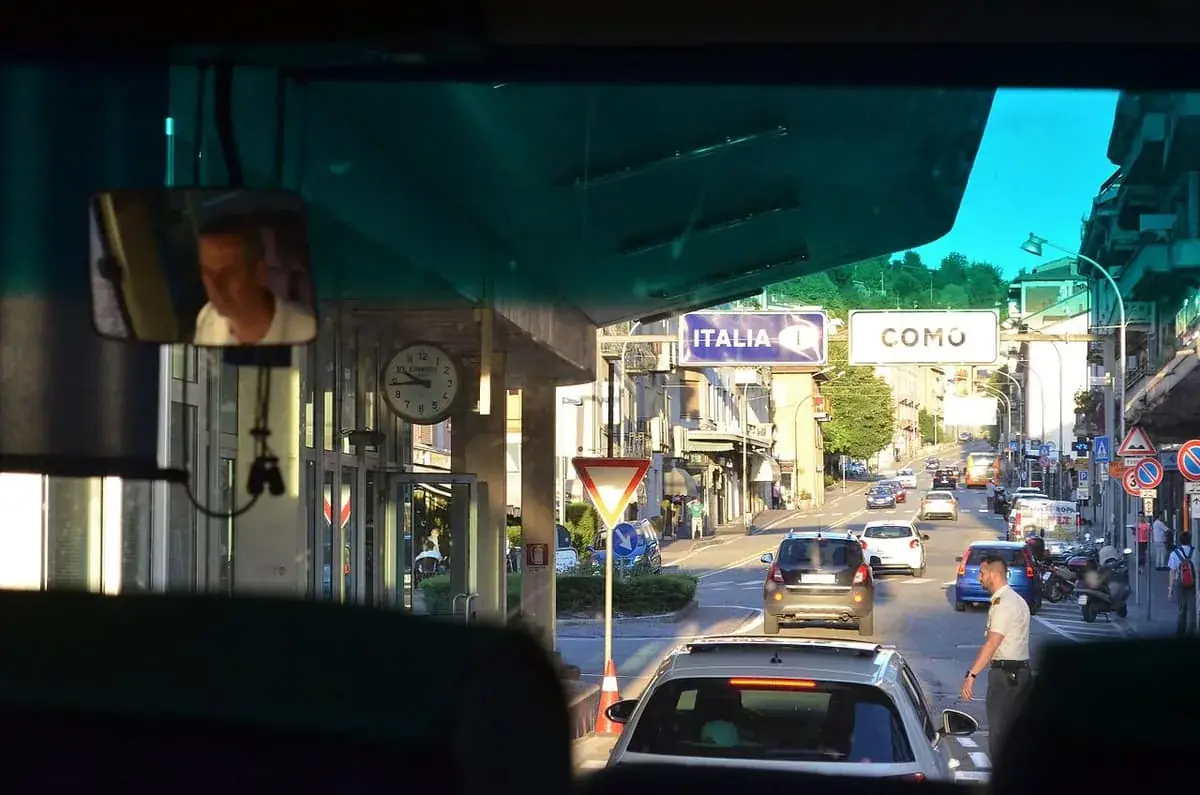
Five serious accidents in seven years on the A2 at Biasca: limited visibility and switched-off streetlights increase dangers for those working across the border.
Context
TL;DR
- A2 Biasca junction is a critical point for cross-border commuters in Canton Ticino.
- Five serious accidents occurred in the past seven years due to poor visibility and high speeds.
- Parliamentary question submitted to address safety concerns and request measures to mitigate risks.
Key facts
- Location: A2 motorway junction at Biasca, Canton Ticino.
- Date of Question: March 2, 2026.
- Accidents: Five serious accidents in the past seven years.
- Daily Traffic: Over 12,000 vehicles daily, with peaks during rush hours.
- Responsible Bodies: Ticino State Council and Federal Roads Office (Ustra).
- Implementation Time: 18-24 months for similar junction adaptations.
- Insurance Coverage: Italian workers should check if their policy covers Swiss accidents.
- Publication Date: March 3, 2026, by laRegione.
Road safety in Canton Ticino is once again in the spotlight, especially for those who cross the border every day to reach their workplace. The A2 motorway junction at Biasca, a strategic hub for traffic between Bellinzona and the Locarno region, is emerging as a critical point for cross-border commuters. The issue was raised by Claudio Isabella, a Centre party deputy in the Grand Council, supported by other co-signatories, through a parliamentary question submitted to the State Council on March 2, 2026. Isabella highlighted that this stretch has seen five serious accidents in the past seven years, a figure that cannot be overlooked given the high number of commuters using this infrastructure daily.
The layout of the intersection, poor visibility, and high vehicle speeds are the main risk factors. The junction acts as a crossroads where cars approach from multiple directions, often without the chance to anticipate other drivers' maneuvers. > 'Visibility is limited, the intersection's design confuses users, and cars come from several directions at often high speeds,' Isabella stated. The situation has worsened since the streetlights were switched off along the junction, a decision made in recent years for energy-saving reasons, further reducing visibility in an already complex area. Cross-border workers from Como, Varese, and border regions, who pass daily through Brogeda or Gaggiolo, now face a tricky stretch where maximum attention is required.
This issue is particularly relevant for Italian workers who, for tax and logistical reasons, choose to live near the border and commute to Ticino via the A2. According to data from the Federal Roads Office (Ustra), the daily average of vehicles passing through the Biasca area exceeds 12,000, with peaks during rush hours. The problem affects not only individual safety but also the efficiency of Ticino's road system, which is vital for the region's economic development and the competitiveness of the cross-border labor market.
Operational details
From a regulatory perspective, the issue raised by Isabella involves both the Ticino State Council and the Federal Roads Office (Ustra), responsible for managing and maintaining motorway infrastructure. The parliamentary question asks for clarification on the institutions' perception of risk and what measures are planned to mitigate the dangers of this section. Specifically, Isabella requested updated accident data, a technical assessment of the junction's layout, and a plan to improve signage and lighting.
Swiss regulations require priority intervention where accident rates exceed the cantonal average. In cases of criticality, Ustra and the Canton must develop a remediation project. However, implementation times can be lengthy: for other Ticino junctions, such as Mendrisio or Lugano Nord, adaptation works have lasted 18-24 months from planning to completion. Currently, no immediate intervention has been announced, but the risk of the situation worsening is real, especially considering the growth in commuter traffic.
For cross-border workers, road safety is also intertwined with insurance regulations. In the event of an accident in Switzerland, coverage may vary depending on the type of policy and tax residence. For example, an Italian worker with car insurance taken out in Italy should check if their company covers damages occurring in Switzerland, especially in the case of serious accidents. It is advisable to keep a copy of the policy in the vehicle and promptly report any incident to local authorities and the insurance company. Economically, an increase in accidents can also affect policy costs and, consequently, overall expenses for commuters working in Ticino.
Useful tools to protect your net income
To reduce FX leakage, compare CHF-EUR exchange options and banks for cross-border workers.
Key points
Those who regularly cross the A2 Biasca junction should adopt practical precautions: reduce speed, avoid sudden maneuvers, and maintain a safe distance, especially during evening hours or when visibility is limited. For cross-border workers, periodically checking headlights and car lights is essential, since the lack of public lighting increases risks. It's also recommended to plan travel times to avoid peak traffic periods, particularly between 7:00 and 9:00 and between 17:00 and 19:00, when vehicle volumes exceed the daily average.
For those working in Ticino and often dealing with cost of living, insurance, and tax issues, an accident can have significant repercussions. Not only health-wise and for insurance, but also for net salary and tax deductions. A serious accident may result in days off work, the need for healthcare coverage procedures, and in some cases, a review of tax status between Italy and Switzerland.
💡 The salary calculator portal offers useful tools to assess your monthly net income after deductions, while the insurance section lets you compare policies suitable for cross-border workers. The news, published by laRegione on March 3, 2026, highlights the urgent need for structural interventions and greater awareness among those working across the border. Staying informed, regularly checking updates on road safety, and using digital services to simulate your work and insurance scenario is worthwhile: risk can be reduced with careful planning and targeted tools.
Frequently Asked Questions
- How many vehicles pass daily in the Biasca area on the A2 and what are the hourly peaks?
- The daily average exceeds 12,000 units, with peaks between 7.00-9.00 and 17.00-19.00.
- What is the impact of insurance regulations on Italian cross-border commuters in the event of an accident in Switzerland?
- An Italian worker with car insurance taken out in Italy must check whether his policy covers damage that occurred in Switzerland. It is advisable to keep a copy of the policy on board and promptly report any incident to the local authorities and the insurance company.
- How can I report a dangerous point of the Biasca junction to the Ticino authorities?
- You can send a detailed report through the official portal of the Canton of Ticino www.ti.ch/viabilità or contact the Ticino Cantonal Police directly on 117. Include data such as location, time, and hazard type to speed up interventions.
- What are the penalties in Switzerland for those who do not respect the safety distance on the A2 section near Biasca?
- The fine for failing to keep a safe distance in Switzerland starts at 250 CHF (approx. 260 EUR) and can go up to 500 CHF (520 EUR) in the event of an accident. The Swiss Highway Code provides for severe penalties to ensure road safety, especially on high-risk sections.
- Is it possible to get a partial refund for Ticino motorway tolls if I often use the Biasca junction?
- No, there is no reimbursement system for Ticino motorway tolls. However, you can deduct the toll costs (about 3-5 CHF per way) from your taxes in Italy if you are an Italian tax resident, by submitting transit documentation.
Related articles
- All articles: Safety and crime
- Biasca, confermato l'arresto del 17enne
- Treni fermi Arbedo-Castione–Biasca per «incidente a persona»
- Biasca: 17enne arrestato per accoltellamento vicino alla stazione
- Biasca rimanda la finale: Uttigen vince ai supplementari
- Nodo di Biasca: l'ultima fase dei lavori dal 31 agosto